


More news on this day
MedCruise member ports across the Mediterranean are stepping up cooperation through the new PortCREW initiative, a European-funded project designed to make cruise tourism cleaner, smarter and better connected to local communities.
Get the latest news straight to your inbox!
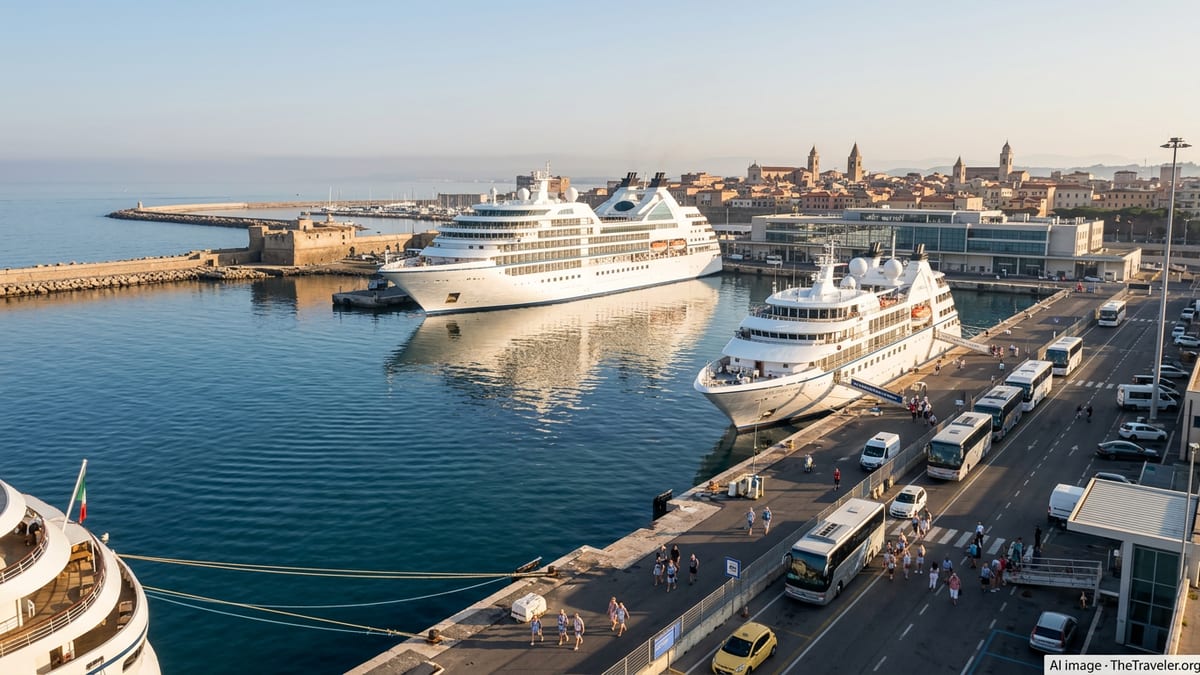
EU-backed platform targets cruise sustainability in the Med
Publicly available project documentation shows that PortCREW, short for Port-City Regions To Wave Med Cruise Destinations As Smart, Sustainable And Striking Eco-Tourism Systems, was approved in 2025 under the Interreg Euro-MED cooperation programme. The project focuses on cruise hubs in Spain, France, Italy, Slovenia and Greece, aligning with broader European objectives to cut emissions, protect biodiversity and reduce pollution in maritime regions.
According to information released by participating partners, PortCREW is scheduled to run for roughly two and a half years, with pilots continuing into 2027. The project’s central aim is to reposition cruise destinations as gateways to eco-tourism by reshaping how passengers move beyond the terminal and into surrounding port-city regions. That approach mirrors wider discussions within the European Union on making ports both energy transition hubs and more responsible tourism gateways.
Project descriptions indicate that PortCREW directly addresses concerns over congestion, air quality and social impacts in popular port cities. By steering visitor flows towards lesser-known inland attractions and encouraging off-peak and low-impact excursions, the initiative seeks to ease pressure on historic centres while still supporting the local economy. The effort fits into a growing body of European policy work that calls for stricter environmental standards and stronger governance for cruise tourism.
MedCruise members anchor the consortium
MedCruise, which brings together more than 150 cruise ports across the Mediterranean and adjoining seas, provides a ready-made platform for cooperation around PortCREW. Several member ports and port-city authorities are among the first wave of participants, including Valencia, Toulon, Ravenna, Koper and Thessaloniki, according to published project overviews and partner announcements.
Reports from these ports indicate that they will test new tools for managing shore excursions, transport connections and visitor information. The goal is to coordinate actions across different port-city regions rather than leaving each destination to experiment in isolation. This regional approach reflects MedCruise’s long-standing emphasis on sharing best practices on issues such as emissions reduction, infrastructure planning and passenger services.
In parallel, MedCruise has recently expanded its own digital capabilities, building more detailed profiles of member ports and their facilities. Earlier upgrades to its data and mapping functions, including information on crew and passenger services, are now expected to support how PortCREW partners exchange operational details and monitor results. Industry observers note that better baseline information on traffic patterns and services is critical for measuring whether new eco-tourism approaches are working.
Digital PortCREW tools aim to reshape passenger flows
At the heart of PortCREW is a shared digital platform that will deliver tailored information to cruise visitors in real time. Project descriptions outline plans for a system capable of suggesting routes, experiences and transport options based on individual interests, accessibility needs, weather conditions and crowding indicators. The intention is to provide alternatives to standard coach tours and concentrated visits to a handful of landmarks.
By nudging passengers towards a wider range of neighborhoods, rural sites and coastal areas, PortCREW tools are designed to spread economic benefits more evenly while easing pressure on hotspots. The digital platform is also expected to highlight low-carbon mobility options, such as walking routes, cycling paths and public transport links, helping to reduce emissions associated with short-distance transfers between port and city.
Early documents on the initiative suggest that data sharing between ports will be a key component. Aggregated statistics on passenger movements, excursion choices and local spending patterns are intended to help city planners and port authorities refine their tourism strategies. This focus on analytics mirrors a broader push by European institutions for ports to embrace smart, data-driven management and integrate more closely with urban planning tools.
Linking shore power, mobility and eco-tourism offers
While PortCREW is framed around tourism experiences, it is also emerging alongside wider investments in environmental infrastructure at European ports. Policy papers on port activities highlight the rapid deployment of onshore power supply systems and alternative fuels infrastructure, particularly at larger cruise and passenger terminals. These developments create opportunities to pair cleaner ship operations with greener options on land.
Some MedCruise members involved in PortCREW are already advancing projects in areas such as shore power, electric shuttle services and low-emission public transport links between terminals and city centres. By layering PortCREW’s digital guidance on top of these physical improvements, ports aim to offer cruise lines and passengers more coherent low-impact itineraries that span both ship and shore.
Observers point out that this type of integrated approach is increasingly seen as essential if the cruise sector is to align with European climate and biodiversity targets. Managing dockside emissions without addressing congestion, noise and waste in nearby neighborhoods leaves many of the most visible impacts of cruising unresolved. PortCREW’s emphasis on inland eco-tourism circuits and sustainable mobility is therefore being watched as a test case for more holistic port-city strategies.
Testing new governance models for cruise destinations
Beyond technology and infrastructure, PortCREW also highlights new ways for stakeholders in cruise destinations to work together. Project outlines describe a governance model that brings port authorities, municipalities, tourism boards, research institutes and private service providers into a shared framework for designing and evaluating eco-tourism solutions.
Work plans indicate that partners will develop joint guidelines and planning tools that can later be taken up by other MedCruise members. These may include templates for integrating cruise tourism into local mobility plans, criteria for promoting certified low-impact excursions and methods for consulting residents on how cruise traffic is managed. The intention is to build capacity so that lessons from pilot cities are transferable across the wider Mediterranean network.
Analysts of European cruise policy note that such coordinated approaches are increasingly encouraged in official guidance on sustainable tourism. PortCREW’s port-city lens, combined with the scale of the MedCruise membership, gives the project potential to influence how destinations around the Mediterranean balance cruise growth, community well-being and environmental limits in the coming years.