


More news on this day
Passengers on a packed British train were left stranded for hours in sweltering conditions after an apparent air conditioning failure turned a stalled service into what witnesses described as an “oven” in temperatures approaching 37C, highlighting renewed concerns about the rail network’s ability to cope with intensifying summer heat.
Get the latest news straight to your inbox!
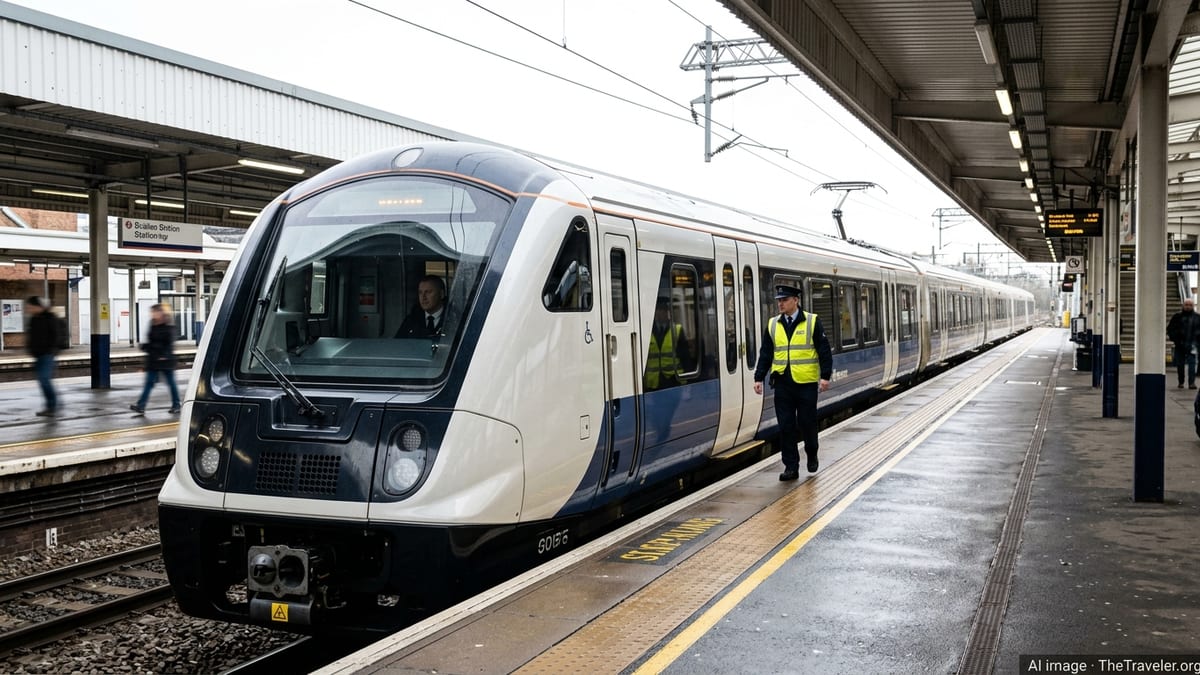
Scorching Conditions Turn Routine Journey Into Ordeal
According to multiple reports, the incident unfolded during a heatwave that pushed temperatures in parts of Britain into the mid-30s Celsius, with some inland areas approaching 37C. Services were already under strain as heat-related speed restrictions and infrastructure checks disrupted timetables across several key routes.
On the affected service, passengers described packed carriages, sealed windows and minimal ventilation once the onboard air conditioning failed. With no meaningful airflow and little room to move, many reported feeling dizzy and nauseous as the temperature inside the train rose well beyond comfortable limits.
Publicly available information indicates that it took several hours for the immobilised train to be moved and for passengers to be transferred or released. During that period, travellers shared images and accounts of the stifling conditions on social media, amplifying criticism of what many saw as an avoidable breakdown in basic passenger welfare.
The incident quickly became emblematic of what commentators labelled “Meltdown Britain,” a phrase increasingly used to describe how transport, health and other critical systems are being tested by more frequent extremes of heat.
Rail Network Struggles Under Repeated Heatwaves
The latest disruption comes against a backdrop of mounting pressure on Britain’s rail operators to adapt to hotter summers. In recent years, high temperatures have forced widespread speed restrictions, track inspections and unplanned cancellations as rails expand, overhead lines sag and older rolling stock struggles to keep cooling systems running.
Industry data and recent coverage indicate that several operators have seen a sharp rise in heat-related faults, particularly involving air conditioning units on busy commuter and intercity services. Many of these trains were designed for a temperate climate in which long spells above 30C were rare, rather than the extended hot periods that meteorologists now say are becoming more common.
In this latest case, commentators noted that once the train stalled, contingency measures appeared limited. With few shaded areas along the line and safety rules restricting evacuations onto nearby tracks, operators relied primarily on remote troubleshooting and attempts to restart the train, leaving passengers confined inside carriages for far longer than they expected.
Critics argue that the episode underlines an uncomfortable reality: while Britain’s rail usage has rebounded strongly, investment in weather resilience and passenger comfort has not kept pace with growing demand and changing climate conditions.
Passenger Safety and Welfare Under Scrutiny
Health experts have repeatedly warned that prolonged exposure to temperatures above 30C, particularly in crowded, poorly ventilated spaces, can lead to dehydration, heat exhaustion and, in severe cases, heatstroke. The risk is highest for older passengers, young children and those with underlying medical conditions.
Reports from the “oven” train suggest that some passengers resorted to sitting on the floor, using improvised fans and sharing limited supplies of water while they waited for assistance. With no clear information on how long they would be stranded, anxiety rose alongside the temperature.
Consumer advocates say the incident raises questions about whether operators’ hot-weather protocols are adequate. Guidance often calls for staff to distribute drinking water, provide regular updates and, where possible, move passengers to cooler parts of the train or arrange prompt evacuation. When a stalled service is isolated from platforms or road access, however, those measures can be difficult to implement.
Public discussions following the incident have focused on whether operators should be required to install additional temperature monitoring, emergency ventilation options and backup power for air conditioning on high-density services, especially on routes that have seen repeated problems during past heatwaves.
Climate Change Exposes Infrastructure Weaknesses
Britain’s latest heatwave is part of a wider pattern across Europe, where record-breaking summer temperatures have led to rail buckling, power outages and severe travel disruption. Transport analysts note that many parts of the continent are grappling with legacy infrastructure that was never engineered for sustained periods above 35C.
Publicly available research shows that as average temperatures rise, the number of days when rails are at risk of thermal expansion increases, forcing operators to choose between enforcing lower speeds for safety or accepting a higher likelihood of faults and failures. At the same time, higher ambient temperatures put extra strain on cooling systems in trains, stations and signalling equipment.
The “Meltdown Britain” narrative has gained traction as a shorthand for this convergence of challenges. The stalled, overheated train has become a stark illustration of how passengers experience climate stress at ground level: not through abstract charts, but in the form of cancelled holidays, missed connections and hours trapped in stifling carriages.
Policy discussions are increasingly focusing on the cost of inaction. Upgrading track, power systems and rolling stock to cope with higher temperatures carries a significant price tag, but so does repeated disruption, lost productivity and the reputational damage that follows viral images of sweltering passengers.
Calls Grow for Investment and Clearer Standards
In the wake of the incident, campaign groups, commentators and passenger organisations have renewed calls for clearer, enforceable standards on maximum onboard temperatures and response times when trains become stranded. Some have argued that just as winter resilience plans are now standard, operators should be obliged to publish summer resilience strategies detailing how they will protect passengers during heatwaves.
Proposals being discussed in public forums include mandatory temperature sensors in every carriage with real-time feeds to control rooms, automatic alerts if conditions exceed safe thresholds, and more robust backup power for ventilation and air conditioning systems. Others suggest that operators should be required to stock emergency water supplies and light thermal blankets on long-distance services, to be used both in extreme heat and cold.
Regulators are also facing questions about how compensation and passenger rights frameworks apply when disruptions are linked to severe weather. While many delays are classified as outside operators’ direct control, passenger advocates argue that recurring failures of air conditioning or inadequate contingency planning should not be treated as unavoidable.
For rail users, the latest “oven” train is likely to reinforce a familiar sense of unease as summer approaches. With ridership high and climate pressures mounting, Britain’s ability to keep its trains running safely and comfortably in 37C heat is emerging as a key test of how quickly the country can adapt critical infrastructure to a hotter future.