


More news on this day
Summer travel across Europe has been thrown into disarray as nearly 200 flights are cancelled and more than 2,000 delayed in a single day, disrupting operations for major carriers including British Airways, Lufthansa, Vueling and Ryanair at key hubs in London, Barcelona, Munich, Dublin and other airports.
Get the latest news straight to your inbox!
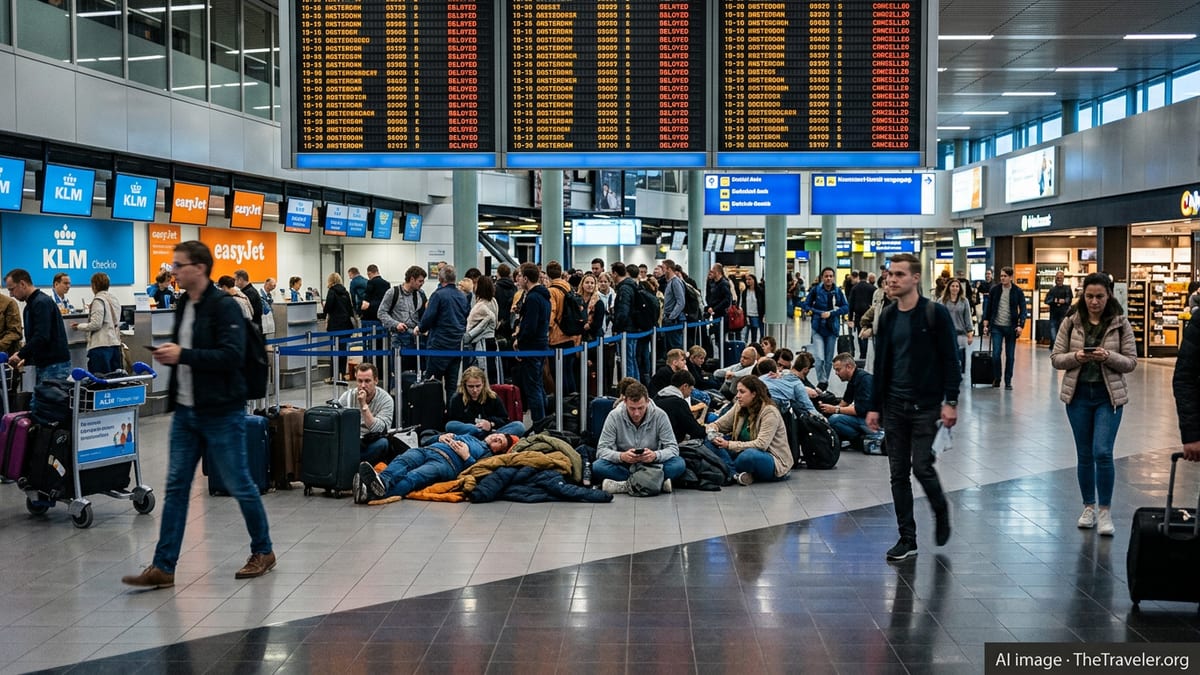
Widespread Disruptions Hit Major European Hubs
Reports from aviation data providers indicate that around 189 flights were cancelled and approximately 2,207 delayed across European airspace, affecting travellers moving between the United Kingdom, Spain, Germany, the Netherlands, Ireland, Scotland and several neighbouring markets. The disruption coincides with the build up to the peak holiday season, intensifying pressure on airlines and airport infrastructure.
London’s airports, including Heathrow, Gatwick and Stansted, have recorded some of the highest volumes of delayed departures, impacting British Airways, Ryanair and a range of short haul and long haul operators. In Spain, Barcelona and Madrid have seen significant knock on schedule changes, with Vueling and other carriers forced to retime or cancel services as congestion and resource constraints ripple through the network.
In Germany, Munich and Frankfurt have experienced rolling delays linked to tight aircraft rotations and earlier schedule reductions at Lufthansa, which has already pared back parts of its European network for the summer period. Publicly available timetable data shows that additional route cuts and capacity trims in June were designed to create more operational slack, yet the latest spike in disruption suggests that margins remain narrow when adverse conditions accumulate.
Airports in Dublin, Amsterdam and other major hubs in Ireland and the Netherlands have reported growing queues at security and border control, along with late arriving aircraft from other European cities. These delays feed into subsequent rotations, meaning flights departing hours behind schedule and, in some cases, same day cancellations when crews and aircraft are no longer in position to operate legally within duty time limits.
Multiple Causes: Weather, Strikes and Structural Strain
Analysis of recent aviation updates points to a combination of factors behind the latest wave of cancellations and delays. Periodic air traffic control restrictions, localised storms and capacity constraints at busy control centres continue to slow traffic flows across key corridors, particularly in French and central European airspace, leading to airborne holding and departure slot restrictions that quickly cascade through airline schedules.
Industrial action remains another central driver. In recent weeks, strikes by air traffic controllers in France and walkouts by aviation staff in Belgium and Portugal have forced the suspension of hundreds of flights and prompted carriers to proactively cancel services to avoid large scale last minute disruption. These events have contributed to a backlog of displaced passengers and created additional complexity for airlines already managing dense summer operations.
At the same time, industry data for 2026 shows that short haul cancellations have risen across many European airports, particularly on budget routes where rising costs and tight staffing leave less flexibility to absorb operational shocks. Low cost carriers including Ryanair and Vueling have trimmed or restructured parts of their networks in Spain, Germany, France and Portugal this year, a trend that reduces the number of alternative departures available when irregular operations occur.
New border and security procedures are also exerting pressure on some terminals. Recent experiences at airports such as Milan Linate, where updated checks led to passengers missing flights despite being present in the building, underline how process changes can add minutes to each traveller’s journey through the airport, multiplying into significant delays at busy times of day.
Impact on Passengers in the UK, Spain, Germany and Ireland
For passengers, the immediate effect of the latest disruption has been missed connections, abandoned short breaks and lengthy waits in crowded terminals. Travellers flying between the UK and Spain have been particularly exposed, as routes from London to Spanish coastal and island destinations are among the busiest leisure corridors in Europe during June and July.
In Spain, consumer rights organisations note that the country is already experiencing elevated levels of disruption in 2026, with earlier analysis showing that roughly one in three flights in the first quarter was delayed or cancelled. This baseline of unreliability means that sudden spikes in cancellations or airspace restrictions quickly push airports such as Barcelona, Palma de Mallorca and Ibiza into prolonged periods of schedule instability.
German travellers have also faced increased uncertainty, with Lufthansa’s schedule adjustments combining with occasional cabin crew strikes and air traffic control restrictions to create pockets of disruption at Munich, Frankfurt and regional airports. Media coverage from earlier in the year described cancelled services between Germany and Spain, Portugal and other European destinations, foreshadowing the pressure now being seen at the start of the main summer travel window.
In Ireland and Scotland, where many passengers rely on a narrow set of daily departures to connect onto continental European flights, even a small number of cancellations can have an outsized effect. Delays or cancellations at Dublin or Edinburgh can mean missed onward connections in Amsterdam, London or Frankfurt, and rebooking options may be limited once a day’s key bank of flights has already departed.
How Airlines and Airports Are Responding
Publicly available statements from airlines and airport operators indicate a strategy of pre emptive schedule cuts, tactical cancellations and capacity additions where possible. Some carriers, including Lufthansa and Ryanair, have reduced their planned summer routes or frequencies on marginally profitable sectors, trading breadth of network for greater resilience on core routes.
Airport operators in Spain, the UK and the Netherlands have been working to add staff in security and ground handling roles, after post pandemic recruitment lagged behind the rapid rebound in demand. Recent data from Spain’s airport operator shows passenger numbers already running ahead of 2025 levels, with terminals in Madrid, Barcelona and Palma handling volumes close to or above pre pandemic peaks.
However, analysts caution that recruitment and schedule planning can only go so far when air traffic control capacity remains constrained across important segments of European airspace. When one major hub or control centre imposes restrictions, neighbouring airports often experience secondary disruptions, as aircraft are held on the ground, diverted or forced into extended holding patterns before landing.
For airlines, each cancellation and delay carries a financial cost, not only in lost revenue but also in passenger care and potential compensation. Industry estimates suggest that every minute of delay can cost around one hundred euros in fuel, staffing and associated expenses, while a single cancelled flight may represent tens of thousands of euros in direct and indirect costs.
What Travellers Can Expect in the Coming Weeks
Looking ahead, travel industry reports suggest that the current pattern of periodic disruption is likely to persist through the peak summer season. Planned industrial action by airport staff and ground handling workers in Italy and Spain in July is expected to add further strain, while ongoing staffing challenges at some air traffic control centres leave little buffer for handling weather related surges.
Passenger advocacy groups are urging travellers to build extra time into itineraries, particularly when connecting between separate tickets or low cost carriers that do not protect onward journeys. They also note that EU and UK regulations continue to provide strong rights to refunds, re routing and in some cases compensation when flights are cancelled or significantly delayed for reasons within an airline’s control.
Travel search data suggests that some holidaymakers are reacting by favouring early morning departures, which historically have a lower risk of knock on delays, and by choosing larger hubs that offer multiple daily flights to popular destinations. Others are diversifying their plans, considering rail or car travel for shorter intra European journeys where practical.
With disruption now a recurring feature rather than an exception, the latest day of 189 cancellations and more than 2,000 delays serves as another reminder that Europe’s aviation system is still operating close to its limits. For travellers heading to or from London, Barcelona, Munich, Dublin and other major airports, close monitoring of flight status and flexible planning remain essential.