

More news on this day
Mexico and Royal Caribbean are moving ahead with parallel beach initiatives in Cozumel, combining a new public shoreline access project with plans for an exclusive Royal Beach Club resort aimed at cruise passengers.
Get the latest news straight to your inbox!
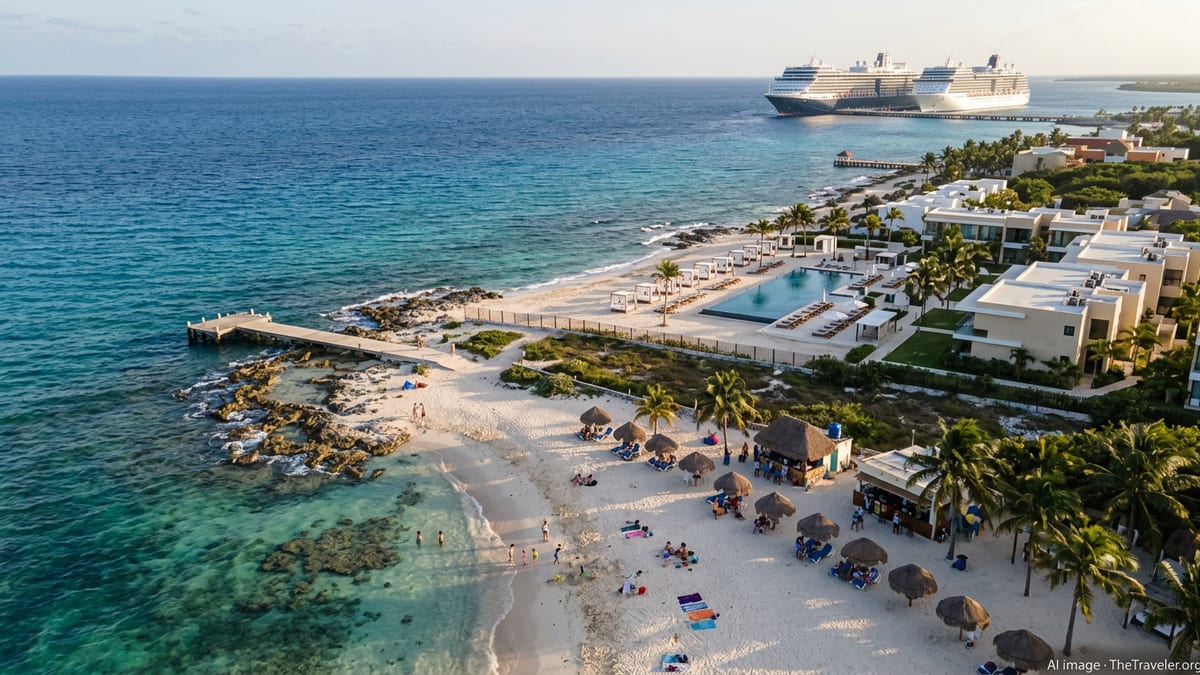
Dual Beach Vision Emerges for Cozumel
Recent investment announcements and planning documents indicate that Mexican authorities and Royal Caribbean are aligning around a dual-track approach to Cozumel’s coastline: preserving and enhancing public beach access while also advancing a high-end, cruise-focused Royal Beach Club resort projected to open in 2026. Publicly available information shows that federal and state tourism officials in Quintana Roo have framed new cruise infrastructure as a way to support local employment and diversify visitor spending across the island, while international cruise brands position private-style destinations as central to their growth strategy.
Reports on Royal Caribbean’s plans describe Royal Beach Club Cozumel as part of a broader portfolio of branded beach experiences at high-volume ports, with the Cozumel project scheduled to follow the launch of Royal Beach Club Paradise Island in The Bahamas. Company filings and recent earnings materials outline a timeline that places Cozumel’s opening in 2026, complementing the separate Perfect Day Mexico destination in Mahahual that is currently under environmental and legal scrutiny.
In parallel, national and local authorities have increased their focus on maintaining and improving public coastal areas in Cozumel. Discussions around cruise-related development have frequently highlighted the importance of guaranteeing open beach access for residents and non-cruise visitors, particularly as more shoreline is integrated into private or semi-private tourism projects.
Royal Beach Club Cozumel: A New Exclusive Resort Concept
Royal Caribbean has submitted the Royal Beach Club Cozumel project for environmental evaluation, describing it as an exclusive, limited-capacity beach club experience for cruise guests along the island’s western shore. Environmental and planning documents summarized in regional coverage indicate that the proposed site spans more than 17 hectares, with only a portion slated for construction and the remainder reserved as open or conservation areas. The cruise company presents the design as reusing previously developed land and existing beach-park infrastructure to reduce its overall footprint compared with a greenfield site.
According to published coverage of the project’s Environmental Impact Statement, assessments identified a series of environmental variables, including vegetation, mangroves and coastal habitats that could be affected during construction and operation. The documents outline mitigation measures such as restoring degraded areas, limiting new building density and using native species and materials in landscaping and architecture. Royal Caribbean promotional materials also emphasize shaded lounging areas, pools, food-and-beverage venues and curated shore excursions as key guest amenities.
Corporate investor presentations and cruise-industry briefings describe Royal Beach Club Cozumel as a bookable shore excursion rather than a complimentary port stop. The model mirrors the company’s approach in Nassau, where access to the Royal Beach Club Paradise Island is sold as an add-on experience. For Cozumel, this structure is expected to concentrate spending within the controlled resort space while still allowing guests to purchase additional tours and activities on the broader island before or after their beach-club visit.
Public Beach Access and Mexico’s Coastal Policy
Mexico’s coastal law treats beaches as public goods, and public debate in Quintana Roo has increasingly focused on ensuring residents and independent travelers retain access to the shore amid expanding resort and cruise infrastructure. In Cozumel, community discussions around new docks and private-style developments have cited the need to protect remaining open beaches and reefs, particularly popular areas used by locals for swimming and snorkeling.
Recent policy moves at the state level, including cooperation agreements between Quintana Roo and cruise-industry associations, have been framed as a way to channel private investment into public infrastructure such as piers, mobility improvements and emergency preparedness. These arrangements often include provisions or expectations around maintaining or improving public spaces, including coastal areas. In this context, the idea of enhancing a public beach in Cozumel alongside the Royal Beach Club project aligns with broader national objectives to balance tourism growth with community access.
Local news and civic commentary have also highlighted concerns that large-scale private destinations can shift economic benefits away from smaller, independently owned beach clubs and waterfront businesses. A strengthened public beach, with basic services and environmental protections, is seen by some observers as a way to preserve more inclusive access even as high-investment, cruise-focused projects move forward.
Investment, Jobs and Environmental Scrutiny
Royal Caribbean has signaled a multiyear investment program in Mexico’s Caribbean coast, with public statements and Mexican media coverage placing total spending in the hundreds of millions of dollars across Cozumel and Mahahual. Within that package, the Royal Beach Club Cozumel project has been associated with an investment figure of more than 75 million dollars, with construction and operation expected to support both direct and indirect employment for island residents in sectors such as construction, hospitality, transport and tours.
At the same time, environmental groups and academic voices have called for rigorous oversight of cruise-related infrastructure in Quintana Roo. Separate legal actions and environmental reviews linked to Royal Caribbean’s Perfect Day Mexico development in Mahahual illustrate the heightened level of scrutiny facing new coastal megaprojects. While those court cases and evaluations are distinct from the Cozumel beach club, they are shaping the wider regulatory climate in which the island’s resort and public-beach plans are advancing.
For Cozumel, environmental evaluation of the Royal Beach Club project is examining potential implications for coastal vegetation, marine habitats and water quality. Analysts following the process note that commitments to conservation areas, controlled visitor capacity and wastewater and waste-management systems will be critical factors as authorities weigh approvals and conditions. Parallel public-beach enhancements are expected to be subject to their own environmental and urban-planning criteria, particularly where reefs and turtle-nesting areas are present.
What the Changes Could Mean for Visitors
If current timelines hold, cruise passengers arriving in Cozumel in 2026 and beyond may encounter a more segmented beach offering: a dedicated, ticketed Royal Beach Club on one hand and an upgraded public beach area on the other. The private club is likely to appeal to travelers seeking a packaged, all-in-one beach day with controlled capacity, curated food and beverage and organized activities. In contrast, the public beach option would continue to attract a mix of residents, independent travelers and cruise guests looking for lower-cost, flexible access to the sea.
Travel analysts suggest that a clearer distinction between public and private coastal spaces in Cozumel could influence how visitors plan their days ashore, including whether they book ship-sponsored excursions or opt to organize their own transport and activities. Improved public access, supported by infrastructure such as restrooms, shade, lifeguards and public transport links, could help sustain the island’s appeal beyond the cruise-only market.
As regulatory reviews continue and construction milestones approach, Cozumel’s evolving shoreline will serve as a test case for how Mexico and major cruise operators manage the coexistence of public beaches and exclusive resort-style developments. The balance they strike is likely to shape not only local visitor experiences, but also wider debates over coastal tourism across the Mexican Caribbean.