


More news on this day
Mexico’s tourism sector set a new benchmark in the first half of 2026, with publicly available government data showing 51.1 million international visitors between January and June, a historic high and a clear signal of the country’s accelerating post‑pandemic travel rebound.
Get the latest news straight to your inbox!
Historic Surge in International Arrivals
Recent figures from Mexico’s federal tourism authorities indicate that the country received 51.1 million international visitors in the first six months of 2026, an increase of 7.7 percent compared with the same period in 2025. The headline number, which includes tourists and same‑day visitors, marks the strongest first‑half performance since records have been kept.
Within that total, 24.5 million were classified as international tourists who stayed at least one night in the country, according to official tourism statistics for January through June 2026. That segment alone grew 4.6 percent year on year and underscores Mexico’s role as one of the world’s most visited destinations for longer‑stay leisure and business travel.
The June 2026 data point shows how robust the trend has become. Government releases report that 8.2 million international visitors arrived during the month, including about 4.1 million tourists, helping to push cumulative first‑half numbers to record levels. The performance follows a strong first quarter, when around 26 million visitors had already entered the country, setting the stage for the mid‑year milestone.
Separate migration and tourism datasets, including the Unidad de Política Migratoria’s air‑arrival tables and the Datatur system, support the picture of rising inbound flows through major airports and land crossings. Together, these sources suggest that Mexico is consolidating its position among the top global destinations in the Americas in 2026.
Spending, Cruises and Air Travel Drive Growth
The latest tourism statistics do not only highlight higher visitor numbers. They also point to significant gains in spending and cruise travel, two indicators closely watched by the industry. Between January and June 2026, international visitors generated an estimated 18.78 billion US dollars in foreign exchange earnings, according to federal tourism data summarized by national media coverage. This reflects higher average spending per traveler and the continued recovery of long‑haul markets.
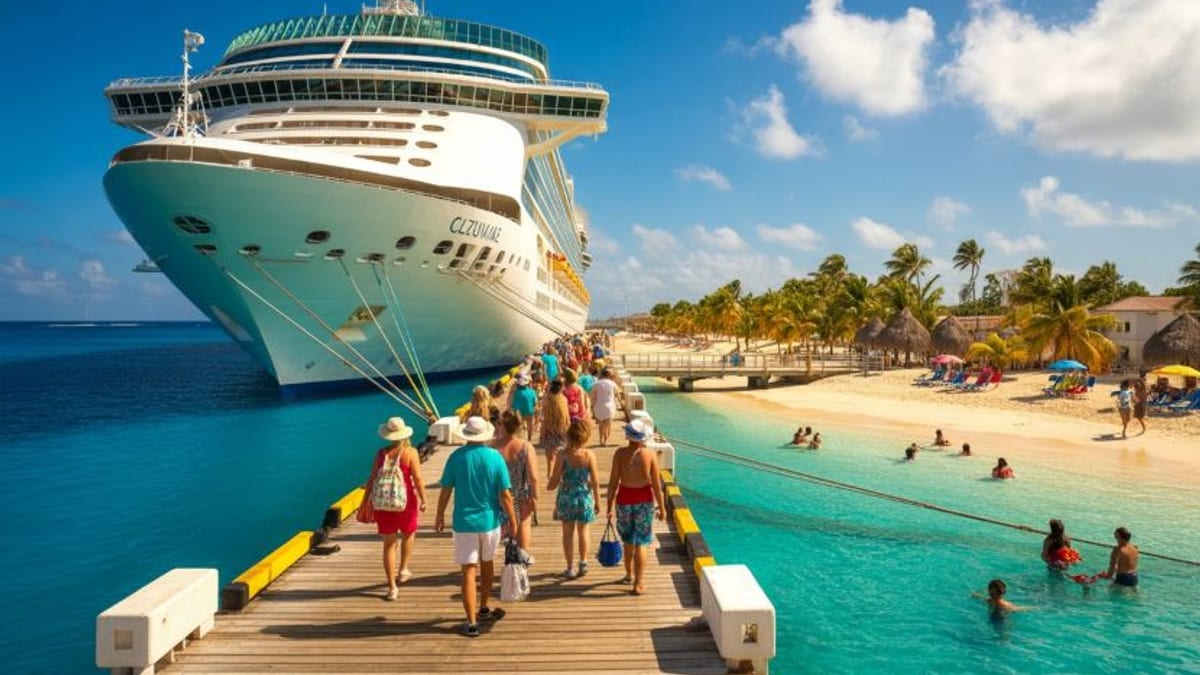
Cruise tourism has been another bright spot. Government summaries for the first semester of 2026 show that 6.6 million cruise passengers visited Mexican ports, a rise of roughly 15 percent from the comparable period a year earlier. Their onshore spending is estimated at around 575 million dollars, reinforcing the importance of destinations such as Cozumel, Mahahual, Cabo San Lucas and Ensenada within global cruise itineraries.
Air travel remains the primary gateway for international tourists. Data from the migration policy unit and airport statistics indicate strong growth at hubs including Mexico City, Cancún, Guadalajara and Monterrey. Mexico City International Airport ranks among the busiest in Latin America in early 2026, while Caribbean and Pacific beach destinations continue to absorb a large share of leisure demand.
January set the tone for the year. Tourism authorities reported that 8.84 million international visitors arrived that month alone, the highest January level on record and around 10 percent more than in 2025. Survey data for that period show parallel increases in both total visitors and overnight tourists, suggesting that momentum has been broad based across segments.
Key Source Markets and Emerging Diversification
Available breakdowns by country point to continued strength from Mexico’s traditional source markets alongside gradual diversification. The United States remains the dominant contributor of international tourists, particularly via air and land crossings, supported by short flight times and a dense network of direct routes to beach and city destinations. Canada has also played a larger role in early 2026, according to sector briefings focused on inbound air travel.
Tourism reports emphasize rising arrivals from European markets and emerging long‑haul segments. Visitors from countries such as Spain, the United Kingdom and Germany contribute disproportionately to average spending and length of stay, which helps explain the strong foreign exchange numbers in the first half of the year. Industry analyses also highlight growing interest from South American markets, adding resilience in the face of currency fluctuations in North America and Europe.
Demographic data released for January 2026 indicate a broad age distribution among foreign tourists. The largest share of visitors fell into the 30 to 44 age group, followed by travelers aged 60 and above and those between 45 and 59 years old. This profile suggests demand spanning adventure and cultural tourism, as well as retiree and luxury segments.
Analysts note that diversification efforts are increasingly focused on promoting secondary cities, colonial towns and nature destinations beyond the country’s flagship resort areas. Publicly available information from state and federal tourism promotion campaigns in 2026 points to renewed emphasis on markets that arrive by air from Canada, Europe and South America, alongside efforts to lengthen stays and distribute spending more evenly across regions.
Global Context and Economic Impact
Mexico’s first‑half tourism performance is unfolding against a backdrop of continued global recovery in international travel. The United Nations’ May 2026 tourism barometer shows that worldwide arrivals in the first quarter of the year were still expanding compared with 2025, with the Americas among the regions posting solid, if uneven, growth. Within that context, Mexico’s 7.7 percent increase in visitors underscores its relative outperformance in the hemisphere.
Tourism has been an important driver of Mexico’s broader economic activity in 2026. Official labor statistics cited by the federal government show that more than five million people worked in tourism‑related occupations in the first quarter of the year, slightly above 2025 levels. The sector’s contribution spans accommodation, food and beverage services, transport, retail and cultural activities, particularly in coastal states and major urban centers.
Business organizations have urged that the record inflows translate into lasting benefits for local enterprises. The national chamber for commerce and tourism services recently noted that the first semester of 2026 saw Mexico break multiple tourism records, and called for policies that ensure small and family‑run businesses can capture a larger share of the expanding visitor economy. This includes investments in infrastructure, training and digitalization for service providers in smaller destinations.
At the same time, industry observers caution that sustaining growth will require ongoing attention to environmental management, security and urban planning in high‑density resorts and metropolitan areas. The record 51.1 million visitors logged in the first half of 2026 place additional pressure on transport, water and waste systems, raising the stakes for sustainable tourism initiatives across the country.
Outlook for the Remainder of 2026
Looking ahead, tourism indicators compiled by Mexico’s Datatur platform and central bank point to a favorable outlook for the rest of 2026, supported by forward bookings and air capacity trends. Hotel performance data for key destinations in late 2025 and early 2026 show rising occupancy and average daily rates, which typically precede further investment in new rooms and infrastructure.
Mexico’s status among the world’s top tourism destinations is also shaping expectations. International rankings compiled from 2025 arrival data place the country within the top tier globally, and the current pace in 2026 suggests it could consolidate or improve its position. The combination of beach resorts, cultural heritage cities and nature tourism continues to resonate with travelers seeking diverse experiences within a single trip.
However, analysts note that external factors, including global economic conditions, currency movements and geopolitical developments, could influence travel decisions in the second half of the year. Exchange rate dynamics in particular will play a role in determining how attractive Mexico remains for price‑sensitive travelers from North America and Europe, especially during the 2026–2027 winter high season.
For now, the record 51.1 million international visitors registered in the first half of 2026 position Mexico as a standout performer in the global tourism recovery. The challenge for policymakers and industry stakeholders will be to convert this volume into long‑term gains in employment, investment and sustainable development across the country’s diverse destinations.
Government of Mexico – Secretariat of Tourism: H1 2026 tourism results
Office of the President of Mexico – tourism balance January to June 2026
El Universal – coverage of 51.1 million international visitors in H1 2026