

More news on this day
Travelers at New York’s John F. Kennedy International Airport faced mounting disruption on Wednesday as at least 16 long-haul flights operated by or codesharing with Etihad Airways, Qatar Airways, Emirates, Delta Air Lines, Gulf Air and partner carriers were canceled, while dozens more departures to major hubs including Toronto, Boston, Auckland, Incheon and San Juan suffered rolling delays tied to unprecedented airspace closures across the Middle East.
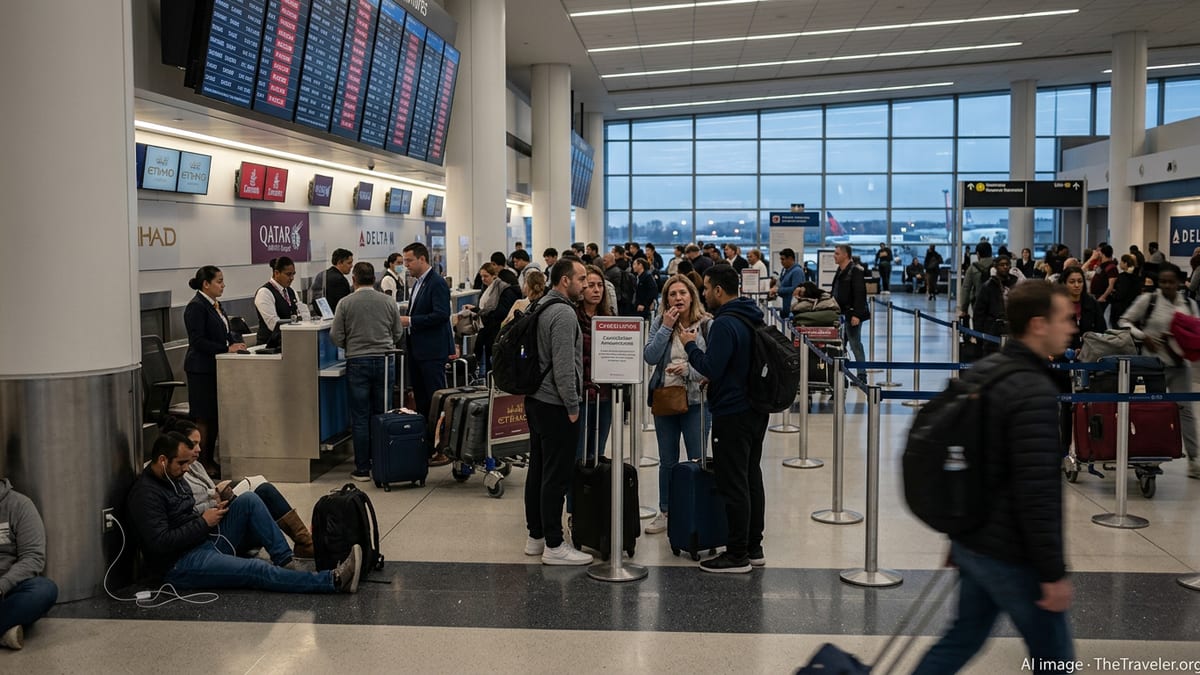
Middle East Conflict Sends Shockwaves Through JFK Schedules
The turmoil follows sweeping airspace restrictions imposed over Iran, Iraq, Israel, Jordan, Lebanon, Bahrain, Kuwait, Qatar, the United Arab Emirates, Oman and Saudi Arabia in recent days, as the regional conflict involving Israel and Iran escalated. With much of this corridor effectively off limits, global airlines have been forced either to suspend flights outright or route aircraft around the affected zone, adding hours to flight times and throwing tightly planned schedules into disarray.
For New York travelers, the impact is being felt most acutely on services connecting JFK to Gulf super-hubs and onward destinations in Asia, Africa and Australasia. Emirates, Etihad and Qatar Airways, which normally funnel thousands of passengers every day through Dubai, Abu Dhabi and Doha, have sharply curtailed operations as their home airspaces remain restricted or only partially reopened on a limited, priority basis.
Analysis from industry data providers shows that Middle Eastern carriers and their codeshare partners have collectively canceled thousands of services since the weekend, with U.S. gateways such as JFK disproportionately affected because they are among the most important long-haul spokes in these global networks. As a result, passengers who began journeys days ago are still stranded in transit, while others are discovering cancellations only upon reaching the airport.
Airlines are issuing rolling travel waivers, allowing customers to rebook, reroute or defer trips without change fees, but the scale of the disruption and uncertainty over how long the airspace restrictions will last mean that seats on alternative routings are increasingly scarce, especially during peak transatlantic and transpacific departure banks.
Flagship Routes to Toronto, Boston, Auckland and Incheon Hit
Among the hardest-hit connections are key long-haul and transborder routes that rely on Gulf hubs or Asia-Pacific overflight rights. Several passengers booked on itineraries linking JFK to Toronto and Boston via Abu Dhabi or Doha reported short-notice cancellations on Wednesday, as Etihad and Qatar Airways struggled to relaunch even a skeletal schedule while their primary corridors over the Gulf remained constrained.
Travelers connecting between North America and Australasia are also facing severe disruption. Services that would typically link JFK to Auckland through Middle Eastern hubs have either been suspended or forced into lengthy diversions, in some cases operating for many hours before being recalled to their origin as flight plans become untenable. That has left U.S. passengers scrambling for scarce seats on alternative routings via Asia or the U.S. West Coast.
Routes touching Seoul’s Incheon hub and other major Northeast Asian gateways are experiencing knock-on delays as European and U.S. airlines reroute around the Middle East, creating congestion in narrower corridors over the Caucasus or southern Mediterranean. While many of these flights do not pass directly over the Gulf, the reallocation of aircraft and crews away from canceled Middle East services is rippling through global networks, tightening capacity and increasing the risk of missed connections for JFK-originating passengers.
Closer to home, leisure routes to Caribbean gateways like San Juan are not directly overflying the conflict zone, but they are still absorbing secondary delays as aircraft and crews arrive late into New York after operating detoured or rescheduled long-haul legs. Airlines have warned that departure boards may change repeatedly throughout the day, and have urged passengers to treat boarding times as indicative rather than fixed.
Delta and Partner Airlines Adjust as Gulf Carriers Scale Back
Delta Air Lines, the largest U.S. carrier at JFK, has already paused some international flying in response to the deteriorating security picture and the strain on regional airspace. The airline recently confirmed that its New York to Tel Aviv service would remain suspended through at least late March, and operational planners are now working to absorb additional pressure created by partners in Europe and the Middle East trimming their schedules.
Codeshare arrangements that normally see Delta and other U.S. airlines sell seats on Emirates, Qatar Airways, Etihad and Gulf Air services have complicated the picture for travelers. Tickets that appear to be operated by a U.S. carrier may in fact rely on an onward segment from a Gulf hub, and when those links are canceled, passengers at JFK can find their entire itinerary invalidated, even if the first leg appears to be operating on time.
Gulf Air and several regional competitors have also reported significant cancellations out of their home bases as they navigate corridor closures and shifting regulatory guidance. Although Gulf Air does not operate its own aircraft into JFK, its network feeds partner airlines and shared itineraries that touch New York, meaning disruptions in Bahrain can reverberate through ticketed journeys that start or end in the United States.
Airport staff at JFK said they were working with airline station managers to consolidate affected passengers, rebook them through remaining open hubs such as London, Paris or Istanbul where possible, and provide hotel and meal vouchers in cases of extended delays. However, with aircraft and crews displaced worldwide, they cautioned that same-day or even next-day alternatives could not be guaranteed for all travelers.
Passengers Face Long Lines, Patchy Information and Difficult Choices
Inside JFK’s international terminals, the disruption has manifested as long queues at ticket counters, crowded seating areas near departure gates, and frequent gate change announcements as airlines try to reshuffle scarce operating slots. Some passengers report receiving multiple schedule changes and cancellation notices within a few hours, making it difficult to know whether to proceed to the airport or remain at home.
Travel advocates say one of the biggest challenges for affected passengers is incomplete or delayed communication. Airline apps and websites have struggled to keep pace with fast-moving operational decisions, particularly overnight in New York as control centers and civil aviation authorities in the Middle East issue new restrictions or partial reopenings. As a result, some travelers are only learning of cancellations when they attempt to check in or clear security.
Families heading to long-planned holidays or reunions have been forced into difficult decisions about whether to reroute via more complex itineraries, accept long layovers in third countries or abandon trips altogether. Business travelers, meanwhile, face missed meetings and conference appearances as previously reliable one-stop connections between North America and the Gulf or Asia become unpredictable.
Consumer groups are urging travelers to document all expenses associated with the disruptions, keep boarding passes and booking confirmations, and carefully review the rebooking and refund policies issued by each carrier. They warn that, while many airlines are offering flexibility because the root cause is a security crisis beyond their control, compensation rules differ widely by jurisdiction and by the point of departure.
What Travelers Through JFK Should Do Next
Aviation specialists recommend that anyone scheduled to travel through JFK on an international itinerary over the coming days, particularly if it involves a connection in the Middle East or South Asia, treat their plans as provisional. Travelers are advised to monitor their booking through airline apps, sign up for text and email alerts, and verify the status of every segment, not just the first departure from New York.
Experts also suggest building in additional buffer time for connections, even on routes that do not pass near the Middle East, as knock-on delays and last-minute aircraft substitutions remain likely while airspace restrictions persist. Where feasible, passengers booking new trips are being encouraged to favor itineraries that avoid over-reliance on a single Gulf hub, in case closures are extended or reinstated with little notice.
For those already at JFK facing cancellations, the priority is to contact the airline that issued the ticket rather than only the operating carrier at the gate. Ticketing agents have the broadest view of available alternatives across alliances and partner networks, including routings that may involve a different European or Asian hub or a domestic positioning flight to another U.S. gateway with spare capacity.
As the situation in the Middle East and the associated airspace restrictions continue to evolve day by day, aviation authorities and airlines have cautioned that global schedules will likely remain fragile. For New York’s flagship international airport, that means more days of crowded terminals, anxious passengers and departure boards filled with red cancellations before a stable pattern of long-haul flying can resume.