

More news on this day
Escalating conflict across the Middle East is eroding the foundations of global mobility, with industry estimates indicating that travel and tourism in and through the region are now losing roughly €600 million in international visitor spending every day, reshaping air routes, prices and destination strategies worldwide.
Get the latest news straight to your inbox!
A Strategic Hub Turned Bottleneck
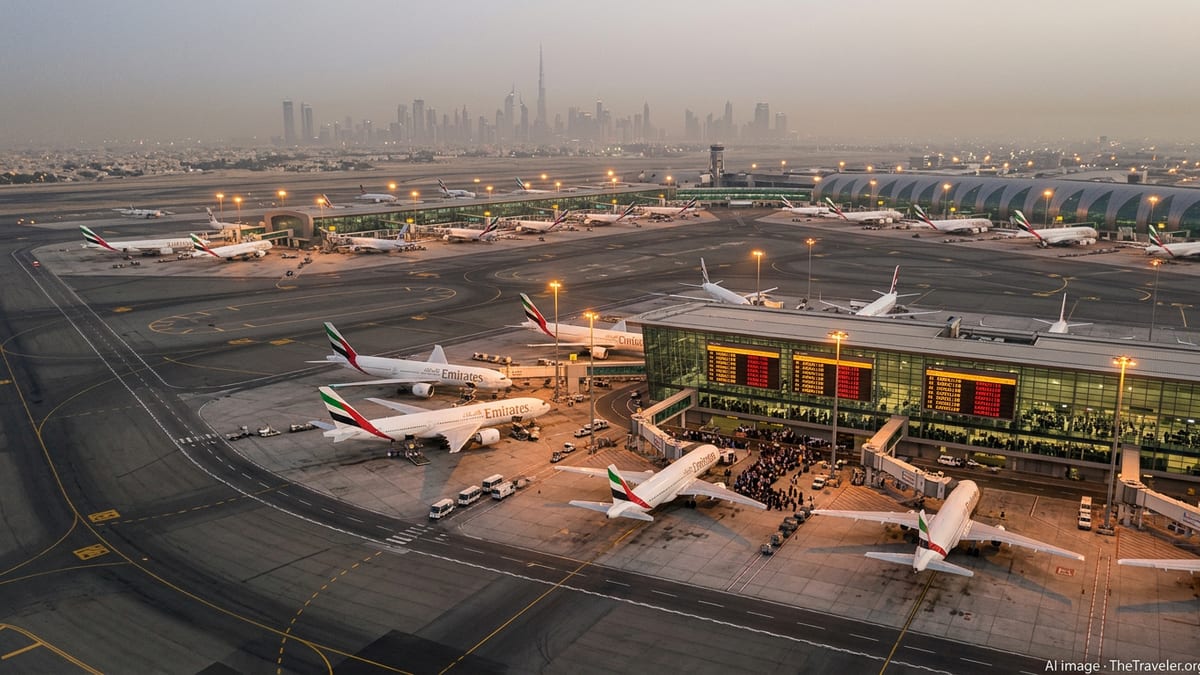
For two decades, Gulf hubs such as Dubai, Abu Dhabi and Doha have been the connective tissue of long-haul travel, linking Europe, Asia and Africa through dense transit networks. Publicly available data from aviation analytics firms shows that this corridor routinely handled around one in seven international air passengers before the latest surge in regional violence. Those same chokepoints are now among the most disrupted airspaces on the planet.
Following the joint United States and Israeli strikes on Iran and subsequent retaliatory attacks in early March 2026, airspace closures and missile threats forced the suspension or severe curtailment of commercial flights across much of the Gulf. Reports from flight-tracking platforms and airline advisories describe an unprecedented wave of cancellations, with tens of thousands of services scrubbed or rerouted within days and hundreds of thousands of travelers stranded from Dubai to Bangkok as connections collapsed.
According to recent analysis cited by industry publications, the World Travel & Tourism Council now estimates that these disruptions are stripping around 600 million euros a day in international visitor spending from the broader Middle East travel economy. The figure reflects lost expenditure by tourists and transit passengers alike, from hotel nights and restaurant bills to duty-free purchases and connecting flights that no longer touch the region.
This daily deficit is not confined to conflict states. Gulf economies that have invested heavily in positioning themselves as safe, high-end transit and leisure hubs are seeing hotel occupancy soften, forward bookings shrink and high-yield connecting traffic divert to alternative routes, undermining one of their most dynamic non-oil growth engines.
Rerouted Skies, Rising Costs
The erosion of demand is compounded by a structural rerouting of the skies. Airlines that once relied on efficient Middle Eastern corridors are increasingly diverting long-haul services around unstable airspace, stitching together longer journeys through Central Asia, North Africa or the far southern route via the Cape of Good Hope. These detours add hours to flight times and significantly increase fuel burn at a moment when jet fuel costs are already climbing in response to supply fears.
Recent coverage by global newswires details how war-related risks in the Strait of Hormuz and the Red Sea are feeding into higher energy prices, pushing up airline operating costs on already thin-margin routes. Longer routings mean more crew hours, more maintenance exposure and reduced aircraft utilization, all of which translate into higher fares. Analysts warn that for price-sensitive travellers, particularly in emerging markets, those increases could be enough to defer or cancel international trips altogether.
Industry forecasts suggest that the impact will be felt unevenly. Premium routes with strong corporate demand may absorb surcharges, while leisure-heavy segments between Europe and Asia are more vulnerable. Tour operators in Asia are already reporting cancellations of itineraries that relied on Gulf transit points, and European carriers have begun trimming capacity on affected corridors, replacing widebodies with smaller aircraft or consolidating frequencies to manage demand volatility.
The knock-on effects stretch into cargo and logistics. With passenger bellies handling a substantial share of global air freight, the loss of Middle Eastern capacity tightens space for high-value goods and pushes shippers toward costlier alternatives. That, in turn, feeds inflation in consumer markets and erodes disposable income that might otherwise be spent on travel.
Tourism Flows Rewired Across Continents
Tourism demand rarely disappears; it moves. Travel research firms tracking booking patterns indicate that many would-be visitors to the Middle East are delaying travel, while others are retargeting their plans toward destinations perceived as more stable, from Mediterranean Europe to Southeast Asia. Spanish tourism analysts, for example, have pointed to early signs that concern about Gulf instability is nudging a portion of long-haul travellers to reroute via or stay longer in Spain and other European gateways.
However, this diversion effect has clear limits. The lost €600 million in daily spending is rooted largely in high-yield transit and city-break traffic that is difficult to replicate elsewhere in the short term. Ultra-connected hubs in the Gulf generated revenue not only from tourists whose final destination was the region, but from millions of travellers who spent a night in a hotel, dined in an airport city or shopped during layovers. When those passengers bypass the region entirely, that ancillary spending evaporates rather than automatically reappearing in another country.
In Asia, published coverage notes that outbound tour operators are reconfiguring products to avoid Middle Eastern stopovers, steering customers onto more expensive non-stop or multi-stop itineraries that skirt the conflict zone. For destinations heavily reliant on Middle Eastern carriers for connectivity, such as island resorts in the Indian Ocean, the loss of direct or one-stop links risks a tangible decline in visitor numbers just as they were recovering from the pandemic-era collapse.
At the same time, several North African and Eastern Mediterranean countries are attempting to capitalize on the shake-up by marketing themselves as alternative gateways between continents. Their ability to absorb displaced flows remains constrained by airport capacity, airline networks and security perceptions, leaving a substantial portion of disrupted demand effectively stuck on the ground.
From Regional Crisis to Global Travel Risk Premium
The immediate shock of cancellations and stranded travelers is only one dimension of the geopolitical erosion now facing global travel. Risk consultancies and multilateral agencies have been documenting a broader “risk premium” attaching to mobility across the Middle East and its periphery, reflected in surging war-risk insurance for airlines, higher security expenditures at airports and ports, and more conservative route planning by carriers.
These additional costs reverberate through the travel value chain. Insurers respond to perceived escalation by revising coverage terms, which in turn shapes airline decisions about which air corridors remain viable. Cruise operators have curtailed calls in the Red Sea and Persian Gulf, rerouting ships to less volatile waters and bypassing ports that had invested heavily in cruise terminals and shore excursion infrastructure.
Such adjustments are also affecting the tourism industries of neighboring countries that are not directly involved in the fighting. Travel advisories, even when narrowly worded, tend to dampen demand across wider regions, particularly among long-haul markets cautious about perceived proximity to conflict. Data compiled by tourism economists in early March suggests that projected arrivals to Middle Eastern destinations in 2026 could fall by double digits compared with pre-war expectations, reversing several years of robust growth.
Crucially, the risk premium is not solely about physical danger. Travellers and businesses are increasingly weighing the likelihood of last-minute disruption, from closed airspace to stranded aircraft. That uncertainty erodes confidence, prompting corporations to curtail discretionary travel and families to avoid itineraries that depend on politically fragile transit points, reinforcing the cycle of lost revenue.
Searching for Resilience in a Fragmented Map
The experience of recent crises, from the pandemic to earlier conflicts, shows that tourism can rebound quickly once conditions stabilize. Analysts observing past episodes in the Middle East note that international arrivals and airline capacity often recover within months of ceasefires or de-escalation, particularly when governments and private sectors coordinate aggressive marketing campaigns and temporary incentives.
Yet the current wave of instability is layered on top of enduring structural vulnerabilities. The Red Sea shipping crisis, recurring threats to the Strait of Hormuz and persistent tensions in the Levant have combined to expose how heavily global travel depends on a relatively narrow set of maritime and aerial corridors. Each new incident reinforces airlines’ and investors’ perception that concentration in a few regional hubs carries systemic risk.
In response, some carriers are accelerating diversification strategies, building up secondary hubs outside the Middle East and negotiating fresh bilateral agreements to open new overflight options. Destination managers in Europe, Asia and Africa are simultaneously reassessing reliance on any single transit region, exploring more direct air links and regional tourism corridors that reduce exposure to geopolitical flashpoints.
For now, though, the arithmetic is stark. As long as missiles, drone strikes and shipping disruptions continue to reshape the map of Middle Eastern airspace and sea lanes, the global travel economy will be absorbing a multi-hundred-million-euro daily hit in foregone spending. That deficit reflects not only the immediate human cost of disrupted holidays and business trips, but a deeper, slow-burning erosion of confidence in the reliability of global mobility itself.