


More news on this day
Passengers across Saudi Arabia, the United Arab Emirates, and Oman are facing another difficult travel day as publicly available flight-tracking data points to at least 48 cancellations and 68 significant delays affecting services operated by Royal Jordanian, Emirates, Saudia, FlyDubai, and Oman Air across major Gulf hubs.
Get the latest news straight to your inbox!
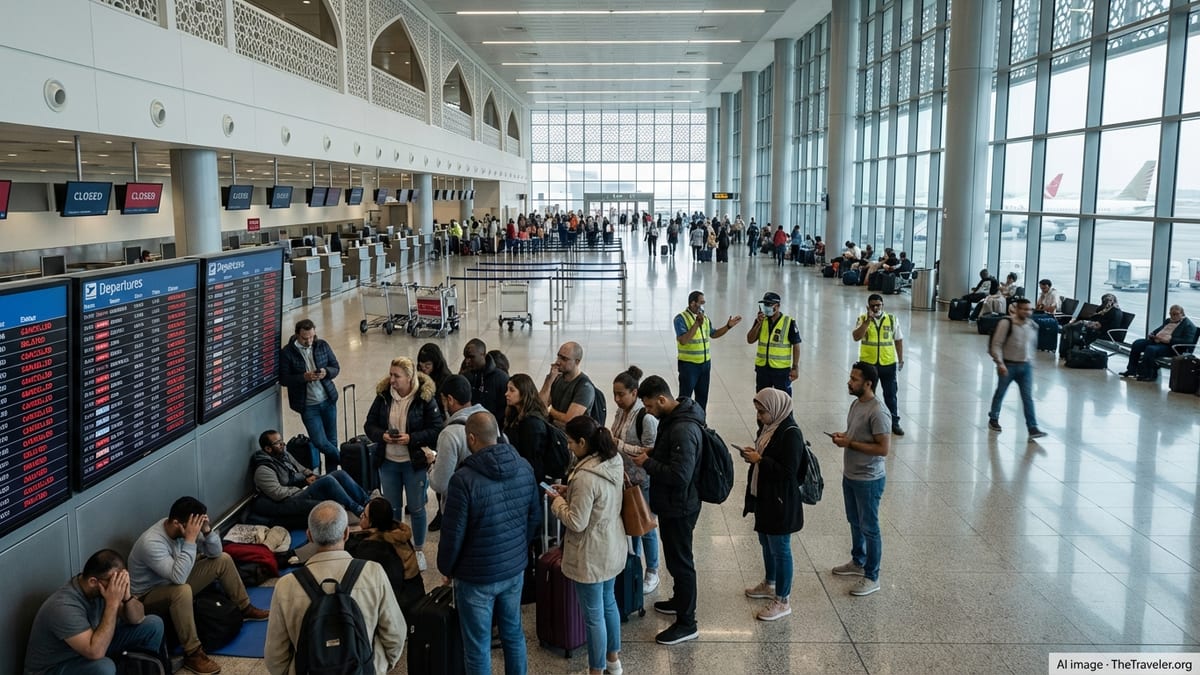
Disruptions Spread Across Key Airports in Saudi Arabia, UAE, and Oman
Operational data from airline portals and independent tracking platforms indicates that the latest wave of disruption is concentrated on major gateways including Dubai International and Muscat International, as well as key Saudi Arabian airports at Riyadh, Jeddah, and Dammam. The pattern mirrors earlier episodes in late winter and spring, when rolling airspace restrictions and short-notice schedule changes generated hundreds of cancellations and delays across the wider region.
Recent industry analyses describe a system still under strain, with airspace restrictions over parts of the Gulf and surrounding countries forcing airlines to adjust routings and crew plans. Each additional minute of flight time increases pressure on aircraft rotations and crew duty limits, which can cascade into cancellations and extended ground holds when resources are no longer in the right place at the right time.
In this latest instance, a mix of regional airspace constraints, congestion at overburdened hubs, and knock-on effects from earlier disruptions is contributing to the 48 cancellations and 68 delays being reported for Royal Jordanian, Emirates, Saudia, FlyDubai, and Oman Air. While many flights are still operating, the uneven pattern means that some routes and departure banks are heavily affected while others run close to schedule.
Publicly available operational notices from airlines and logistics providers also point to intermittent suspensions or reductions in services touching the UAE and Oman, alongside warnings that conditions in Saudi Arabia remain fluid. These advisories consistently stress that schedules are subject to change at short notice and that travelers should not assume a flight is operating until it has been specifically confirmed.
How Major Gulf Carriers Are Adjusting Schedules
Publicly available information on network changes suggests that Emirates and FlyDubai, both heavily dependent on Dubai International as a transfer hub, continue to trim frequencies on some routes, consolidate lighter services, and reroute aircraft to accommodate longer flight paths around restricted airspace. This strategy can reduce outright cancellations at the cost of longer journey times and busier individual departures.
Saudia, operating from Riyadh, Jeddah, and Dammam, has also been adjusting schedules to reflect fluctuating access to regional airspace. Past advisories have highlighted suspensions of certain regional links and frequency reductions on others, and similar measures are again visible in real-time departure boards and tracking data. These adjustments can leave some passengers stranded at intermediate points when onward connections no longer line up with revised arrival times.
Royal Jordanian and Oman Air, both with important roles in regional connectivity, are likewise affected. Royal Jordanian has previously published broad flexibility policies for travelers impacted by cancellations and extended disruptions tied to regional unrest, and those frameworks continue to apply to newly disrupted itineraries. Oman Air has been highlighted in recent supply chain and travel advisories as operating within a constrained environment in and around Muscat, where rerouted traffic and schedule changes elsewhere in the Gulf feed into local congestion.
The upshot for passengers is a patchwork of schedule changes: some flights are cancelled outright, others are merged or retimed, and many are operating with extended block times. This complexity means that assumptions based on historic schedules are unreliable, even for flights that traditionally operate multiple times per day.
What Stranded Travelers Should Do Right Now
For travelers already at the airport and facing an unexpected cancellation or long delay, publicly available guidance from passenger rights organizations and travel insurers emphasizes three immediate steps. First, verify the real-time status of the specific flight using the airline’s official channels and reputable flight-tracking tools, rather than relying on printed boarding passes or older emails. In the current environment, overnight and even same-day schedule changes are common.
Second, travelers are advised to initiate rebooking as quickly as possible, either through the airline’s app and website or, if purchased through a third party, via the relevant travel agency or booking platform. In periods of mass disruption, rebooking inventory on alternative departures and routings can disappear within minutes, especially on high-demand trunk routes between Gulf hubs and major intercontinental destinations.
Third, passengers should keep careful records of boarding passes, booking confirmations, and any written communication regarding delays or cancellations. Consumer advocacy groups and compensation specialists note that this documentation can be important when later pursuing refunds, credits, or statutory compensation where applicable. Even when compensation rules differ by jurisdiction and ticket type, a detailed paper trail can significantly strengthen any subsequent claim.
Several airlines serving the region, including Royal Jordanian and other major carriers, maintain ongoing travel waivers and flexibility policies related to Middle East unrest and airspace disruption. These policies may allow affected passengers to change travel dates, alter routings, or request vouchers or refunds without standard penalties, provided certain conditions are met. Checking the latest version of these policies before making changes can help travelers choose the most advantageous option.
Understanding Your Rights on Cancellations and Long Delays
Passenger protections vary widely depending on where a journey begins, which carrier operates the flight, and which legal regime applies. Flights departing from airports in the European Union or the United Kingdom, or operated by EU and UK carriers, can fall under specific compensation regulations in cases of long delay, short-notice cancellation, or denied boarding, although exemptions may apply when disruptions are linked to extraordinary circumstances such as sudden airspace closures.
In the Gulf, consumer protection frameworks exist but are generally less standardized across borders than in the EU. National civil aviation regulators in countries such as Saudi Arabia and the United Arab Emirates publish rules that require airlines to provide certain forms of care in the event of significant disruption, including meals, accommodation, or rebooking in specific situations. However, the precise entitlements can depend on the length of the delay, the cause of the disruption, and whether a passenger is on a domestic or international itinerary.
Specialist organizations that track passenger rights recommend that travelers review both the conditions of carriage for their specific airline and any applicable national regulations for the countries in their itinerary. For multi-leg journeys involving code shares or separate tickets, responsibility for assistance can be complex, particularly when a disrupted sector is operated by a different carrier from the one that sold the original ticket.
Travel insurance can provide an additional layer of protection, but only if the policy was purchased before the disruptive event became a known issue. Many comprehensive policies offer trip interruption coverage that may reimburse additional accommodation, meals, and rebooking costs caused by extended delays or cancellations, subject to policy limits and exclusions. Travelers are encouraged to keep receipts and submit claims promptly once they return home or reach their final destination.
Planning Upcoming Trips Through the Region
For travelers with upcoming itineraries involving Saudi Arabia, the UAE, or Oman, publicly available analysis of current conditions suggests that disruption risk remains elevated compared with long-term historical norms. Airspace restrictions in parts of the wider Middle East continue to force detours, increase fuel burn, and compress operational margins, raising the likelihood of future cancellations and delays even when local weather and airport conditions are otherwise favorable.
Experts in route planning and aviation risk management emphasize the value of flexibility in this environment. Where possible, travelers may wish to build longer connection times between flights, avoid separate tickets on critical connections, and consider travel dates with multiple daily frequencies rather than once-daily services. Selecting earlier flights in the day can also reduce the chances of being caught in a rolling wave of delays that worsens as crew and aircraft fall further behind schedule.
Monitoring conditions in the days leading up to departure is equally important. Travel advisories from airlines, consular authorities, and reputable aviation-tracking services can change quickly as new information emerges about airspace access and airport capacity. Subscribing to flight alerts and keeping airline apps updated on mobile devices can provide early warning of schedule changes and open up more rebooking options.
While the current tally of 48 cancellations and 68 delays affecting Royal Jordanian, Emirates, Saudia, FlyDubai, and Oman Air represents only a fraction of total daily movements across the region, the impact on individual travelers can be severe. Passengers who stay informed, understand their options, and act quickly when disruption hits are better positioned to secure alternate arrangements and reduce the stress of an already challenging travel landscape.