

More news on this day
Middle East air travel disruptions intensified this week as Kuwait International, Sharjah International, Cairo International, Hamad International and Dubai International reported dozens of cancellations and delays, underscoring how fragile schedules remain across a region that serves as a critical bridge between Europe, Asia and Africa.
Get the latest news straight to your inbox!
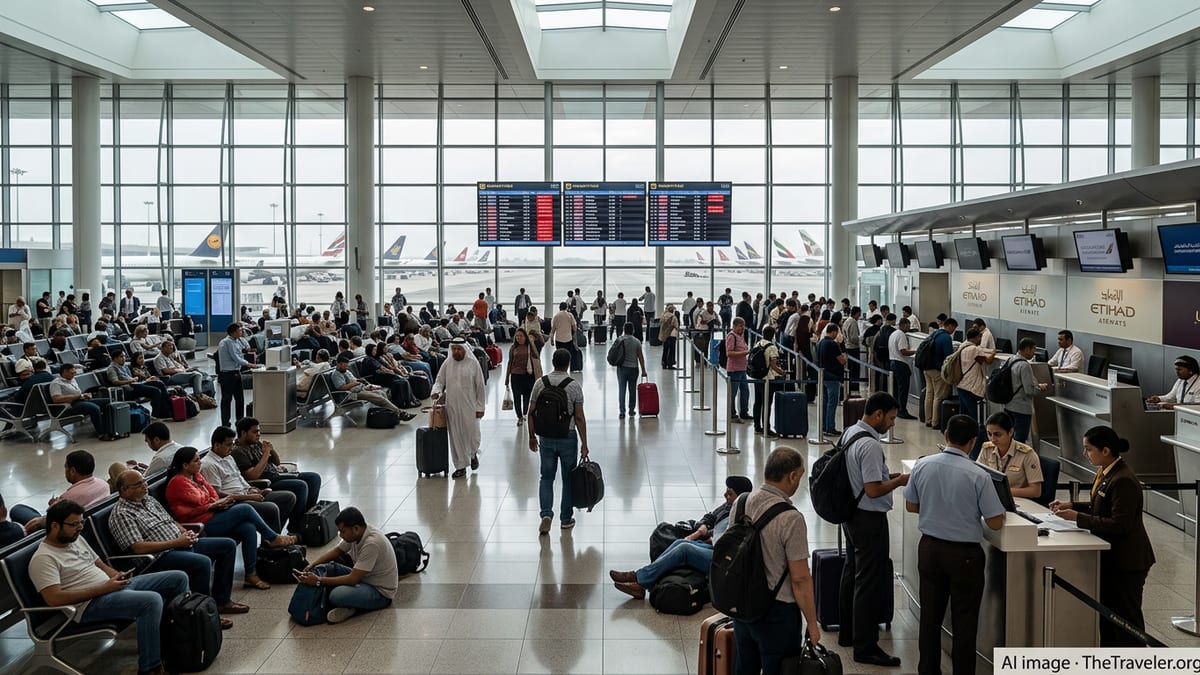
New Wave of Cancellations at Strategic Gulf Gateways
Published flight-status data and regional aviation updates indicate that a fresh wave of cancellations and delays has swept across major hubs in Kuwait, the United Arab Emirates, Qatar and Egypt, with more than 60 flights cancelled and close to 100 delayed in a single 24-hour window. The pattern reflects a broader instability that has affected airline timetables since the first quarter of 2026, when regional tensions and airspace restrictions sharply curtailed traffic through key Middle East corridors.
Kuwait International Airport has experienced repeated interruptions this year, with earlier security incidents and temporary closures forcing airlines to trim or suspend services and then rebuild them gradually. While passenger operations have partly resumed, local trackers and passenger reports show that cancellations remain frequent, especially on regional routes that rely on overflight permissions and tightly timed connections.
Dubai International and nearby Sharjah International, which together handle tens of millions of passengers annually, are continuing to operate but on constrained schedules compared with typical summer peaks. Publicly available timetables and airline advisories show that several foreign carriers still have Dubai and broader UAE routes suspended or reduced, contributing to rolling disruption even on days when local conditions are calm.
Hamad International in Doha and Cairo International in Egypt have also seen knock-on effects as airlines rework routing and crew plans around changing risk assessments and fuel costs. The result is a patchwork of cancellations, short-notice delays and equipment changes that can shift significantly from one day to the next.
Conflict, Airspace Restrictions and High Costs Drive Disruption
The current instability builds on months of conflict-linked airspace closures, drone and missile incidents and wider security advisories that have affected civilian aviation across the Gulf and Levant. Analysts note that earlier closures of Kuwaiti and Qatari airspace, temporary suspensions of operations in parts of the UAE, and reroutings around sensitive corridors have all reduced the amount of usable sky for commercial traffic.
In parallel, airlines are facing elevated fuel prices and insurance costs on routes transiting the wider Middle East. Recent industry coverage from India and the Gulf shows several carriers trimming schedules or consolidating flights between June and August 2026, citing the combined impact of operating costs and regional uncertainty. Even where airports are open, this has translated into thinner timetables and a lower margin for recovery when disruptions occur.
The cumulative effect is particularly acute at transfer-heavy hubs such as Dubai, Doha and Kuwait City, which traditionally rely on smooth, high-frequency operations to funnel passengers between Europe, Asia, Africa and Australasia. When a bank of flights is cancelled or delayed, missed connections cascade across networks, amplifying the impact well beyond the region.
Airports and airlines are gradually restoring capacity as ceasefire arrangements and diplomatic efforts stabilize parts of the airspace map, but recovery remains uneven. Travel advisories published in recent weeks still warn of possible sudden changes to routing and schedules for flights touching or overflying the region.
Passengers Face Missed Connections and Sudden Rerouting
For travelers, the latest cancellations and delays at Kuwait International, Sharjah, Cairo, Doha and Dubai translate into missed connections, extended layovers and, in some cases, forced diversions through alternative hubs. Publicly shared passenger experiences show itineraries being rebooked via secondary airports in Saudi Arabia and Oman, or shifted in date altogether, as carriers attempt to keep customers moving while respecting route constraints.
In Kuwait, travelers have reported last-minute messages notifying them that flights were cancelled or rescheduled as airlines adjusted to changing slot allocations and terminal availability. Some flights that had been listed as operating during the early phases of the airport’s reopening have since been removed from schedules, creating uncertainty for passengers whose journeys depend on tight connections.
Across the United Arab Emirates, routine advice circulated by airlines and travel forums now emphasizes checking flight status repeatedly in the 24 hours before departure and monitoring airline apps for automatic rebooking offers, vouchers or refunds. With some international routes to and from Dubai still suspended by foreign carriers, passengers are often redirected through alternative European or Asian gateways, extending overall journey times.
At Hamad International and Cairo International, where flight banks are closely timed around regional and long-haul departures, even modest delays can trigger re-accommodation challenges. Travelers on multi-leg itineraries may find their onward segments sold out for several days after an initial disruption, pushing airlines to negotiate interline options or offer rerouting through different continents.
Knock-On Effects for Global Networks and Tourism
The disruptions at these Middle Eastern airports are being felt well beyond the region, affecting tourism flows, business travel and cargo movements across three continents. Industry data and travel advisories highlight that cancellations and delays centered on Kuwait, Dubai, Doha, Sharjah and Cairo are distorting schedules to and from India, Southeast Asia, East Africa and parts of Europe.
Regions that depend heavily on Gulf carriers for connectivity, such as South Asian cities with limited nonstop long-haul options, have seen certain services temporarily suspended or reduced in frequency. This has raised fares on remaining routes and made last-minute travel more difficult to secure, particularly during the busy summer period.
Tourism boards and hospitality operators in destination markets are monitoring the situation closely, as any sustained reduction in capacity from Middle East hubs can impact hotel occupancy and seasonal bookings. Some countries are working with airlines to promote alternative routings or to add capacity from European or domestic carriers where feasible, but the speed of change in the regional aviation picture makes planning complex.
Cargo operators are also contending with changing routings and longer flight times, especially for high-value or time-sensitive goods that traditionally move through Gulf hubs. While freighter networks offer some flexibility, the combination of rerouted passenger flights and regional port constraints has introduced new bottlenecks for logistics planners.
Travelers Urged to Plan Conservatively Amid Ongoing Volatility
Given the scale and unpredictability of the disruption, aviation analysts and travel risk specialists are advising passengers to build additional margin into any itinerary that touches the Middle East in the coming weeks. Publicly available guidance from security consultancies and travel management firms recommends avoiding same-day long-haul connections where possible and considering overnight stops to reduce the risk of missed onward flights.
Travelers are also being encouraged to review ticket conditions before purchase, paying particular attention to change and cancellation rules, and to consider booking directly with airlines operating their flights rather than through multiple intermediaries. In the current environment, flexible tickets and clear rebooking options can be more valuable than marginal savings on restricted fares.
For those with imminent travel through Kuwait, the United Arab Emirates, Qatar or Egypt, monitoring both airline communications and airport announcements remains essential. With schedules still subject to rapid adjustment, even passengers whose flights appear confirmed several days out may encounter changes closer to departure.
Although there are signs that overall regional capacity is slowly recovering compared with the height of the crisis earlier in 2026, the latest cluster of cancellations and delays at Kuwait International, Sharjah International, Cairo International, Hamad International and Dubai International indicates that Middle East air travel remains in a volatile, transitional phase rather than a full return to normal operations.