


More news on this day
A large-scale recovery operation is under way on the Midland Main Line near Bedford after a fatal collision between two passenger trains killed a driver and left around 100 people injured, forcing one of Britain’s key intercity corridors to remain severely disrupted.
Get the latest news straight to your inbox!
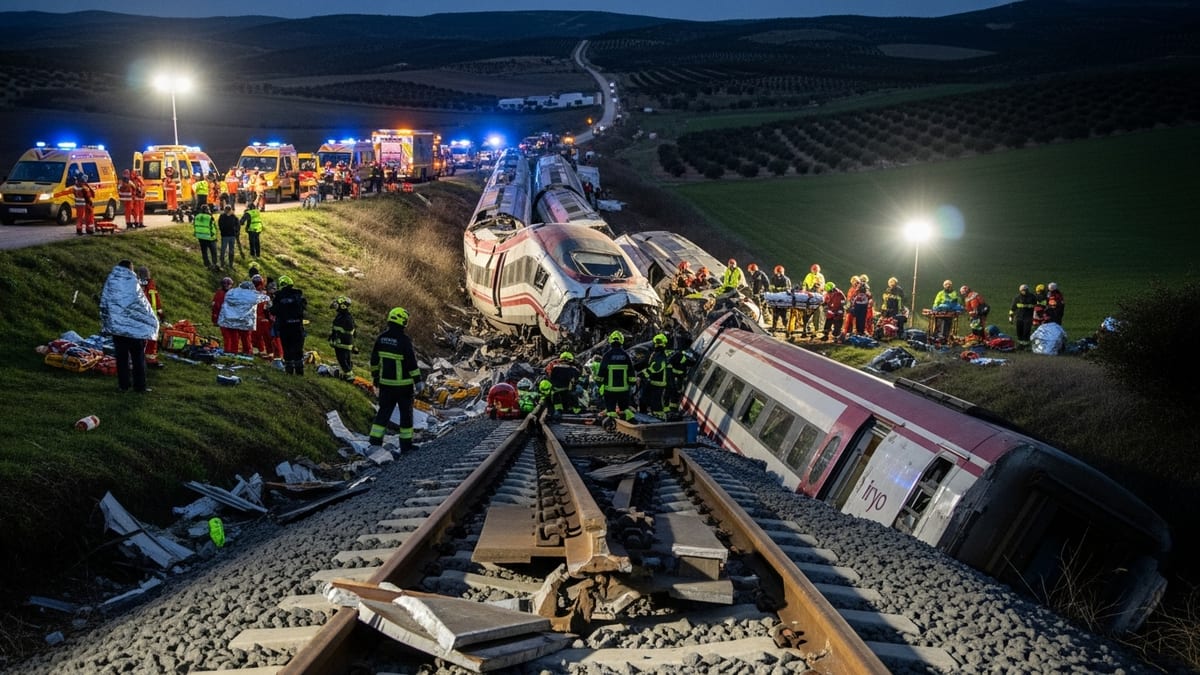
Specialist teams begin delicate recovery at crash site
Reports indicate that engineers, crane crews and rail incident specialists have begun the complex task of stabilising and removing the two damaged East Midlands Railway trains involved in Friday’s rear-end collision south of Bedford. Images published in UK and international outlets show one London-bound service embedded in the rear of another on the same line, with multiple carriages visibly buckled but largely upright.
According to published coverage, initial priorities over the weekend focused on searching and securing all carriages, making the site safe from fire or electrical risks, and protecting evidence for investigators. With those emergency phases now largely completed, attention has shifted to heavy recovery work that will allow the line to be repaired and eventually reopened.
Rail infrastructure managers are reported to be working with specialist contractors to plan how the two trains can be separated and lifted without causing further structural damage. The presence of overhead power lines, soft ground beside the embankment and the close spacing of the tracks are all factors understood to be adding to the technical difficulty.
Recovery planners are also being guided by the need to preserve key components for examination, including braking equipment, onboard data recorders and signalling interfaces. Publicly available information suggests that several vehicles may have to be moved in stages to ensure that these systems remain intact for analysis.
Investigation focuses on signals, train protection and speed
Accident investigators have opened a formal inquiry into how two southbound services, both heading for London St Pancras, ended up on the same track section at the same time. Coverage in British and international media notes that early attention is centring on signalling around Bedford South junction and on how the trains’ protection systems operated in the run-up to the impact.
Rail commentators point out that the Midland Main Line is equipped with multiple layers of safety technology, including lineside colour-light signals and train-stop systems on selected high-risk signals. Discussion in specialist rail forums and industry analysis pieces highlights questions about whether any signal was passed at danger, whether equipment was working as designed, and how quickly the following train was travelling when it struck the rear of the first.
Published reports also describe the collision as a near straight-line impact, with one train running into the back of a stationary or slow-moving service. That type of crash can concentrate forces at the front and rear of trains and place extreme loads on couplers and underframes, which investigators will now examine to assess how well modern rolling stock structures and energy-absorbing zones performed.
The Rail Accident Investigation Branch is expected to produce an initial update outlining key facts from on-train data, signal logs and radio recordings before a more detailed interim report. Safety specialists following the case suggest that recommendations could touch on signal protection, onboard systems and operational rules for running closely timed services on busy commuter and intercity corridors.
Passenger disruption spreads across Midland Main Line and beyond
The crash has caused significant disruption to rail travel through Bedford, a town that sits on a major axis linking London with the East Midlands and, via connections, northern England and Scotland. According to rail operator statements cited in news reports, services between London St Pancras, Corby and Nottingham remain heavily curtailed while the recovery operation and track repairs continue.
Replacement buses and long-distance diversions are being used to keep passengers moving, with some intercity trains reportedly rerouted via alternative lines that add considerable journey time. Commuters who normally rely on fast services from intermediate stations north of Luton are facing slower journeys and revised timetables, with operators advising travellers to check schedules frequently.
Travel coverage notes that the disruption is also affecting connections onto cross-country routes and international journeys booked via London, as some passengers miss onward trains from St Pancras and other London terminals. Tourism and business travel to and from key cities on the Midland Main Line, including Leicester, Derby and Nottingham, is being reshaped around altered departure times and lower capacity.
Rail planners are working to introduce limited through services where possible, but the need to keep staff, investigators and recovery teams safe at the site is restricting how much traffic can pass through the affected section. Industry observers suggest that near-normal timetables may not return for several days, particularly during peak commuting periods.
Human impact and support for injured passengers
Published reports state that the driver of the rear train died at the scene and that more than 80 passengers were taken to hospital, with around 28 still receiving treatment over the weekend and several in critical condition. Local and regional hospitals along the Bedfordshire corridor activated major incident plans as casualties arrived with fractures, head injuries and other trauma.
Travel and commuter-focused media note that many of those on board were end-of-week travellers, including business passengers returning from London, leisure travellers and people heading to or from Luton Airport. Social media accounts and interviews compiled by broadcasters describe chaotic scenes inside the carriages immediately after the impact, with smoke, broken glass and passengers assisting one another before emergency crews arrived.
Rail operators have indicated through public statements that teams are working to provide practical and emotional support to those affected, including help with compensation claims, replacement travel and access to counselling services. Advocacy groups for rail users are using the incident to highlight the importance of clear information, swift refunds and long-term support for passengers who may face lengthy recoveries.
Community services in the Bedford area are also reported to be offering assistance to families of the injured and to local residents who witnessed the aftermath from nearby roads and paths. For many regular users of the route, the collision is prompting renewed anxiety about safety, even as statistics show that serious rail accidents in the United Kingdom remain rare.
Safety lessons and implications for future rail travel
While the causes of the crash have not yet been formally established, rail safety experts cited in print and broadcast coverage argue that the event is likely to have wide-reaching implications for future investment and operating practices. Discussions are already under way about the role of modern signalling, automatic train protection systems and the prioritisation of safety upgrades on busy main lines.
Some analysis pieces suggest that the Bedford collision may accelerate plans to roll out advanced digital signalling on sections of the Midland Main Line, replacing or supplementing traditional lineside signals with in-cab information and continuous speed supervision. Advocates of such systems argue that they can reduce the risk of human error in congested corridors where trains run at high frequency and speed.
The crash is also renewing scrutiny of crashworthiness standards and emergency preparedness on modern passenger trains. Commentators are examining how well interior fittings, doors and lighting withstood the impact, and how crews and passengers were able to evacuate. Any findings on these elements may influence future design requirements and staff training across the network.
For travellers, the incident underscores both the resilience and vulnerabilities of a rail system that carries large numbers of people every day. As recovery teams work to clear the line and investigators piece together a second-by-second picture of what happened near Bedford, many regular passengers will be watching closely for assurances that the lessons learned will lead to tangible safety improvements on one of the country’s most important routes.