


More news on this day
Network Rail is preparing a complex recovery operation to remove two badly damaged London-bound trains and repair key infrastructure after a fatal collision near Bedford that continues to disrupt journeys into the capital.
Get the latest news straight to your inbox!
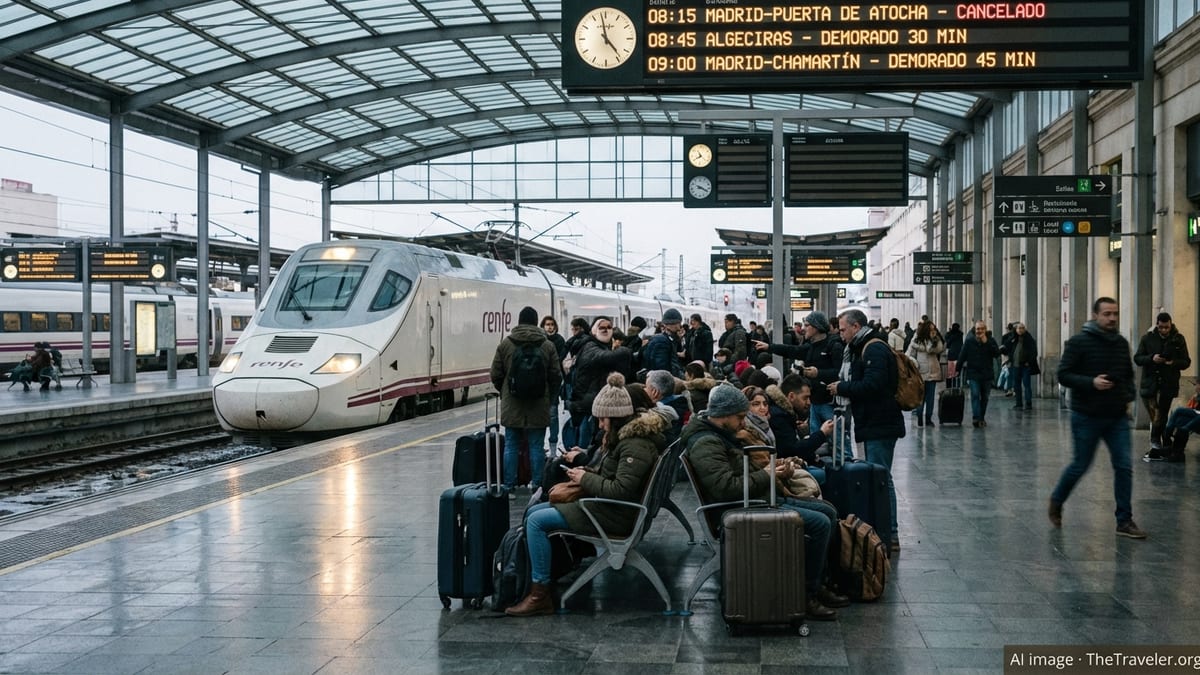
Route remains severely disrupted north of London
Rail services on the Midland Main Line between Bedford and London St Pancras remain severely disrupted as Network Rail prepares to move the wrecked trains off the tracks and begin detailed repairs. Publicly available information indicates that two London-bound passenger services collided south of Bedford on the afternoon of 19 June, killing one driver and injuring dozens of passengers.
Operators have warned that journey plans into London remain uncertain, with reports indicating that East Midlands Railway services to and from St Pancras are curtailed or diverted and some Thameslink services are also affected. Replacement buses and altered stopping patterns are being used to maintain a limited link into the capital while the line remains partially blocked.
Network Rail has described the forthcoming recovery as a complex task, involving not just removal of the two damaged trains but a full assessment of track, ballast, signalling and overhead line equipment in the crash area. The company has indicated that the line will only reopen fully once engineers are satisfied that the infrastructure is safe for normal operations.
Focus turns from emergency response to engineering recovery
In the days immediately after the collision, the priority was stabilising the scene and supporting emergency services as they evacuated injured passengers from the carriages. Published coverage shows that many of those on board were treated for cuts, fractures and concussion, with a number remaining in critical condition in hospital over the weekend.
With the initial emergency phase now largely complete, attention is shifting to technical recovery. Network Rail specialist engineering teams are being brought in to determine how to safely separate and remove the two interlocked trains, one of which appears to have run into the rear of the other at speed. Images from the scene show significant deformation of several coaches and at least one vehicle off the rails.
Heavy lifting equipment and rail cranes are expected to be deployed once investigators give permission for the rolling stock to be moved. Engineers will need to work methodically to avoid further damage to the vehicles or to the track formation beneath them, a process that is likely to take several days even before detailed infrastructure repairs can begin.
Investigators examine signalling and operational factors
Alongside recovery preparations, specialist investigators are continuing to examine what led to two passenger services occupying the same stretch of line. Publicly available information indicates that the Rail Accident Investigation Branch and British Transport Police are gathering data from onboard recorders, signalling logs and radio communications as they build a detailed timeline of events.
Technical teams are expected to review the performance of lineside signals, any train protection systems in use on the route and the behaviour of the trains in the minutes before impact. Weather and visibility at the time of the crash, as well as recent maintenance or engineering work in the area, are also likely to form part of the investigation.
According to rail industry commentary, investigators will pay particular attention to how traffic was being regulated on the busy north–south corridor, where fast intercity and commuter services share limited capacity into central London. Any interim safety recommendations that emerge could influence how services are signalled and managed on similar approaches to the capital.
Passengers face extended disruption as route reopens in stages
Travelers heading between the East Midlands and London are being urged to check journey planners closely, as operators adapt timetables around the blocked section. Public information channels show that some long-distance services are terminating short of London, with passengers asked to transfer to alternative routes or onward connections where capacity allows.
The constrained network is likely to mean longer journey times, crowded trains and short-notice changes over the coming days. Transport planners expect that Network Rail will reopen the route in stages once temporary speed restrictions and safety checks are in place, which may allow a limited number of trains through before full capacity is restored.
For tourism and business travel into London, the crash adds further pressure to a rail system already managing routine summer engineering work. Visitors are being advised to allow extra time, consider flexible tickets and, where practical, route via alternative main lines into the capital while the Bedford corridor is partially out of action.
Safety record under scrutiny as industry awaits answers
The Bedford collision has prompted renewed scrutiny of mainline rail safety near London, a region that typically handles dense flows of commuter and intercity traffic. While Britain’s rail network is often highlighted for having a relatively strong safety record in international comparisons, the scale of injuries in this incident has raised questions among passenger groups and rail commentators.
Published analysis notes that previous investigations into serious crashes have frequently led to changes in signalling practice, driver training, maintenance regimes and the rollout of additional automatic protection systems. Many observers are now watching to see whether emerging findings at Bedford point toward similar systemic issues on this corridor.
Network Rail and the wider rail industry are expected to face detailed scrutiny over how quickly services are restored, how transparently information is shared with the public and what long-term improvements are proposed once investigators deliver their final report. For now, the priority remains safely recovering the damaged trains, repairing the route and restoring reliable access to London for thousands of daily passengers.