

More news on this day
Global air travel has been thrust into turmoil as Dubai’s Al Maktoum International Airport and Dubai International Airport suspend all flight operations, stranding thousands of passengers and severing one of the world’s most important aviation lifelines amid escalating conflict in the Middle East.
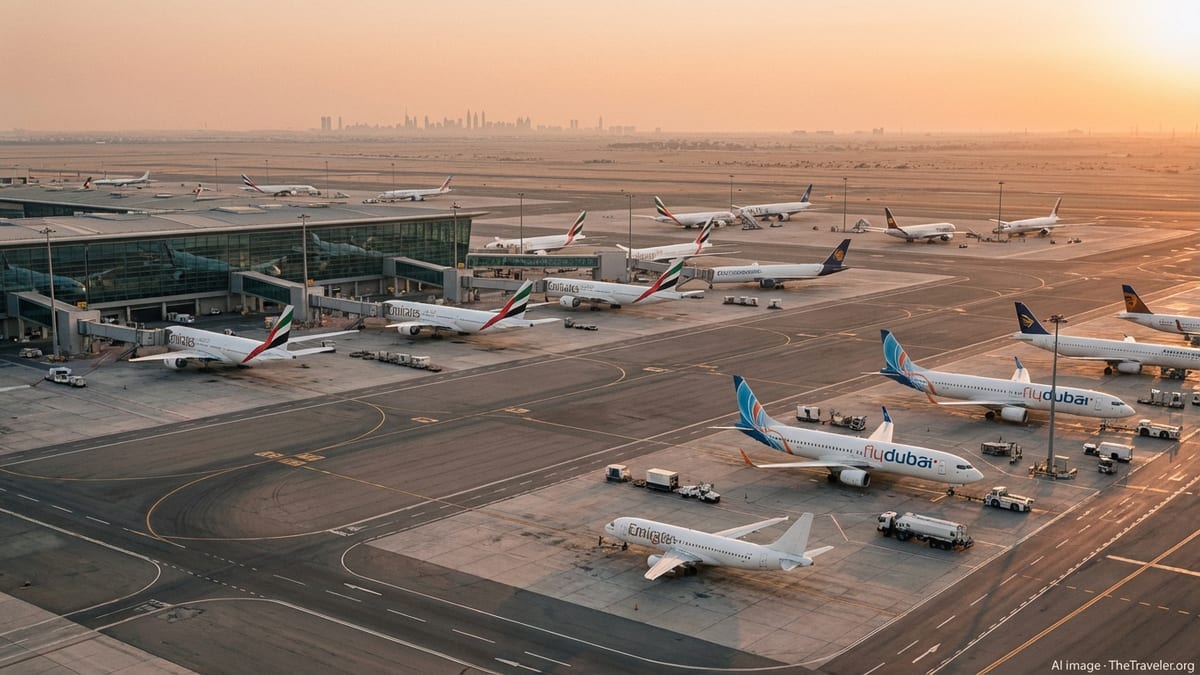
Al Maktoum International Brought to a Standstill
Al Maktoum International Airport, part of the Dubai World Central complex and a critical cargo and long-haul hub, has joined Dubai International in halting all arrivals and departures "until further notice" following a sudden escalation in regional hostilities. The move, announced on February 28 by Dubai Airports and echoed by the Dubai Media Office, effectively shuts down Dubai’s dual-airport system and freezes a key gateway between Europe, Asia and Africa.
Authorities describe the suspension as a safety-led response to rapidly evolving security conditions after U.S. and Israeli strikes on Iran triggered retaliatory missile and drone launches across the Gulf. With the United Arab Emirates implementing a temporary, partial closure of its airspace, airport officials say they cannot safely maintain normal operations at either Al Maktoum or Dubai International.
Passengers have been urged not to travel to Al Maktoum International or DXB and instead contact their airlines directly for the latest information. Terminal screens that would normally flicker with a constant stream of international departures are now dominated by the same terse message: cancelled.
Airspace Lockdown Cascades Across the Middle East
The paralysis at Al Maktoum International is part of a broader aviation shockwave rolling across the Middle East. In the wake of strikes on Iran, multiple countries, including Iran, Iraq, Israel, Qatar, Kuwait and Bahrain, have closed or heavily restricted their airspace, creating a vast corridor of no-go zones for commercial jets. Flight-tracking maps show a once-busy region abruptly blank, with aircraft forced to arc north or south to avoid the danger area.
Regional aviation authorities characterize the measures as precautionary but necessary. The UAE’s General Civil Aviation Authority confirmed it ordered the partial airspace closure as an exceptional step, prioritizing what it called the “highest standards of operational safety and passenger wellbeing.” Similar language has been used in neighboring capitals, underscoring the level of concern about potential further strikes or debris risks along major flight paths.
The scale of the disruption is extraordinary. Industry data indicates that thousands of flights across the broader region have been cancelled, diverted or delayed since February 28, with major hubs in Dubai, Abu Dhabi and Doha bearing the brunt. For global airlines, the sudden loss of key Middle Eastern corridors has forced emergency replanning of long-haul schedules that rely on Gulf overflights to connect continents efficiently.
Global Carriers Scramble as Schedules Collapse
With Al Maktoum International and Dubai International off line, airlines that depend on Dubai as a central node are facing an operational nightmare. Emirates, the world’s largest long-haul carrier, has temporarily suspended all flights to and from Dubai, while its sister airline flydubai has halted operations as it works through a growing backlog of disrupted services and displaced crews.
Foreign carriers are equally affected. European and Asian airlines operating into Dubai have diverted wide-body aircraft mid-flight, in some cases turning jets back to their origin or rerouting to alternate airports in cities such as Istanbul, Athens and Rome. Lufthansa has temporarily suspended flights to the United Arab Emirates and is avoiding UAE airspace altogether, joining a widening list of international airlines that have redrawn routes virtually overnight.
For passengers, the result is a patchwork of cancellations, rolling delays and “ghost flights” that depart with no certainty about their final destination. Aviation analysts warn that even if airspace restrictions are eased in the coming days, it could take significantly longer to restore normal schedules, reposition aircraft and crews, and clear the mountain of stranded travelers from terminals around the world.
Travelers Stranded as Flight Status Systems Buckle
Inside Dubai’s airports, the atmosphere has shifted from frustration to resignation as travelers confronted an unprecedented breakdown in flight status systems. With Al Maktoum International effectively shut and real-time information changing by the minute, check-in counters and customer-service desks have been overwhelmed by inquiries from anxious passengers desperate for clarity.
Many travelers report that airline apps and global distribution systems have struggled to keep pace with the speed of schedule changes, leading to conflicting or outdated information about departures, rebookings and refunds. Airport staff have been deployed across terminals to assist families with young children, elderly passengers and those in transit who suddenly find themselves without a connecting flight or a confirmed place to stay.
Consulates and embassies from multiple countries, including major tourism and labor markets in Europe and Asia, have issued advisories urging their citizens to stay where they are, monitor official airline communications and avoid heading to Dubai’s airports unless instructed otherwise. Hotels near the city’s aviation hubs are rapidly filling up, and some carriers have begun issuing accommodation vouchers for stranded customers, though availability remains uneven.
Uncertain Timeline and Wider Economic Ripples
As of March 2, there is no firm timetable for resuming normal operations at Al Maktoum International or Dubai International. Officials stress that any decision to reopen will hinge on real-time security assessments and coordination with regional and international aviation regulators. Behind the scenes, airlines are running contingency models for various reopening scenarios, from a limited resumption of cargo flights to a phased restart of passenger services.
The shutdown has immediate and far-reaching economic implications. Dubai’s airports typically handle hundreds of thousands of passengers a day and serve as a critical artery for global trade, tourism and expatriate labor flows. The grounding of flights at Al Maktoum International, in particular, has disrupted key cargo routes linking manufacturers and markets across Asia, Europe and Africa, with logistics providers already warning of delays and higher shipping costs.
Tourism operators fear that prolonged uncertainty could dent traveler confidence in using Gulf hubs, even after restrictions are lifted. At the same time, analysts note that Dubai’s aviation sector has demonstrated resilience in past crises, from regional conflicts to the pandemic, and expect authorities and airlines to move quickly to restore connectivity once conditions allow. For now, the message to passengers remains starkly simple: do not go to the airport, stay in close touch with your airline, and be prepared for continued turbulence in the days ahead.