


More news on this day
Fresh military escalations in the Middle East are reverberating across the world’s skies, as airlines ground and reroute flights once again, disrupting summer travel plans from Europe to Asia and straining already fragile aviation networks.
Get the latest news straight to your inbox!
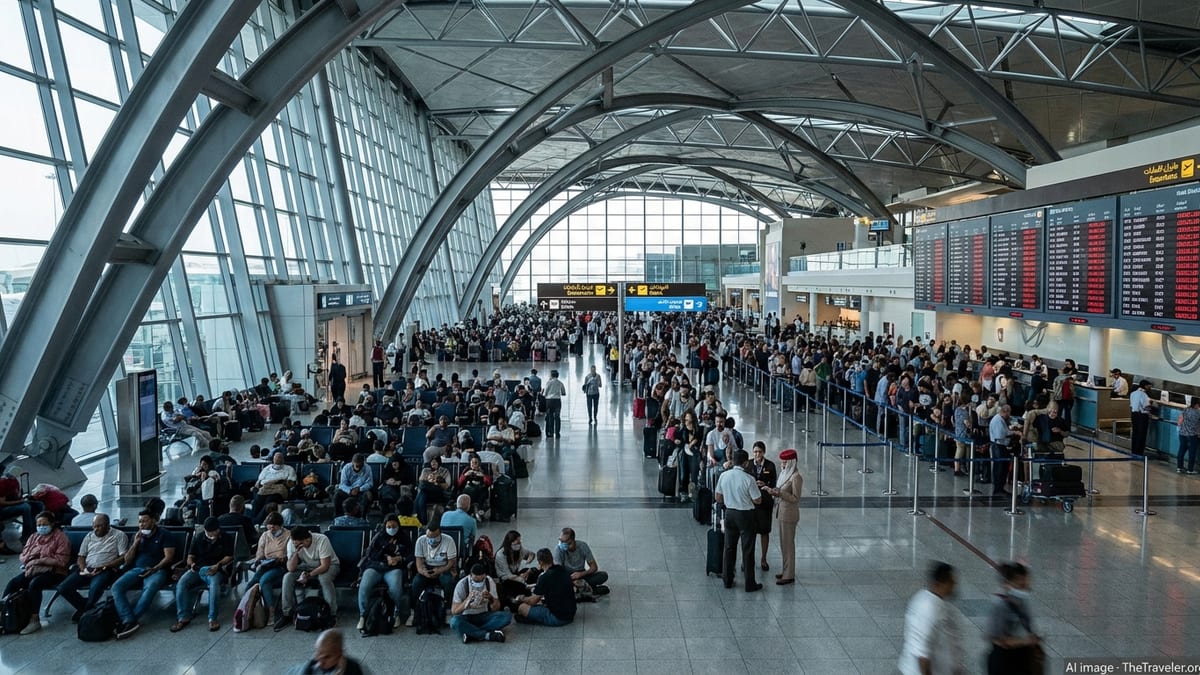
Renewed conflict closes corridors and chokepoints
Publicly available information indicates that the latest round of disruption traces back to the Iran war and follow-on strikes that have periodically closed airspace across Iran, Iraq and parts of the Gulf. Regional hubs that normally anchor traffic between Europe, Asia and Africa have repeatedly reduced operations or halted certain services, forcing carriers to improvise longer and more complex routings.
Industry analysis from aviation and economic observers notes that airspace restrictions over Iran and its neighbors removed one of the most heavily used east–west corridors, with some Middle Eastern hubs handling more than 15 percent of global traffic before the conflict. When those hubs are constrained or periodically shut, ripple effects spread far beyond the region, affecting flights between cities that may seem unconnected to the Gulf, such as routes from North America to South and Southeast Asia.
Reports from regional airports show that renewed missile and drone activity around key military and energy sites, as well as sporadic strikes on infrastructure, have prompted authorities to reimpose or tighten flight restrictions several times since the spring. Each closure sends airlines back to the drawing board, triggering rolling delays, cancellations and last-minute diversions that are now familiar to many international travelers.
Travel risk advisories compiled by consulting firms describe Saudi Arabian airspace as one of the few relatively stable east–west corridors, placing unprecedented strain on air traffic control and scheduling. Even with that route available, carriers face congested skies, limited alternative airports and pressure on crew and aircraft utilization.
Global airlines juggle suspensions, resumptions and longer routes
Major airlines in Europe, Asia and North America have adopted a stop-start approach to Middle East operations as the situation evolves. Reuters-based factboxes and other published coverage list multiple carriers that suspended flights to hubs such as Dubai, Doha, Abu Dhabi, Kuwait and Tel Aviv at the height of the conflict, then gradually restored a portion of services once temporary ceasefires or risk assessments allowed.
Many of these resumptions come with caveats. Some European network airlines are cutting the number of daily frequencies to Gulf and Levant destinations, permanently dropping certain cities such as Jeddah from their maps while reallocating capacity to India and Africa. Asian long-haul carriers have restored limited flights to select Middle Eastern hubs but kept nonstop links such as Tokyo–Doha off their schedules at least through late July and early August.
At the same time, airlines that do not rely on Gulf connections are circumnavigating the region entirely. Flight-tracking analyses shared in public forums and by air traffic agencies show long-haul services between Europe and East or Southeast Asia arcing north over Central Asia or south via the Arabian Sea and East Africa. These detours add significant distance, increasing fuel burn and pushing some flight times well beyond 12 or 13 hours.
Low-cost and leisure-focused airlines appear particularly exposed. Several have extended suspensions on routes to Dubai, Abu Dhabi, Amman and Tel Aviv into late summer or autumn, citing the need to conserve capacity and manage costs on core European or intra-Asian networks. This has left some popular holiday itineraries without their usual budget options, pushing travelers toward more expensive full-service carriers or alternative destinations.
Travelers face cancellations, higher fares and complex itineraries
For passengers, the renewed tensions translate into a mix of grounded flights, longer journeys and higher prices. International Air Transport Association research on recent disruptions indicates that removing a major region from global routings compresses capacity onto a smaller number of viable corridors. This tends to push up fares, particularly on long-haul sectors where aircraft and crew time are at a premium.
Travel advisories and airline notices reviewed this week highlight repeated rolling cancellations on Middle East routes, including same-day suspensions when risk levels change quickly. Travelers connecting through Gulf hubs report being stranded after onward legs were dropped or rerouted, with some forced to rebook via European or African gateways that are themselves contending with congestion and scarce seats.
Analysts monitoring fuel markets note that the closure and disruption of energy exports through the Strait of Hormuz have helped drive jet fuel prices higher worldwide. Combined with longer flight paths that require more fuel and tighter aircraft rotation, this dynamic contributes to surcharges and reduced promotional fares, particularly on routes touching Europe, Asia and Oceania. In some cases, even travelers avoiding the Middle East entirely are bearing indirect costs in the form of more expensive intercontinental tickets.
Insurance and risk-management specialists also point to a rise in demand for flexible tickets and comprehensive travel insurance that covers conflict-related disruption. Many policies still exclude war or civil unrest, so consumers are being urged by travel associations to read terms closely and monitor airline waiver policies, which can shift quickly as carriers respond to new advisories.
Airlines rethink hub strategies and risk exposure
Beyond the immediate headache of grounded flights, the latest Middle East crisis is prompting a strategic rethink across the aviation sector. Consultancy reports on the 2026 Iran conflict suggest that airlines are reassessing how heavily they rely on any single region or group of hubs for global connectivity, especially where geopolitical risks are concentrated.
Some European and Asian airlines are adding capacity on alternative long-haul corridors that bypass the Gulf, such as nonstop flights between secondary cities in Europe and South or Southeast Asia, or enhanced links via Africa and Central Asia. These moves aim to diversify transfer points and reduce dependence on Middle Eastern stopovers that may be vulnerable to future closures.
At the same time, Gulf-based carriers are working to gradually rebuild their role as global super-connectors. Schedules filed for July and August show more flights being added back from Dubai, Abu Dhabi and Doha to key markets, though often at reduced frequencies and with warnings of potential last-minute changes. Regional aviation authorities have outlined revised risk frameworks that maintain high-alert zones over Iran, Iraq and Lebanon while flagging medium-level risks in neighboring states.
Airport operators and air navigation service providers in the wider region are being pushed to adapt, investing in contingency planning, routing flexibility and crisis communication. Analysts caution that even as capacity returns, the era of assuming seamless, 24-hour connectivity over the Middle East has given way to a more fragile equilibrium in which renewed flare-ups can quickly bring grounded aircraft and stranded passengers back into the headlines.
What travelers can do now
With tensions still elevated and advisories subject to rapid change, travel organizations recommend that passengers with itineraries touching the Middle East build in additional resilience. This includes allowing longer connection times, favoring single-ticket journeys on one airline group where possible and registering contact details with carriers and booking platforms to receive real-time updates.
Published guidance from aviation regulators and consumer groups also emphasizes the importance of knowing one’s rights to refunds or rebooking when a flight is canceled or significantly delayed for safety reasons. In many jurisdictions, passengers are entitled to cash refunds rather than vouchers when an airline cancels a service, but the process may require persistence and careful documentation.
For those still in the planning phase, route choice is becoming a central consideration alongside price. Travel agents and online booking tools are increasingly highlighting routings that avoid higher-risk airspace, even when those options are slightly longer or more expensive. Some travelers are opting to break journeys with overnight stops in secondary hubs rather than rely on complex connections through the Gulf.
As the northern summer peak continues, the evolving situation underscores how closely global mobility is tied to stability in a region that sits astride critical air and energy corridors. For now, the return of grounded flights and sudden reroutings serves as a reminder that the Middle East remains a pivotal, and volatile, junction in the world’s aviation map.