


More news on this day
Holidaymakers flying with Ryanair around Europe this summer are being urged to prepare for long waits at a cluster of major airports, after the carrier highlighted 15 locations where new EU border checks and peak-season crowds are combining to create some of the longest queues on the continent.
Get the latest news straight to your inbox!
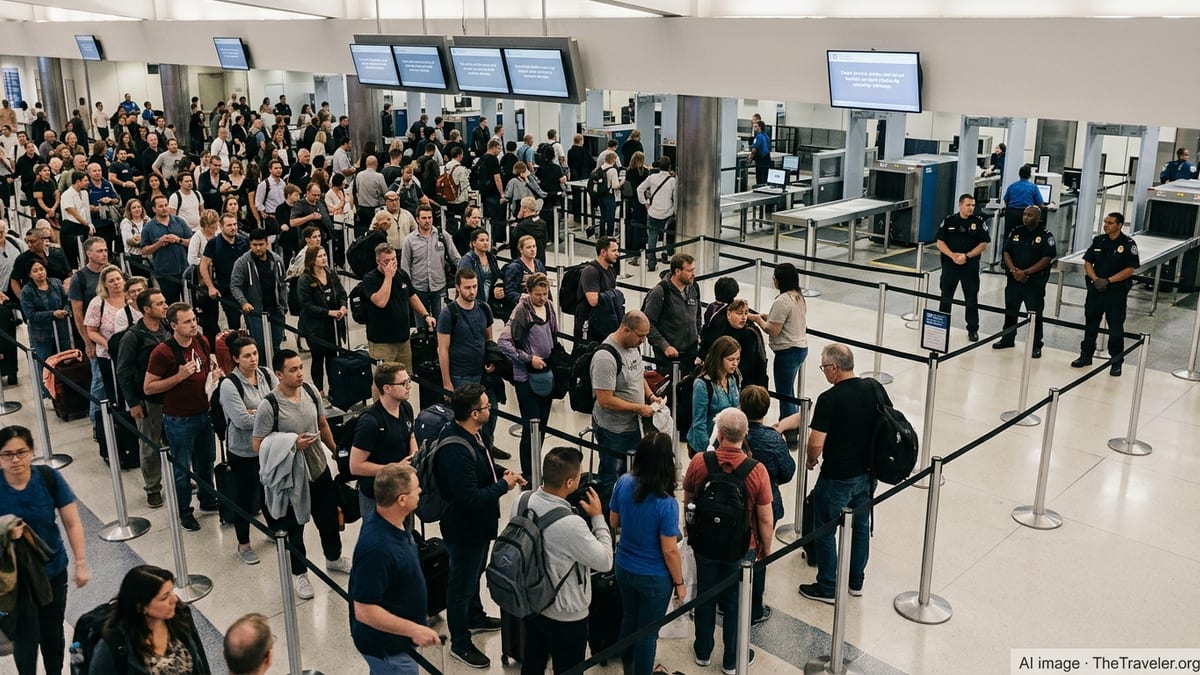
Border rules and peak demand collide
Ryanair’s warnings centre on the EU’s new Entry/Exit System, a biometric border regime that records fingerprints and facial images from most non-EU travellers entering or leaving the Schengen area. Publicly available information shows that the system, introduced earlier this year, has already contributed to long processing times at some of Europe’s busiest holiday hubs during test phases and early rollout.
According to recent coverage across European outlets, the problem is most visible at airports where large volumes of British, Irish and other non-Schengen passengers converge at peak holiday periods. At these gateways, border booths and kiosks are handling unprecedented numbers of first-time EES registrations, which take longer than routine passport checks and can quickly generate bottlenecks.
Industry bodies such as IATA and ACI Europe have also drawn attention to the risk of long queues this summer, citing reports of waits running into hours during earlier EES trials. While additional staff and more kiosks have been deployed in many terminals, officials and operators are still racing to match staffing and infrastructure to the sharp rise in summer traffic.
Ryanair has pointed to this broader backdrop in its public comments, arguing that lengthy queues are an inevitable consequence of a complex border system going live at the same time as a surge in family travel, particularly from the UK and Ireland.
The 15 airports Ryanair highlights
Travel reporting in recent days has compiled the 15 airports where Ryanair expects the worst congestion this summer, based on the airline’s network data and early EES experience. The list spans many of Europe’s busiest leisure gateways, including hubs in Spain, Portugal, Italy, Greece and France, as well as key transfer points for UK travellers heading into the Schengen zone.
Among the airports cited are several serving Mediterranean beach destinations and major city-break favourites. These locations typically see spikes in arrivals during school holidays, when multiple planeloads of passengers can hit passport control within minutes of each other. When combined with the added processing time for biometric enrolment, the result can be queues that stretch far back into the arrivals hall.
Ryanair has not suggested that its own operations are the sole driver of these delays. Instead, the carrier has framed the 15-airport list as a snapshot of the wider pinch points likely to affect all airlines using those terminals. The company’s large footprint across Europe, particularly on short-haul point-to-point routes, means it has a detailed view of how quickly passengers are moving through border checks at different times of day.
For travellers, the practical impact is similar regardless of airline: more time spent at passport control and a greater risk that tight connections or onward transport plans could be disrupted if queues grow unexpectedly.
How EES is reshaping the airport experience
The new Entry/Exit System fundamentally changes what many passengers experience at the border. Instead of a quick passport stamp, first-time EES users must submit fingerprints and a facial image, confirm biographical details and wait while the system cross-checks multiple databases. Subsequent trips should be faster, but the initial registration can take several minutes per traveller.
In busy summer conditions, those extra minutes add up. Travel industry analysis notes that airports with high volumes of short-stay visitors from outside the EU and Schengen area are particularly exposed. Families with children, older travellers and large tour groups all tend to move more slowly through biometric procedures, further stretching processing times.
Reports from early EES operations also describe a learning curve for both passengers and staff. Confusion about which queue to join, uncertainty over document requirements and technical glitches at self-service kiosks have all been cited as contributing factors in the longest delays. Several airports have responded by adding floor staff to direct queues, opening extra manual booths and adjusting terminal layouts.
Ryanair’s communications reflect this broader picture, suggesting that summer 2026 will be a transition period in which the system beds in while airports refine staffing plans. The airline has argued in public statements that, without temporary flexibilities or deferrals in some countries, queues at the 15 highlighted airports could become a defining feature of the season.
What this means for summer travellers
For passengers, the immediate consequence of Ryanair’s warnings is a strong recommendation to build extra time into every stage of the journey. Travel advice across Europe now commonly suggests arriving at airports at least two to three hours before short-haul departures, with some carriers and travel agents advising even earlier check-in for peak weekend and school-holiday flights.
At the 15 airports flagged by Ryanair, this margin may be particularly important for non-EU travellers who have not yet been registered in the EES database. Families and groups are being encouraged by travel commentators to factor in longer walks through unfamiliar terminals, potential queues at airline bag drops and more time than usual at border control.
Observers also note that the nature of delays is changing. Where passengers once worried mainly about air traffic control disruptions or security queues, the bottleneck this summer is more likely to be at passport control. This shift affects not only arrival times at holiday destinations but also the stress levels of travellers heading home, who face the risk of missing flights if outbound border queues swell unexpectedly.
Despite these concerns, the overall European aviation network is expected to handle record numbers of passengers. Ryanair’s identification of 15 high-risk airports is being framed in much of the coverage as a call for realistic planning rather than a reason to cancel trips.
How airports and airlines are responding
Airports on Ryanair’s list, along with many others across the continent, have been rolling out a mix of short-term and longer-term measures to keep queues manageable. Public information from terminal operators describes efforts such as hiring additional border staff, reconfiguring queuing areas, adding multilingual signage and expanding self-service infrastructure.
Some countries have also made use of flexibilities built into EU regulations, allowing temporary adjustments to how the Entry/Exit System is applied during peak periods. Travel industry reports indicate that these measures can ease pressure at the busiest times of day but may not fully offset the surge in demand during school holidays and long weekends.
Airlines, for their part, are adjusting schedules, tweaking check-in and bag-drop opening times and pushing more passengers toward online and app-based services. Low-cost carriers such as Ryanair are emphasising the importance of arriving early, checking in digitally and proceeding promptly to security and passport control rather than lingering in departures.
Analysts suggest that the experience at the 15 highlighted airports this summer will be closely watched as a test of how quickly Europe’s border infrastructure can adapt. If lessons are learned and investments follow, subsequent seasons may see the benefits of a digital border system with fewer of the teething troubles that are defining travel in 2026.