


More news on this day
Summer travelers flying with Ryanair are being urged to build in extra time at the airport after the low cost carrier warned of significant queues and potential delays at 15 major European hubs, highlighting mounting pressure from new border procedures and peak-season crowds.
Get the latest news straight to your inbox!
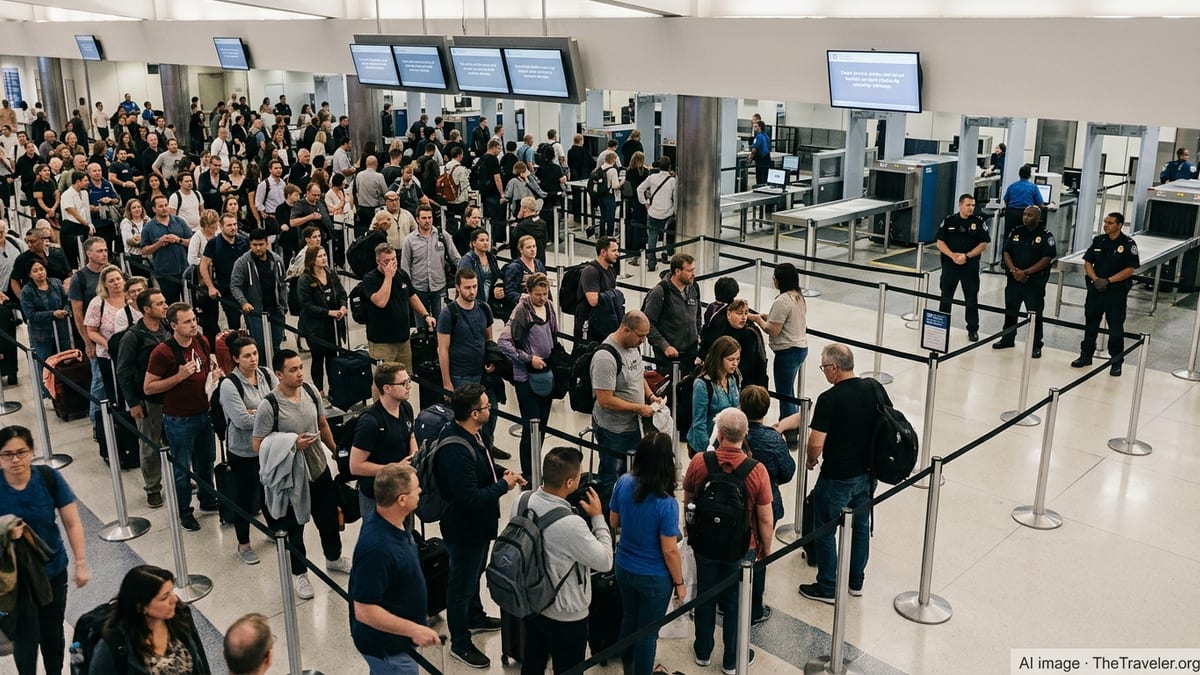
Carrier flags pressure points across its European network
According to recent coverage of the airline’s travel alerts, Ryanair has identified 15 European airports where passengers are most likely to encounter long lines at check-in, security or border control during the high summer season. The list focuses on popular holiday gateways that already handle dense schedules of short haul flights and are now seeing additional pressure from new entry requirements and strong leisure demand.
Publicly available information indicates that these airports span several tourism hotspots, including major hubs in Spain, Italy, Portugal and Eastern Europe. Many of them serve coastal resorts and city break destinations that draw large numbers of travelers from the United Kingdom and Ireland, markets where Ryanair is a leading carrier.
While the airline continues to operate its regular flight program at these locations, it is emphasizing that airport processing times may be considerably longer than passengers experienced in previous summers. Travelers are being advised not to assume that past experience is a reliable guide for how quickly they can move from the terminal entrance to the departure gate this year.
The warning comes at a time when airports across Europe are under scrutiny for their ability to maintain smooth passenger flows during the busy July and August peak. Industry data from aviation bodies points to recurring strain at several high-traffic hubs when holiday demand surges, even before additional checks are factored in.
Entry/Exit rules and security checks driving longer queues
Reports on the situation link many of the anticipated delays to the European Union’s new Entry/Exit System, which is gradually being rolled out for travelers from non-EU countries. The system requires additional biometric and passport checks on arrival and departure, adding crucial seconds to each passenger’s processing time that can quickly accumulate into long queues in peak periods.
Airport operators and airlines have repeatedly highlighted how these new formalities interact with existing security screening, baggage drop and boarding processes. When several departure banks coincide, even minor slowdowns at one checkpoint can cascade through the terminal, leaving passengers stuck at border control or security while boarding times approach.
Some airports have expanded staffing or opened extra lanes to mitigate the impact, but capacity remains finite during the busiest hours of the day. Public updates from aviation groups suggest that performance can vary widely by time and terminal, with relatively smooth operations at off-peak periods and acute congestion at others.
Ryanair’s latest advisory reflects a broader concern within the European aviation sector that infrastructure and staffing have not fully caught up with the combined effects of new border systems and a strong recovery in leisure travel. The emphasis on 15 particularly vulnerable airports indicates where these pressures are currently most visible for the carrier’s customer base.
Ryanair urges earlier arrivals and extra contingency time
In its public messaging, the airline is recommending that passengers flying from the affected airports arrive significantly earlier than the minimum times they may have used in previous years. Travel industry commentary notes that Ryanair is aligning its guidance with wider calls for holidaymakers to allow additional time for check-in, security and passport control during the mid-summer rush.
The carrier is also reminding passengers that check-in and bag-drop deadlines remain fixed, even if queues at airport-controlled checkpoints become lengthy. Travelers who misjudge how long it will take to clear formalities may risk missing bag acceptance cutoffs or boarding times, particularly at early-morning and late-evening departures when multiple flights are scheduled close together.
Consumer advocates frequently stress the importance of building in a substantial buffer, particularly for families, larger groups and passengers unfamiliar with the airport layout. Public guidance from travel organizations often suggests arriving at least several hours before departure during peak holiday weekends, and Ryanair’s latest alert echoes that cautious approach.
Airline schedule data shows that Ryanair relies on tight turnaround times to operate its dense European network, which limits the flexibility to hold flights for delayed passengers without triggering knock-on disruption later in the day. The company’s emphasis on early arrival is therefore framed as a way for customers to protect their own journeys rather than a guarantee that flights will wait for those caught in queues.
Implications for summer travel across Europe
The focus on 15 airports comes as part of a wider pattern of disruption risks facing European travelers this summer. Aside from new border checks, industry reports point to occasional air traffic control restrictions, localized staffing shortages and weather-related constraints that can all contribute to delays.
Data from European aviation agencies shows that even small operational bottlenecks can have outsized effects during peak periods, with one delayed departure often causing a chain reaction throughout the day. Airports singled out in the Ryanair advisory typically serve large numbers of point-to-point leisure routes, meaning a single delay can inconvenience passengers on multiple sectors.
For travelers, the airline’s warning acts as an early indicator of where journeys may require the most careful planning. Travel analysts note that passengers connecting from long-distance rail or coach services, as well as those relying on busy urban transport networks to reach the airport, are particularly exposed if they do not allow extra time for unforeseen interruptions.
Some European governments and airport operators have acknowledged these challenges in recent public communications and encouraged passengers to follow airline advice on arrival times. Initiatives such as temporary deployment of additional border staff or the flexible operation of control points are being explored in various countries, although the level of support and implementation can differ from airport to airport.
What passengers can do before heading to the airport
Travel experts recommend that passengers booked on Ryanair services from any of the highlighted airports monitor their flight details closely in the days before departure. Checking the latest terminal information, reconfirming check-in times and reviewing airport guidance on security and border procedures can all help reduce the risk of last-minute surprises.
Holidaymakers are being encouraged to complete as many formalities as possible before arriving at the airport, including online check-in, printing or downloading boarding passes and ensuring travel documents are valid and easily accessible. Efficient preparation can speed up individual processing, which in turn helps reduce pressure on congested checkpoints.
Families and larger groups may wish to allocate responsibilities in advance, such as one person managing travel documents while another handles baggage, to move more quickly through queues. Observers also suggest packing hand luggage with security screening in mind, keeping liquids and electronics easy to remove when required.
While Ryanair’s warning underscores the likelihood of longer waits at certain European hubs, the overall message from travel organizations is that most journeys can still run relatively smoothly if passengers plan ahead and allow generous margins of time. For those flying during the busiest weeks of July and August, caution and preparation are being framed as the best safeguards against missed flights and stressful airport experiences.