


More news on this day
Summer holidaymakers flying with Ryanair are being urged to prepare for significant delays and long queues at nine major European airports, as congestion at passport control and security points intensifies under Europe’s new border rules.
Get the latest news straight to your inbox!
Nine airports flagged as disruption hotspots
According to recent public statements and media reports, Ryanair has identified nine airports where passengers are facing recurring disruption, with lengthy queues reported at border control on both arrival and departure. The airline has highlighted these locations as particular hotspots for delays during the peak school holiday period.
Coverage in regional and travel industry outlets indicates that the warning is focused on popular leisure gateways used heavily by UK and Irish travelers heading to Mediterranean destinations. These airports handle large volumes of short-haul traffic, amplifying the impact when processing times increase at passport control.
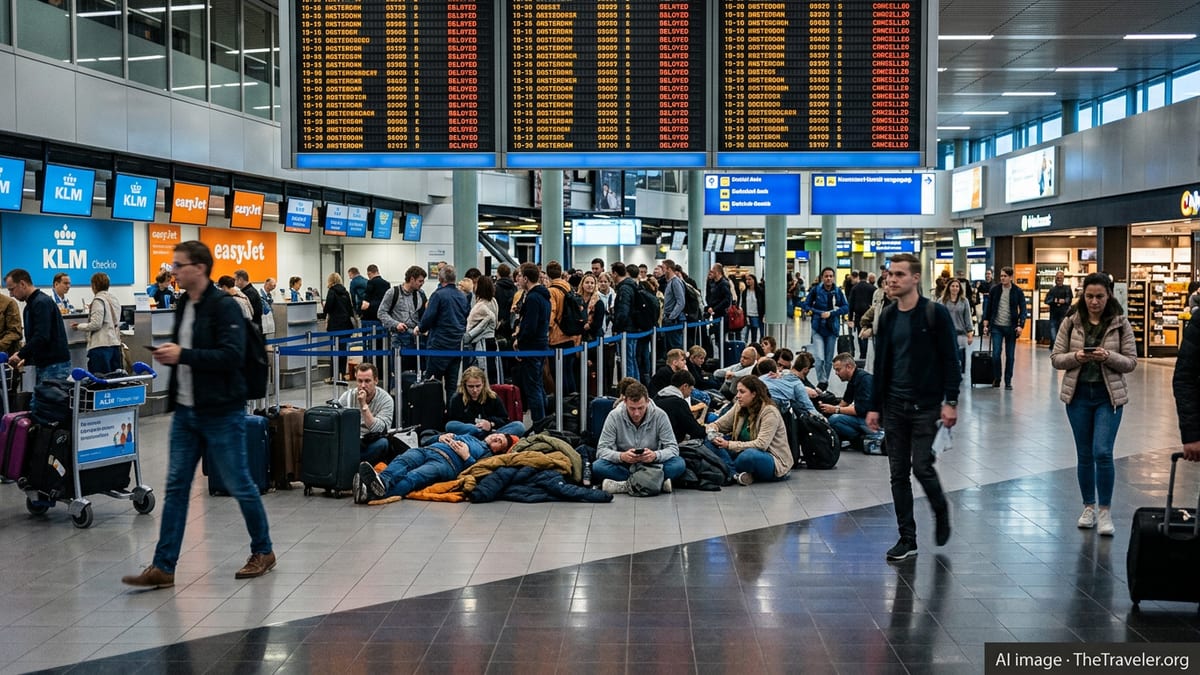
Reports describe scenes of crowded terminals, snaking queues and anxious passengers worried about missing flights, especially at early-morning and late-evening peak banks. While operations are continuing, the combination of high summer demand and slower border checks is stretching capacity at some terminals.
The alert comes as millions of families prepare to travel during late July and August, traditionally the busiest period for European leisure flying, raising concerns that even modest disruptions could quickly cascade into wider schedule delays.
EU Entry/Exit System blamed for slower processing
Ryanair’s warning is closely linked to the rollout of the European Union’s new Entry/Exit System, or EES, which records biometric data and movement details for non-EU travelers crossing external Schengen borders. Industry bodies such as ACI Europe and IATA have previously cautioned that the system risks lengthening processing times at passport control unless resourced and managed carefully.
Publicly available information from airlines, airports and trade groups suggests that the additional biometric checks, combined with varying levels of staffing and infrastructure across countries, have created bottlenecks at some border control points. The impact is particularly pronounced at leisure-focused airports where large numbers of non-EU passengers, including UK nationals, arrive in concentrated waves.
Travel coverage notes that some airports appear better prepared than others, with more automated kiosks or additional staff, while others rely heavily on manual checks. Where facilities are constrained, queues are building more quickly and can take time to dissipate, especially when multiple large aircraft arrive within a short window.
Industry commentary also highlights that the EES implementation is occurring against a backdrop of broader pressures, including occasional air traffic control restrictions and seasonal staffing challenges, which can further amplify delays once they begin.
Knock-on effects for departures and missed flights
Recent incidents reported in European media show how congestion at passport control can spill over from arrivals into departures, creating a domino effect for departing passengers. In one widely discussed case, a Ryanair service to London left without a substantial number of booked travelers after many became trapped in long queues at border checkpoints and were unable to reach the gate in time.
Such cases illustrate the difficulty airports face in managing passenger flows when the same facilities must process both arriving and departing travelers. When queues lengthen unexpectedly, terminal layouts can become congested, wayfinding becomes harder and passengers may struggle to move quickly between security, passport control and departure gates.
Ryanair and other carriers have responded in some markets by urging passengers to arrive at airports even earlier than usual, particularly at the nine flagged locations. Some have adjusted check-in and boarding cut-off times or issued targeted travel advisories in an effort to reduce the number of travelers who are physically present at the airport but still miss their flight because they cannot clear formalities in time.
Travel experts quoted in consumer coverage suggest that, in extreme cases, passengers could experience waits of an hour or more at border control, especially at peak weekend and holiday periods, increasing the risk of both outbound and inbound delays.
Calls for temporary flexibility and operational fixes
While the EES has been presented by European institutions as a long-term security and data-management upgrade, airlines and airports are increasingly focused on its short-term operational impact. Industry statements and commentary in the aviation press describe calls for temporary flexibilities or phased approaches to give border authorities and airports more time to adapt.
Airline groups have urged policymakers to use existing legal mechanisms to adjust timelines or procedures during the busiest summer weeks, arguing that otherwise passengers face avoidable disruption. Airport representatives have echoed concerns, warning that even well-prepared facilities could struggle if traffic volumes continue to rise faster than available staffing and infrastructure.
Some coverage points to local mitigation measures, such as reallocating staff to border control during peak hours, expanding pre-departure information campaigns, and tweaking terminal layouts to improve passenger flow. However, these steps can only partially offset the underlying increase in processing time when biometric checks are fully applied.
Analysts following the sector note that the situation at the nine Ryanair-flagged airports may serve as an early stress test for the broader system. Their experience this summer is likely to shape future operational planning and political debate around how EES is managed at busy tourist gateways.
What travelers can do ahead of peak summer
Consumer-focused reports advise that passengers traveling through affected airports build in additional time, particularly if they are non-EU nationals or connecting onward to tight schedules. Arriving at the airport well ahead of departure, checking in online where possible and heading directly to security and passport control are among commonly recommended steps.
Travel writers also suggest that families keep travel documents easily accessible for all members, prepare children for biometric checks, and monitor their airline’s app or alerts closely on the day of travel. In some cases, airports publish live queue estimates or operational updates, which can help travelers anticipate bottlenecks once they arrive at the terminal.
Observers emphasize that conditions can vary significantly from one day to the next, depending on factors such as local staffing levels, flight schedules and any concurrent air traffic or security restrictions. Even at the nine airports singled out in Ryanair’s latest warning, not all passengers will experience severe disruption, but the risk of longer waits is considered higher than at other locations.
With schools across the United Kingdom and parts of Europe now entering the main holiday period, the airline’s advisory underlines the fragile balance between high demand and constrained airport infrastructure. How the nine airports manage queues and delays in the coming weeks will be closely watched by the wider industry and by travelers planning late-summer trips.