


More news on this day
Shifts in official travel guidance across parts of the Middle East are beginning to ripple through flight schedules and booking patterns, offering a tentative lift to Europe’s peak-season holiday prospects after months of geopolitical disruption.
Get the latest news straight to your inbox!
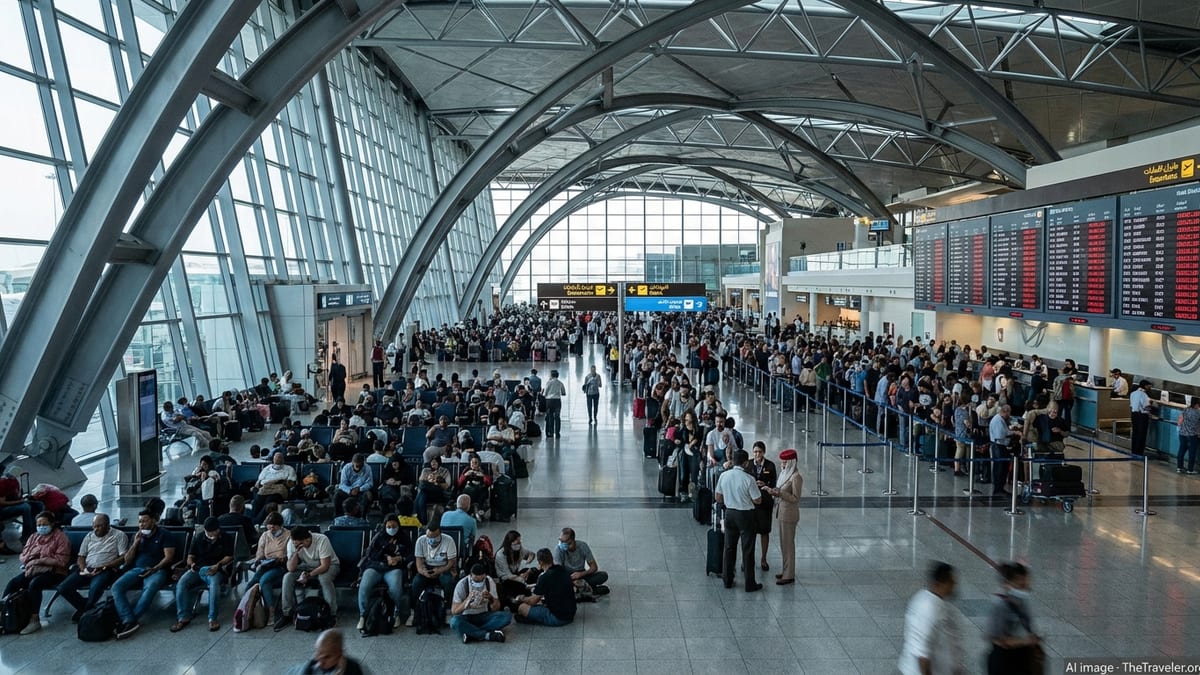
Advisories evolve as conflict risk is reassessed
Publicly available travel advisory information indicates that government guidance on parts of the Middle East remains restrictive, but has started to differentiate more clearly between high-risk war zones and lower-risk hubs that are essential for global connectivity. The United States and several European countries continue to classify areas such as Lebanon and parts of Israel as destinations where travel is strongly discouraged, while gradually narrowing blanket regional warnings that were widespread at the height of recent hostilities.
On the aviation side, notices from European safety bodies show that regulators are still monitoring Israeli and Lebanese airspace closely, but are refining recommendations rather than calling for uniform avoidance of the wider region. Earlier crisis communications that led airlines to reroute or cancel large numbers of flights across the Eastern Mediterranean have given way to more targeted assessments focused on specific flight levels and geographic corridors.
This recalibration does not mean that the Middle East has become a low‑risk destination. However, the shift away from broad regional alerts is reducing the knock‑on uncertainty for passengers whose primary goal is to reach or transit through Europe, rather than travel within the conflict area itself.
Industry analysts note that as authorities focus their strongest language on active front lines, airlines have greater scope to restore schedules on peripheral routes that are considered manageable with additional precautions. That in turn is beginning to stabilize long‑haul networks that feed key European leisure markets.
From mass rerouting to more stable summer schedules
Network data published by European air traffic managers during the height of the crisis showed how quickly fighting in the Middle East translated into upheaval for European skies. On some peak disruption days in 2025 and early 2026, hundreds of flights linking Europe with the region were cancelled or pushed onto longer paths via Egypt and Cyprus, contributing to congestion and delays over southern Europe.
More recent briefings suggest that while flights directly to and from the conflict zone remain far below normal levels, overall European traffic has proved resilient and is now edging above 2025 volumes. Reports from Eurocontrol indicate that global network traffic involving Europe is slightly higher than a year earlier, even as Middle East services remain significantly reduced. This mix reflects a partial normalization of long‑haul flows and a redirection of capacity toward more stable corridors.
For holidaymakers, the impact is visible in airline schedules that look increasingly familiar for July and August. Carriers are restoring frequencies on transatlantic and intra‑European routes that had been constrained by aircraft and crew tied up in diversions. Operational briefings point to improved on‑time performance compared with the previous summer, helped by fewer last‑minute reroutes around conflict airspace.
Travel agents in major source markets report that the clearer picture on routings has reduced the wave of pre‑departure itinerary changes that characterized the early months of the crisis. Passengers heading for Mediterranean favourites are now less likely to find their flights suddenly shifted to an overnight connection or an unfamiliar hub at short notice.
Eurozone tourism demand holds up despite headwinds
Tourism research released by the European Travel Commission and industry groups portrays a sector that has weathered the geopolitical shock better than many had feared. Data for late 2025 showed visitor spending outpacing arrivals, with travellers willing to pay more for trips that felt safe and predictable. Early projections for 2026 point to continued growth in long‑haul arrivals, even as inflation and conflict risks persist.
Forward‑looking search and booking information from global platforms indicates that European cities, particularly in Eastern and Central Europe, rank among the fastest‑rising destinations for 2026. Analysts link part of this momentum to travellers who are hesitant about itineraries relying on Gulf or Levantine hubs and instead choose routings that stay within Europe’s Schengen area or use North Atlantic gateways.
Industry surveys in markets such as Germany illustrate the balancing act. Business sentiment among travel companies weakened when conflict flared, with concerns focused on itineraries that required connections through Middle Eastern hubs. At the same time, bookings to Turkey, Greece, Spain and Portugal have remained comparatively robust, suggesting that many customers are re‑routing rather than cancelling outright.
This pattern supports the view that clearer, more localized travel warnings can help contain the economic fallout. By signalling which specific areas carry the highest risk, authorities allow airlines and tour operators to redirect capacity to safer alternatives within the broader Europe and Mediterranean region, rather than pulling back across an entire season.
Shifting patterns in hubs, routes and beach favourites
The evolution of advisories is also reshaping how travellers move between continents. Airline waivers and schedule updates introduced during the most volatile weeks of the crisis made it easier for passengers to avoid certain hubs in the Gulf and Eastern Mediterranean. Over time, this flexibility has encouraged a rebalancing toward European and North African gateways that offer more predictable operations.
Search trend reports for 2026 highlight growing interest in secondary European cities and coastal regions, from the Balkans to the Baltics, as travellers look for trips that feel both affordable and geopolitically distant from flashpoints. Traditional sun‑and‑sea leaders on the western Mediterranean continue to draw strong demand, but the fastest‑rising interest is often in destinations that combine EU consumer protections with less crowded airports and resorts.
For Middle Eastern destinations themselves, the outlook remains challenging. Tourism economists now expect international arrivals to the region to fall in 2026 compared with earlier forecasts, citing sustained concerns over security and airspace stability. That shortfall is likely to push more long‑haul leisure traffic toward Europe, especially if airlines decide to redeploy capacity from suspended or underperforming Middle Eastern routes.
Package operators are already advertising rebooked holidays that swap cancelled Middle Eastern beach stays for resorts in Spain’s islands, the Greek archipelago or the Turkish Riviera, often with incentives aimed at travellers who accepted changes during the crisis months. This substitution effect is one of the main reasons European coastal destinations are expected to see another busy high season, even as some competitors on the southern and eastern shores of the Mediterranean struggle to rebuild confidence.
Cautious optimism for summer travellers
While the security backdrop in parts of the Middle East remains fragile, the gradual easing and tightening of specific travel warnings, combined with more stable European flight operations, is producing a cautiously optimistic outlook for summer holidays. Experts emphasize that risk is unlikely to disappear entirely and that sudden escalations can still disrupt travel plans.
However, the experience of the past year suggests that aviation and tourism systems are becoming more adept at managing regional crises without paralysing wider networks. As advisories become more finely targeted and airlines refine contingency routings, travellers heading for Europe can plan with greater confidence that their trips will proceed, even if exact flight paths continue to adjust around sensitive airspace.
For now, booking data and capacity plans point toward another crowded European summer, supported by resilient demand from North America and a gradual return of visitors from Asia. The easing of the most sweeping Middle East travel disruptions looks set to reinforce that trend, giving Eurozone destinations a welcome, if cautious, boost after a turbulent period in global geopolitics.