


More news on this day
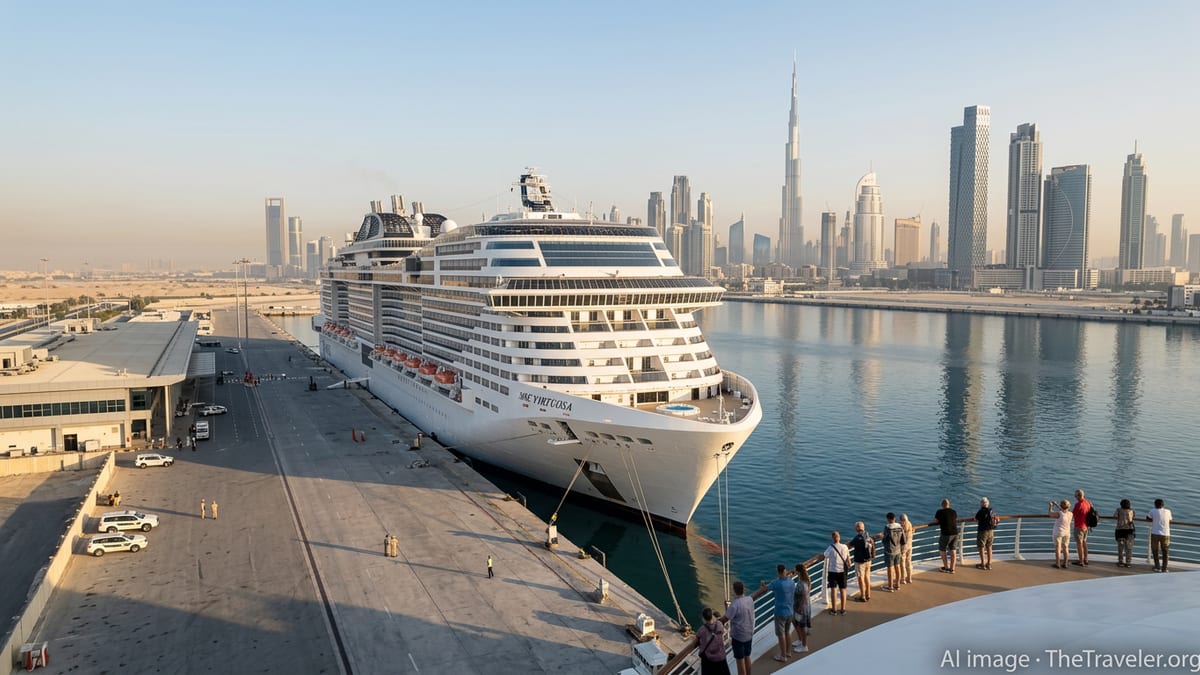
Reports from a recent MSC Cruises sailing indicate that passengers gained access to the ship’s public address system and broadcast a series of fake emergency messages, briefly alarming guests and raising new concerns about how easily critical safety channels can be misused at sea.
Get the latest news straight to your inbox!
Confusion Onboard After Fake Emergency Broadcasts
Accounts shared by cruise travelers and relayed in online coverage describe an incident on an MSC ship where passengers managed to inject false emergency-style announcements into the onboard public address system. The messages, reportedly imitating safety alerts, were heard in guest areas and initially left some travelers unsure whether they were facing a genuine emergency or a hoax.
Publicly available descriptions suggest that the broadcasts referenced emergency scenarios in a tone similar to official drills, but without the usual preamble or structured instructions passengers expect during safety procedures. Some travelers have indicated that crew members moved quickly to reassure guests that no real emergency was underway once the interference was recognized.
While there are no indications of injuries or operational impact on the vessel, the apparent ease with which prank messages briefly disrupted the information flow on board has focused attention on the resilience of shipboard communication systems and how they might be protected from unauthorized access.
How Cruise Ship PA Systems Normally Work
On large cruise ships, the public address network is a central part of the safety architecture, designed so that critical instructions can reach hundreds or thousands of people simultaneously in cabins, corridors, and public spaces. Industry guidance indicates that emergency announcements are ordinarily routed through controlled stations on the bridge or designated safety posts, with priority over entertainment audio and other nonessential channels.
In typical operation, ships use a combination of general PA announcements and coded emergency signals to alert crew and, when necessary, passengers. Certain tones or phrases can signal events such as medical emergencies, fires, or man-overboard situations, with many codes intended to be understood by staff while avoiding unnecessary panic among guests.
Because international safety rules treat emergency communication as mission-critical, PA hardware is usually designed with overrides and protected access points. However, the latest reports from the MSC sailing suggest that one or more passenger-accessible interfaces, or a misconfigured system, may have created an opportunity for pranksters to inject audio into parts of the network intended only for trained personnel.
Potential Vulnerabilities Behind the Prank
Technical descriptions of modern cruise communication systems show that ships increasingly rely on integrated digital networks connecting PA, internal telephones, messaging apps, and alarm systems. In theory, these networks are segmented so that passenger-facing features cannot bridge into safety-critical channels. In practice, configuration errors, aging equipment, or overlooked access points may open gaps that can be exploited by determined guests.
Specialist commentary on maritime safety and similar incidents in other sectors has highlighted several potential pathways, including unsecured wall panels, misused service telephones, or software interfaces that were not properly locked down. Even a single unprotected microphone or console connected to the emergency-capable audio bus could allow unauthorized users to broadcast announcements that mimic genuine alarms.
Reports of the MSC incident have not yet detailed the exact method used, but the episode aligns with broader concerns in transport and hospitality about how easily pranksters can subvert warning systems designed originally for closed, analog environments. As ships add more digital functionality and passenger-accessible features, the risk surface for such disruptions may expand unless security is updated at the same pace.
Safety, Trust, and Passenger Experience at Sea
Although the prank messages on the MSC cruise appear to have been short-lived, they highlight how central trust in official communication is to the modern cruise experience. Safety briefings, evacuation drills, and routine updates all rely on passengers immediately recognizing the authority of the voice on the PA and responding without hesitation when genuine emergencies occur.
Maritime safety research has shown that confusion or delays in interpreting emergency instructions can have significant consequences during real incidents. If guests begin to question whether an alarming message is real or a hoax, critical seconds or minutes could be lost at the very moment decisive action is needed. Episodes like the MSC prank therefore carry an impact beyond momentary disruption, touching on how passengers perceive the reliability of life-safety systems.
From a customer-experience standpoint, cruise travelers increasingly share real-time accounts of unusual events through social media and online forums. Even when an incident is quickly contained, visible disruption to safety channels can shape public perception of a brand’s attention to security and preparedness. That reputational dimension is likely to add pressure on operators to treat communication misuse as a strategic as well as a technical issue.
Industry Scrutiny of Onboard Communication Security
The MSC PA hijacking incident comes amid broader scrutiny of how transport operators protect emergency communication tools from spoofing and interference. Academic work and regulatory hearings have examined scenarios in which malicious actors send fake alerts through cellular warning systems, public sirens, or digital signage, warning that such attacks can cause panic, erode trust, or mask real crises.
Within the cruise sector, publicly available safety reviews already emphasize the need for robust controls around bridge systems, navigation, and engine management. Communication networks are increasingly being folded into that conversation, with experts calling for clearer separation between passenger amenities and core safety channels, stronger authentication for devices that can access the PA, and routine audits to confirm that no unsecured pathways exist.
For travelers, the MSC episode serves as a reminder to treat any unexpected emergency-style message seriously while also remaining attentive to follow-up communication from the ship’s command. For cruise lines, it underlines the importance of ensuring that practical security measures match the expectations created by polished marketing about comfort and safety at sea.