


More news on this day
Global air travel is facing a fresh wave of disruption as Emirates joins Qatar Airways, Etihad, Air India, Lufthansa and British Airways in slashing flights, rerouting long-haul services and raising fares in response to the Middle East war and an escalating jet fuel crunch.
Get the latest news straight to your inbox!
War in Iran Pushes Jet Fuel Prices to New Highs
The latest turmoil stems from the Iran war, which erupted in late February 2026 and quickly rippled through global energy and aviation markets. Publicly available economic assessments show that the conflict has led to airspace closures across parts of the Gulf and has severely restricted shipments of crude and refined products through the Strait of Hormuz, a vital corridor for jet fuel exports.
Industry data compiled by aviation and energy analysts indicates that average global jet fuel prices have roughly doubled since the start of the war, with some benchmarks nearing or exceeding 100 percent year on year increases by early May. Reports tracking airline networks suggest that carriers worldwide have already cut more than ten thousand flights for May alone, directly attributing many of the cancellations to the fuel shock and the need to conserve limited supplies.
While fuel hedging has softened the immediate blow for some airlines, the sudden jump in costs is being passed on to passengers in the form of higher base fares and additional fuel surcharges. Travel analysts note that the pace and scale of the increases are beginning to resemble the sharp spikes seen during previous oil crises, but with the added complication of large swaths of Middle East airspace being intermittently restricted or closed.
Emirates, Qatar Airways and Etihad Scale Back Gulf Hub Operations
Gulf megacarriers that underpin global long haul travel are at the center of the upheaval. According to regional media coverage and airline operational summaries, Emirates is operating a reduced schedule out of Dubai, serving more than 100 destinations instead of its usual prewar network. Travel advisories circulated in recent weeks highlight rolling cancellations on select European, Asian and Oceania routes as the carrier juggles aircraft utilization, fuel availability and longer routings that avoid sensitive airspace.
Qatar Airways, based in Doha, has taken even more drastic measures. Network planning updates reported by regional news outlets describe cuts of close to half of its planned services for the second quarter of 2026, including a significant reduction in flights to North America and parts of Europe. The airline has simultaneously promoted flexible rebooking and extended change waivers for affected passengers, reflecting the scale of the disruption at its Doha hub following Iranian missile strikes and subsequent airspace restrictions over Qatar.
Etihad Airways in Abu Dhabi is also adjusting. Travel industry bulletins and fare rule updates indicate that the airline has introduced broad change fee waivers for tickets touching the Gulf region and has quietly trimmed frequencies on selected routes to conserve fuel. Operational guidance distributed to passengers urges travelers to confirm flight status repeatedly in the 24 hours before departure and to ensure contact details are up to date, underscoring how quickly schedules are shifting.
European and Indian Carriers Cut Thousands of Flights
The impact is not confined to Gulf airlines. In Europe, Lufthansa has announced plans to remove around 20,000 flights from its schedule through the autumn period, a move widely described in European financial media as a direct response to soaring jet fuel costs and constrained supplies. Public statements from the group emphasize that many of the cuts are focused on shorter intra European routes that have become uneconomical under current fuel prices.
British Airways and its parent group have also openly acknowledged heavy exposure to the fuel shock, even as they stress that hedging strategies should keep mainline operations running through the peak summer. Consumer focused travel guidance in the United Kingdom notes that British Airways has introduced generous refund and rerouting options for passengers booked to or from Gulf destinations such as Dubai, Doha and Abu Dhabi, anticipating ongoing schedule changes as the conflict evolves.
Across the Indian market, Air India has joined the wave of capacity reductions by suspending or thinning services that cross Middle Eastern airspace or rely heavily on fuel uplift at regional hubs. Indian business press reporting points to targeted cancellations on certain Westbound routes and the use of more fuel efficient aircraft where possible. Combined with route cuts by Gulf carriers that traditionally carry large numbers of Indian passengers on connecting itineraries, these moves are narrowing options and driving up prices for travelers between South Asia, Europe and North America.
Dubai, Doha, Abu Dhabi and Frankfurt Struggle With Operational Strain
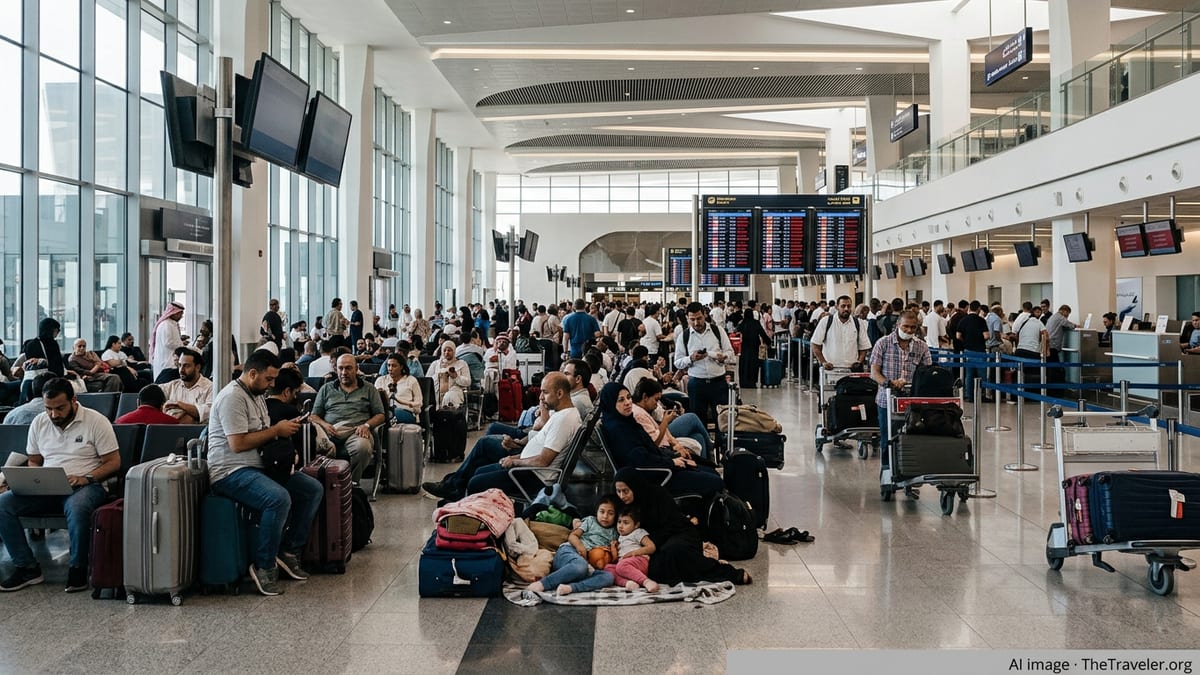
Airport hubs that normally pride themselves on smooth connections are straining under the combined weight of cancellations, reroutings and fuel logistics. Dubai International, one of the busiest global transit points, has seen waves of last minute schedule changes as Emirates and partner airlines react to shifting fuel allocations and airspace advisories. Travelers passing through the airport in recent weeks have reported extended connection times, congested transfer zones and frequent gate changes, patterns that align with the volatile operational environment described in regional aviation reports.
In Doha, where the main airport has already contended with direct security concerns from Iranian strikes, disruptions have been even more pronounced. Periods of reduced runway capacity and tightened air traffic control procedures have translated into clusters of delayed departures and missed onward connections, according to accounts collated by travel rights organizations and flight tracking services. The reliance of Qatar Airways on long haul connections amplifies any upstream disruption, making network recovery slower and more complex.
Abu Dhabi faces similar pressures as Etihad pares back frequencies and shifts aircraft among routes, while Frankfurt in Germany has become a European focal point for the fuel shock. With Lufthansa implementing large scale cuts from its primary hub, Frankfurt Airport has seen a thinning of short haul links and increasingly full remaining flights. European aviation data indicates that the cumulative effect across these four hubs is a noticeable reduction in global connectivity, particularly for itineraries that once relied on a single seamless connection between continents.
Longer Routes, Soaring Fares and What Passengers Should Expect
A key knock on effect of the conflict is the need for many airlines to avoid Iranian and neighboring airspace entirely, forcing longer flight paths around the region. Publicly available route maps and flight tracking feeds show that some services between Europe and Asia now add up to two hours to scheduled journey times, with aircraft flying northerly or southerly detours to stay clear of restricted zones. These extended routings further inflate fuel burn per flight just as prices spike, compounding cost pressures.
For passengers, the immediate consequences are higher ticket prices, fewer nonstop options and a greater risk of last minute disruption. Travel market analysts report average international airfares up by more than 20 percent year on year globally, with some long haul corridors that previously transited the Middle East seeing far steeper increases. Budget friendly connecting itineraries via Dubai, Doha or Abu Dhabi are becoming harder to find, replaced by more expensive routings via secondary hubs or multi stop journeys that add hours to total travel time.
Consumer advocacy groups advise travelers to build extra buffer time into connections, monitor airline apps closely in the days before departure and consider flexible fare classes or travel insurance that covers schedule changes. Guidance from European and US regulators reiterates that passengers remain entitled to refunds for canceled flights, even when airlines cite extraordinary circumstances such as war or fuel shortages. However, with seats on alternative services selling out quickly, rebooking often means accepting inconvenient schedules and significantly higher fares.
With no clear end in sight to the conflict or the resulting fuel crisis, industry forecasts suggest that volatility in flight schedules and pricing is likely to persist at least through the peak northern summer season. For now, travelers using Dubai, Doha, Abu Dhabi and Frankfurt as gateways to the world are being warned to expect fewer choices, longer journeys and the highest long haul airfares seen in years.