


Montenegro is one of Europe’s easiest countries to cross in a single trip, yet its landscapes shift dramatically from Venetian bays to high alpine peaks and quiet wine country. With short drives, reliable intercity buses and two coastal-facing airports, you can comfortably combine Kotor Bay, the Budva Riviera, Durmitor National Park, Lake Skadar and Tivat in as little as three days, or build a slower seven to ten day route that feels like a full Adriatic road trip.
Get the latest updates straight to your inbox!
Key Planning Decisions: When to Go, How to Move, Where to Land
Most travelers start or finish in either Podgorica Airport (the main international hub in the interior) or Tivat Airport on the coast. Tivat puts you within about 15 minutes’ drive of Kotor and Porto Montenegro in Tivat town, which makes it ideal for short trips that focus on the Bay of Kotor and Budva. Podgorica usually has more flight options and often slightly cheaper fares, and it sits roughly 1.5 hours by road from both Lake Skadar and the coast, so it works well if you want to loop through the mountains and the lake. In practice, many visitors fly into Podgorica and out of Tivat, or vice versa, to avoid backtracking.
Getting from the airports to the main coastal towns is straightforward but rarely a single direct hop. From Podgorica Airport to Kotor, for example, you typically take a regulated airport taxi to the main Podgorica bus station for around 15 euros, then a direct coach to Kotor, which in 2025 and 2026 has commonly cost about 8 to 12 euros and taken around two and a half hours depending on traffic. From Tivat Airport to Kotor or Budva, local taxis queue outside the terminal, with recent summer reports describing fares around 20 to 30 euros to Kotor and slightly more to Budva; it is worth confirming the price or meter use before you get in.
Driving is the most flexible way to see Durmitor and Lake Skadar, but you do not have to rent a car for your whole stay. Many visitors base themselves in Kotor or Budva without a vehicle, using frequent coastal buses at roughly 4 to 6 euros per leg between Kotor, Budva and Herceg Novi, then pick up a rental car just for three or four days to tackle the Durmitor Ring panoramic road or the tiny villages above Lake Skadar. If you prefer to avoid driving entirely, focus your time on Kotor Bay, Budva and Lake Skadar, where boat tours, taxis and organized excursions can replace self-drive days.
Season matters more than distance in Montenegro. July and August bring hot temperatures and heavy traffic, especially along the Budva Riviera and the approach roads to Kotor when cruise ships dock. Shoulder months such as May, June, September and early October see fewer crowds and slightly cooler weather, and mountain areas like Žabljak and Durmitor are usually fully accessible. In winter, Durmitor turns into a small ski area and some high passes can close, so itineraries then tend to focus more on the coast, Kotor and Budva, with only limited forays to the interior.
3 Days in Montenegro: A Snapshot of the Bay and Budva Riviera
A three day itinerary works best if you concentrate on the Adriatic coastline and skip the interior mountains this time. With such a short window, flying into Tivat makes logistics simplest, although Podgorica still works if you are comfortable with a longer initial transfer. The most efficient pattern is to base in Kotor for all three nights and visit Budva and Tivat as half-day or full-day trips, relying on buses and taxis rather than a rental car.
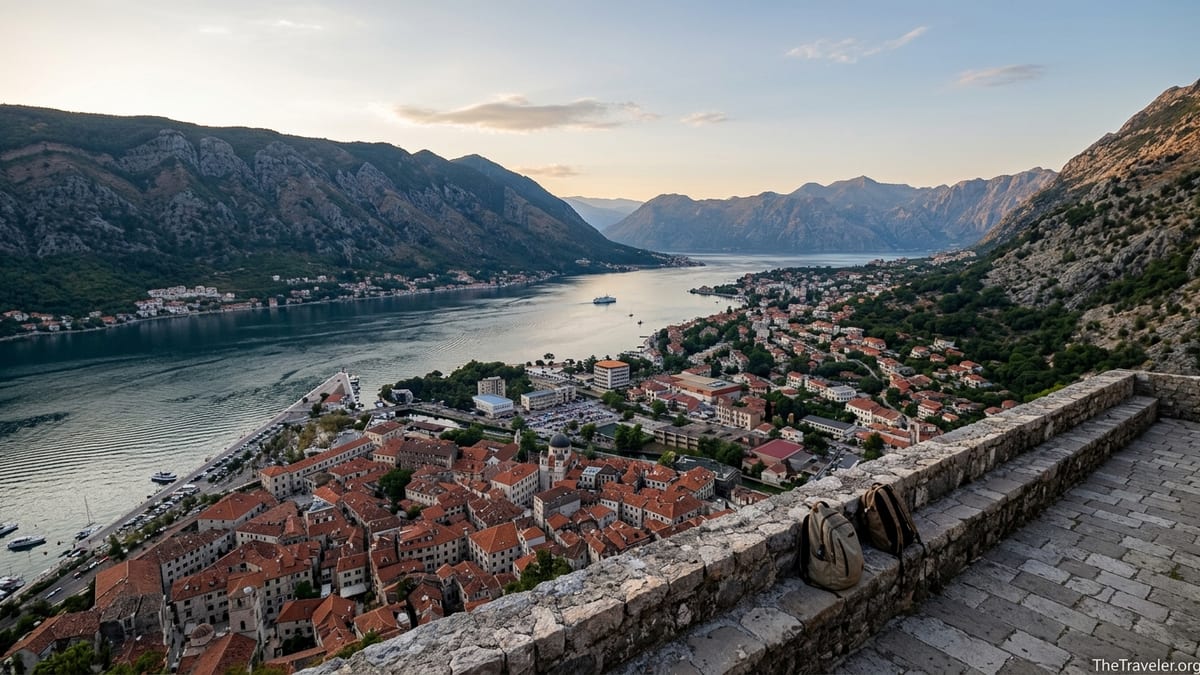
On Day 1, arrive at Tivat or Podgorica and head straight to Kotor, checking in to a guesthouse either inside the Old Town’s walls or along the waterfront strip of Dobrota, which is usually a little quieter and better value. Spend the rest of the day wandering the UNESCO-listed Old Town, climbing the city walls toward St John’s Fortress in the late afternoon when the heat eases, and having dinner in one of the stone courtyards. Typical mid-range restaurant mains in 2026 run around 10 to 18 euros, with a glass of local Vranac red wine around 4 to 6 euros.
Day 2 can be devoted to the Bay of Kotor and Tivat. Many visitors join a three to four hour speedboat tour from Kotor that runs out to Our Lady of the Rocks, passes the village of Perast and sometimes continues as far as the narrow Verige Strait or the open sea. Those tours typically cost in the region of 25 to 50 euros per person depending on length and group size. In the afternoon, you can take a short taxi or bus ride to Tivat to walk the modern marina at Porto Montenegro and watch the sunset over the superyachts before returning to Kotor for the night.
On Day 3, taste the Budva Riviera. Buses from Kotor to Budva usually take around 45 minutes and cost roughly 4 to 6 euros one way. In Budva, explore the compact Old Town, then walk or take a taxi out to Mogren Beach or Jaz Beach for a few hours of swimming. Be cautious with unofficial taxis waiting at beach parking lots; recent travelers have reported jumping into cabs where the meter started at several euros before leaving the car park and climbed quickly, so it is safer to ask your hotel or a bar to call a reputable local company and agree clear expectations before the ride.
5 Days in Montenegro: Adding Lake Skadar or a Taste of Durmitor
With five days, you can still keep a coastal base but now have room to add either Lake Skadar or a brief foray into the Durmitor mountains. A practical option is three nights around Kotor Bay and two nights in Virpazar or another Lake Skadar village, traveling entirely by bus and boat. Alternatively, for confident drivers, you could follow a Kotor–Budva–Žabljak arc that gives you one full day in Durmitor National Park before looping back to the coast or your departure airport.
One common five day pattern without a car is Day 1 to 3 in Kotor, Tivat and Budva as outlined in the three day itinerary, then on Day 4 travel from Budva or Kotor to Virpazar on the northern shore of Lake Skadar. The trip typically involves a bus change in Podgorica, and in total takes around three hours from Budva or slightly more from Kotor depending on schedules. Virpazar itself is small, with a handful of guesthouses and restaurants lining the lakeside; double rooms in mid-season often sit around 35 to 70 euros per night depending on view and comfort.
From Virpazar, join an early morning traditional wooden boat cruise among the lily pads and birdlife of Lake Skadar. Two-hour tours on shared boats commonly cost about 15 to 25 euros per person, while private half-day charters or sunset trips are typically more. Many captains also offer optional swimming stops in the lake and will point out viewpoints such as Pavlova Strana, which you can later reach by car or taxi for sweeping photographs of the river loops. Spend your fifth day visiting a winery in the surrounding Crmnica region, where family-run cellars pour robust reds and serve simple plates of local cheese and prosciutto, before returning to Podgorica or the coast for your flight.
If you prefer mountains to lakes and are willing to drive, consider splitting five days between Kotor Bay and Žabljak at the edge of Durmitor National Park. After two nights in Kotor and a day trip to Budva, rent a car on the coast and drive roughly three to four hours inland via Nikšić toward Žabljak, allowing time for photo stops above the canyons. In Žabljak, many guesthouses sit within walking distance of Black Lake, the national park’s most famous glacial lake; park entry tickets in recent seasons have typically been around 5 euros per adult for Durmitor and Lake Skadar, with additional local parking charges near the lake itself in summer.
7 Days in Montenegro: Classic Coast, Lake and Mountain Loop
A week in Montenegro is the sweet spot for a full loop that includes Kotor Bay, the Budva Riviera, Lake Skadar and Durmitor, without feeling rushed. This works best as a road trip using a compact rental car, but you can still combine buses with two shorter rental segments if you would rather minimize driving. A logical flow for seven days if you land in Tivat is Tivat and Kotor, Budva, Lake Skadar around Virpazar and finally Žabljak for Durmitor, finishing in Podgorica or looping back to Tivat.
On Days 1 and 2, settle into Kotor and Tivat. Spend one night in Kotor’s Old Town or Dobrota, exploring the historic squares and taking a bay boat trip, then one night in Tivat, where you can stroll the waterfront promenade, visit the modern cafes and look out toward the Lustica Peninsula. Day 3 and 4 could be based in or around Budva, but you do not need to stay in the thick of the party strip if that is not your style; nearby villages such as Bečići or smaller coves south of Budva offer quieter guesthouses with beaches still within walking distance or a short taxi ride.
From Budva, drive inland across the mountains toward Virpazar and Lake Skadar, ideally working in at least one scenic viewpoint stop above the lake. Spending Day 5 around Virpazar allows you to combine a morning on the water with an afternoon visiting monasteries on small islands or heading deeper into the wine-growing villages. Many travelers base themselves in stone houses renovated as rural escapes, with hosts arranging boat trips, wine tastings and even transfers back to Podgorica if they do not want to self-drive.
Days 6 and 7 can then be devoted to Durmitor. From Lake Skadar or Podgorica, the drive to Žabljak is typically around three hours on main roads, with mountain sections that are winding but paved. Once in Žabljak, take an afternoon to walk the easy lakeside trail around Black Lake, then dedicate a full day to either driving the Durmitor Ring, a roughly 76 kilometer loop that climbs to almost 1,950 meters, or joining a guided hike or rafting trip in the Tara Canyon. Return your car in Podgorica or Tivat on the final evening or next morning depending on your flight schedule.
10 Days in Montenegro: Slow Travel and Side Trips
Ten days let you slow the pace, repeat your favorite spots and add side trips that many shorter itineraries miss. With this much time, you can comfortably include rest days by the sea, extra hikes in Durmitor and multiple villages around Lake Skadar. One simple framework is to aim for three nights around Kotor Bay, two around Budva, two at Lake Skadar and three in Žabljak and Durmitor, adjusting by a night in either direction based on your interests and your arrival and departure airports.
On the coast, an extended stay around Kotor Bay allows you to explore quieter villages like Perast and Prčanj, or take a local bus or taxi along the waterfront to Dobrota for more relaxed swimming spots. Rather than rushing through Budva, you can spend a full day walking between beaches such as Mogren, Slovenska and Bečići, or take a taxi to the lookout above Sveti Stefan island for photographs. Prices for sun loungers in summer can vary widely, from around 10 euros for a pair with umbrella on standard beaches to significantly more at private beach clubs, so scanning the options before you commit helps avoid surprises.
In the interior, a 10 day itinerary lets you dive deeper into Durmitor and the surrounding north. After a first day around Black Lake, you might use another to hike a classic route such as the ascent of Bobotov Kuk, conditions permitting, or to explore the viewpoints along the Tara Canyon including the Đurđevića Tara bridge with its zipline operators. A third day could be your scenic driving day along the Durmitor Ring, stopping in hamlets like Mala Crna Gora to walk among high pastures and limestone cliffs.
Back at Lake Skadar, additional days mean you can rise with the sun for a dawn boat tour focused on birdwatching, then spend the afternoon in a village like Rijeka Crnojevića, known for its arched stone bridge and riverside terraces. You might also join a guided wine tasting that showcases the Vranac and Krstač grape varieties, often in groups of six to twelve guests for around 25 to 40 euros per person including snacks. With ten days, it is also feasible to stitch in a brief cross-border trip to nearby Dubrovnik or to the Albanian town of Shkodër, although you will need to check bus schedules and border crossing times in advance and allow buffer time for your return flight.
Driving, Buses and On-the-Ground Logistics
Montenegro’s main coastal and north–south arteries are paved and well signposted, but distances can feel longer than they look on a map because of narrow switchbacks and summer traffic. When deciding whether to rent a car for your whole trip, factor in not only the daily rental rate, which in recent seasons has often started around 30 to 50 euros a day for a small manual car in shoulder months, but also parking costs and the stress of navigating tight lanes in Old Town areas. Some travelers prefer a hybrid strategy, using buses for moves between Podgorica, Budva and Kotor and renting a car only for the Durmitor and Lake Skadar segments.
Intercity buses are a realistic backbone for many itineraries and connect almost all the places in this guide. Common routes like Podgorica to Budva, Budva to Kotor and Kotor to Herceg Novi are served multiple times per day by private companies whose tickets are typically bought either online a few days ahead or directly at the bus station ticket window. Prices fluctuate by operator and season but, as a broad guide, journeys along the coast often cost under 10 euros and last between one and two hours. For more rural destinations like Žabljak, there are usually a few direct buses per day from Podgorica and Nikšić.
Within towns and for late-night returns from beaches or restaurants, taxis fill the gap. Official taxi companies generally use meters and publish average fares between common points, but there is a difference between those and opportunistic drivers waiting at beach entrances or outside bus stations. Recent visitors have described meter readings that seemed to jump rapidly when leaving certain coastal parking areas, so a practical tip is to ask your accommodation for a recommended local company, to check that the meter starts from a reasonable base fare or to agree a clear fixed price before departure on tourist-heavy routes like Budva to Jaz Beach.
Finally, be aware of local driving rules and conditions if you take the wheel yourself. Using a mobile phone while driving is prohibited unless you have a hands-free system, and seatbelts are compulsory. Mountain roads, including scenic routes such as the Durmitor Ring or the serpentine ascent above Kotor toward Lovćen, can be narrow with sheer drops, minimal barriers and limited passing places, so sober, unhurried driving and avoiding night-time mountain drives are wise. In peak summer heat, planning mountain hikes for the morning and coastal sightseeing for late afternoon makes both more enjoyable.
Choosing Where to Base: Kotor, Budva, Tivat, Durmitor and Lake Skadar
Kotor Bay offers atmosphere and history, with the Old Town’s alleys, defensive walls and bay views providing a strong sense of place. Staying inside the walls or in the immediate waterfront neighborhoods puts you close to cafes and restaurants but also to the cruise ship crowds that roll in on certain days. Areas such as Dobrota and Muo a short walk or taxi ride away often have calmer evenings and slightly better-value waterfront apartments, which suit travelers who want bay views without all the street noise under their windows.
Budva is the classic resort choice, known for its beaches and nightlife along the Budva Riviera. The Old Town is picturesque, but the broader town has a more modern, high-rise resort feel. This can be a positive if you are looking for a sociable base with beach clubs and a wide spread of accommodation from budget apartments to all-inclusive hotels. If you want easy access to Budva’s restaurants and ferries but quieter nights, consider staying in Bečići, Petrovac or small coves further south that are linked by local buses and taxis.
Tivat is often overlooked but can work well for travelers who value convenience and a softer price point. The town’s modern marina promenade has upmarket boutiques and restaurants, yet a street or two back you can still find simple bakeries and local bars. Because Tivat is serviced by the coastal airport, it is a practical first or last night base and, for some travelers, a cheaper alternative to Kotor while remaining a short bus ride away from the more famous Old Town.
Inland, Žabljak is the main gateway for Durmitor National Park. It feels more like a mountain village than a town, with wood cabins, guesthouses and small supermarkets rather than big hotels. This base works best for hikers and nature lovers who plan to spend their days on trails or scenic drives. Around Lake Skadar, compact Virpazar is the most familiar base, with boat captains, lakeside cafes and tour offices lining the main bridge, while villages such as Rijeka Crnojevića or Godinje offer quieter stays among vineyards and stone houses where hosts can organize boat trips, bike rentals and wine tastings.
The Takeaway
Montenegro rewards both quick visits and long, meandering road trips because its grand shifts in scenery sit surprisingly close together. In three days, you can immerse yourself in the drama of Kotor Bay and the beach town energy of Budva; in five, you can add either Lake Skadar’s wetlands or a glimpse of Durmitor’s rugged peaks. A week lets you complete a satisfying loop of coast, lake and mountains, while ten days opens the door to slower mornings, extra hikes and evenings tasting wine in small villages.
Planning your route around arrival and departure airports, deciding where you truly need a rental car and being realistic about travel times along winding roads are the key practical choices. Once these pieces are in place, the rest is a matter of choosing how much time to give to each contrast: walled towns and marinas, quiet lakes and high passes, beach clubs and mountain cabins. However long you stay, Montenegro’s compact size and evolving infrastructure make it an accessible, rewarding country to explore in depth.
FAQ
Q1. Is it better to fly into Tivat or Podgorica for this itinerary?
Tivat is more convenient for short coastal-focused trips because it sits close to Kotor and Budva, while Podgorica offers more flight options and works well for loops that include Lake Skadar and Durmitor. Many travelers choose one airport for arrival and the other for departure to minimize backtracking.
Q2. Do I need to rent a car to visit Durmitor and Lake Skadar?
You can reach both areas by bus and then use local taxis and tours, but a car gives you far more flexibility, especially for the Durmitor Ring and smaller Lake Skadar villages. A hybrid plan is popular, with buses along the coast and a rental car just for three or four interior days.
Q3. How much should I budget per day in Montenegro?
Spending varies widely, but many mid-range travelers report daily costs around 70 to 130 euros per person excluding flights, covering a private room, restaurant meals and activities. Staying in apartments a street or two back from the water, using buses and eating some meals from bakeries or markets can keep costs down.
Q4. Is driving in Montenegro safe for visitors unfamiliar with mountain roads?
Hundreds of visitors drive Montenegro’s routes each day without problems, but the roads can be narrow and winding with steep drops. If you are not comfortable with that, avoid night driving, choose main highways over scenic shortcuts, and consider joining organized excursions for the most demanding sections such as the Durmitor Ring.
Q5. When is the best time of year to follow these itineraries?
Late spring and early autumn, roughly May to June and September to early October, balance pleasant temperatures with lighter crowds. July and August bring hot weather, busy roads and higher accommodation prices, while winter can limit access to some high mountain routes around Durmitor.
Q6. Can I rely on public transport between Kotor, Budva, Tivat and Podgorica?
Yes, intercity buses link these towns several times daily and are widely used by locals and visitors. They are affordable and reasonably punctual, although schedules thin out in the evenings and on some rural routes, so checking times a day or two ahead is wise.
Q7. How many nights should I spend in Žabljak for Durmitor?
Two nights give you one full day to see Black Lake or take a short hike, but three or more nights are better if you want to drive the Durmitor Ring, attempt a longer hike and add an activity such as rafting in the Tara Canyon.
Q8. Is Kotor or Budva a better base for first-time visitors?
Kotor offers a more historic, atmospheric stay with bay views and narrow lanes, while Budva has longer beaches and a livelier nightlife scene. With five or more nights, many travelers split their time between the two to experience both the Old Town charm and the classic beach resort feel.
Q9. Are card payments widely accepted or should I carry cash?
Cards are accepted at most mid-range hotels, supermarkets and many restaurants, but you will still need cash for smaller guesthouses, some parking areas, local taxis and boat tours. Having a mix of payment options, including some euros in small denominations, keeps day-to-day logistics smoother.
Q10. Is Montenegro suitable for families following these routes?
Yes, families often enjoy the combination of beaches, gentle lake swims and easy walks around places like Black Lake. Choosing shorter driving days, coastal bases with nearby playgrounds and boat trips instead of the longest hikes can make a 7 or 10 day Montenegro itinerary very family friendly.