


Montenegro is small enough to cross in half a day yet varied enough to feel like three different countries: a Venetian-flavoured coastline, rugged Alpine-style mountains and quiet lake and village landscapes in between. Because distances are short but travel time can be slow, the smartest Montenegro itinerary starts with one question: where should you actually base yourself? This decision guide compares the country’s headline destinations and a few under-the-radar coastal towns to help you match Montenegro’s beaches, mountains and old towns to your travel style, time and budget.
Get the latest updates straight to your inbox!
How to Choose Your Base in Montenegro
First-time visitors often underestimate how fragmented Montenegro feels on the ground. The Bay of Kotor, the Budva Riviera, Lake Skadar and Durmitor National Park are all within roughly three hours of each other by car, but bus connections are slower and mountain roads can be winding. For a one-week trip, most travelers end up choosing two bases: one on or near the coast for old towns and beaches, and one in the mountains for hiking or rafting.
Your budget also influences where you stay. A coffee on Kotor’s main square typically costs around 2 to 2.50 euros, and a casual dinner with a glass of local wine often comes to 15 to 25 euros per person in places like Budva or Tivat. Inland, in towns like Žabljak near Durmitor or Virpazar at Lake Skadar, you will often find hearty set lunches in local restaurants for 8 to 12 euros and basic guesthouses from around 30 to 40 euros per night in high season, sometimes less if you book early or stay in private rooms known as “sobe.”
Season is another key factor. July and August bring cruise ships into Kotor and packed beaches around Budva and Ulcinj. If you want to hike around Durmitor’s Black Lake or take a Lake Skadar boat trip without crowds, consider late May, June, September or early October, when daytime temperatures are usually comfortable and room rates are often lower. Winter visits can work well if you focus on Podgorica, Cetinje or coastal towns, but many mountain activities and smaller lake businesses shut or run on limited schedules.
Think in terms of “clusters” rather than individual towns. The Bay of Kotor cluster covers Kotor, Perast, Herceg Novi and Tivat. The Budva Riviera includes Budva itself, nearby Sveti Stefan and smaller coastal villages. The southern coast centers on Ulcinj. Inland nature hubs include Durmitor and Lake Skadar, while Lovćen National Park and Cetinje sit roughly in between coast and interior. Once you know whether you are a bay-view, beach, mountain or village traveler, choosing a base becomes much easier.
Kotor, Perast, Tivat and Herceg Novi: Best for Views and Old Stones
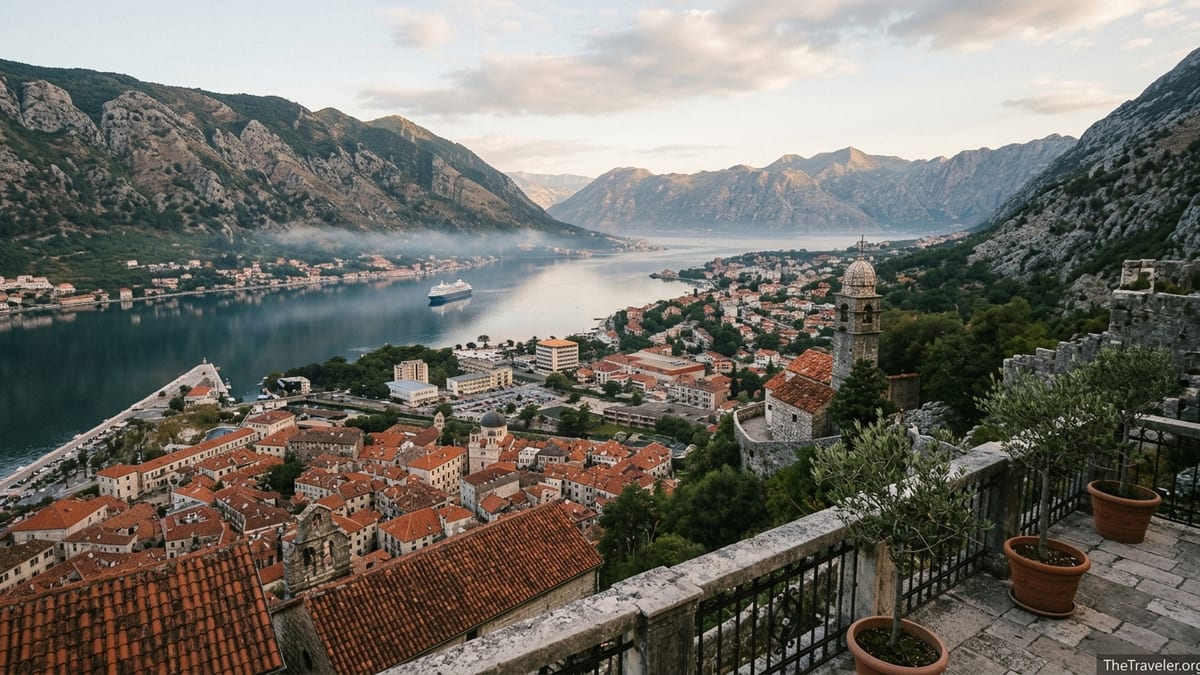
If your mental picture of Montenegro is a fjord-like bay framed by medieval walls, you are thinking of the Bay of Kotor. Kotor itself is the marquee name, with a walled Old Town that feels like a smaller, more intimate cousin of Dubrovnik. Inside the walls, you will find stone alleyways, cats lazing in church doorways and a dense cluster of cafés, apartments and boutique hotels. Accommodation inside the Old Town is atmospheric but noisy in summer, especially when cruise passengers fill the streets from mid-morning to mid-afternoon.
Many repeat visitors now choose Dobrota, a waterfront area stretching north from Kotor, or the small villages on the opposite side of the bay for a quieter base. Here, you can rent an apartment in a traditional stone house, swim from tiny jetties and be in Kotor Old Town in 5 to 10 minutes by taxi or bus. Perast, about 20 minutes up the bay, is even more tranquil. It is essentially a single waterfront street of baroque palaces facing two postcard-perfect islands, including the church on Our Lady of the Rocks. You can expect to pay a few euros for a short boat ride out to the island, and many visitors combine this with a long lazy lunch on Perast’s waterfront.
Tivat and Herceg Novi appeal to travelers who want the bay setting without Kotor’s intensity. Tivat’s Porto Montenegro marina has luxury yachts, upmarket hotels and international restaurants. Prices here are among the highest in the country, but in return you get a polished, modern waterfront, well-maintained promenades and a resort-like feel that suits travelers who might otherwise choose the French Riviera or Croatia’s more upscale islands. Herceg Novi, closer to the Croatian border, is more low-key and popular with families and longer-stay visitors. The town has a sloping old center, several fortresses, shaded seaside walks and easy access to quieter beaches and coves on the Luštica Peninsula by boat or taxi.
For most first-timers with three or four nights on the bay, Kotor or Dobrota work best if you want to explore on foot and do day trips to Perast, Lovćen and Lake Skadar. If you arrive by car from Croatia and prefer a less touristy atmosphere, basing in Herceg Novi and visiting Kotor on a day trip can give you more space while still delivering the signature bay views.
Budva, Sveti Stefan and Hidden Coastal Towns: Best for Beaches
Budva is Montenegro’s classic beach resort, with a compact old town jutting into the sea, long strips of sand and pebbles east and west, and dense lines of hotels and rental apartments behind them. It is also one of the busiest places in the country in July and August, with beach bars and nightclubs staying loud into the early morning. If you want nightlife, a wide choice of restaurants and easy access to organized excursions, Budva makes sense. A standard sunbed and umbrella set on a central Budva beach in high season often costs somewhere between 10 and 20 euros for the day, with cheaper or free areas if you are happy to lay a towel on the pebbles.
Just down the coast, Sveti Stefan is the famous fortified islet connected to the mainland by a narrow causeway. The island operates as an exclusive hotel complex, but the real attraction for most visitors is the view from the coastal path and the beaches on either side of the islet. These beaches are among the most photogenic in the country, backed by pine trees and former royal gardens. Accommodation in the immediate Sveti Stefan and nearby Pržno area tends to be mid to upper range, with smaller guesthouses, sea-view apartments and a handful of four and five star hotels commanding higher prices than in inland towns.
If you like the idea of the Budva Riviera but want something quieter and more local in feel, consider smaller towns like Petrovac or the villages further south toward Bar. Petrovac offers a sheltered bay, a modest old town feel and a family-oriented atmosphere, with several mid-range hotels and plenty of self-catering apartments. You can still reach Budva or Sveti Stefan in under an hour by bus or car, but evenings in Petrovac are more about strolls along the waterfront promenade than bar crawls.
Hidden pockets of coastline also exist all along the bay. Villages like Prčanj or Stoliv near Kotor, or Morinj further up, lack big beaches but offer stone houses right on the water, quieter swimming spots and long, flat promenades ideal for evening walks. Travelers who are happy with ladder access to the sea rather than sandy expanses often find these low-key waterfronts more relaxing than the official resort beaches.
Ulcinj and the Southern Coast: Best for Big Beaches and Wind
At Montenegro’s southern end, near the Albanian border, Ulcinj feels different from the northern coast. The old town sits on a rocky headland and reflects a mix of Ottoman and Mediterranean influences, with minarets, narrow streets and sea views. Below it, the small city beach can be crowded in summer, but just a short drive away lies one of Montenegro’s most distinctive coastal features: Velika Plaža, a broad sandy beach that stretches for around 12 kilometers.
Velika Plaža is particularly popular with families who want lots of space and shallow water, and with kitesurfers drawn by steady afternoon winds. Beach clubs here range from simple wooden shacks renting two loungers and an umbrella for around 10 to 15 euros, to more developed setups with music, volleyball courts and basic changing facilities. Food options run from grilled fish and salads at beachside restaurants to casual pizza and burek stalls.
South of Velika Plaža, the Ada Bojana river island area is known for simple seafood restaurants built on stilts along the riverbanks and a few low-rise resorts and bungalows. It suits travelers who want a laid-back, slightly rustic escape with long bike rides along the coast, sunset swims and dinners of local grilled fish, mussels and homemade wine. Prices for accommodation in Ulcinj and Ada Bojana are often lower than in Budva or Kotor at comparable quality levels, which can make the south appealing for longer stays.
Because Ulcinj is further from the main northern sights, it works best either as a dedicated beach week or as the final stop in an itinerary that loops down the coast from Kotor or Budva. Public transport links exist, but realistically a car makes it easier to hop between Ulcinj’s beaches, river restaurants and inland viewpoints around Lake Skadar.
Durmitor National Park: Best for Serious Mountains and Adventure
Durmitor National Park in northern Montenegro is the country’s premier mountain playground, with limestone peaks, glacial lakes and deep canyons including the Tara River Canyon, often cited as one of the deepest gorges in Europe. The gateway town of Žabljak sits at around 1,450 meters above sea level, which keeps summer temperatures cooler than on the coast and often brings snow in winter. Most visitors stay in or around Žabljak and spend their days hiking, cycling or taking guided excursions.
One of the signature experiences is a circuit walk around Black Lake, an easy 3 to 4 kilometer path through conifer forest with mountain reflections on still days. Fit hikers use Žabljak as a base for full day climbs of peaks such as Bobotov Kuk, while others opt for shorter viewpoints accessed by marked trails or guided jeep tours. In summer, local agencies in town advertise activities like canyoning, rafting on the Tara River, e-mountain bike tours and zipline crossings, usually starting from 40 to 60 euros per person for half day experiences, with rafting day trips typically costing more depending on route and inclusions.
Spring through early autumn is the main season for hiking and water activities. Between roughly November and March, Durmitor shifts toward winter sports. There are ski runs on slopes like Savin Kuk, along with cross-country ski and snowshoeing opportunities, though facilities are more modest than in the Alps. Travelers should check recent safety updates and weather conditions, especially if planning off-piste activities or visiting early or late in the snow season.
Durmitor pairs naturally with coastal stays for visitors who want a two-sided trip. Many travelers either drive directly from the Bay of Kotor or Budva to Žabljak in around three to four hours or break the journey with a night near Nikšić or in smaller mountain villages. If you do not want to drive, several agencies based in Kotor or Budva sell long day trips to the Tara Canyon and Durmitor highlights. These are convenient but often involve early starts, late returns and limited time out of the bus compared with a proper two or three night stay in Žabljak.
Lake Skadar, Lovćen and Cetinje: Best for Villages, Views and Culture
Between coast and mountains, Lake Skadar (also called Skadar Lake or Skadarsko Jezero) offers a quieter, more rural slice of Montenegro. The lake itself is shared with Albania and is known for its birdlife, water lilies and traditional fishing villages. Most visitors base themselves in Virpazar, a small town about 30 minutes by road from the coast and around the same from Podgorica. Here, wooden boats line the small harbor, and nearly every quay advertises lake tours of varying lengths and routes.
Boat trips are the main way to experience Lake Skadar. Short shared tours of around one to two hours are commonly priced in the region of 15 to 25 euros per person, while private boats are typically rented per hour, sometimes starting around 40 to 50 euros for a small group, plus a modest national park entrance fee that is usually collected at the pier. Longer trips might include swimming stops, birdwatching and visits to island monasteries or villages where you can sample local wine and homemade cheeses. Kayak rental is available for travelers who prefer to explore the reed channels under their own steam.
To the west of the lake, Lovćen National Park rises above the Bay of Kotor and the old royal capital of Cetinje. The park is famous for its hairpin “serpentine” road views over the bay and for the Njegoš Mausoleum, perched on a high peak. Many visitors reach the park by driving or taking a guided excursion from Kotor, Budva or Cetinje, combining a stop at village smokehouses in Njeguši for plates of cured ham and cheese. A newer cable car route connects the Kotor area with Lovćen’s high slopes in season, cutting travel time and offering panoramic views, though you still need a shuttle or additional transport to reach the very top of the mausoleum steps.
Cetinje itself is a compact, green town that once served as Montenegro’s royal and diplomatic center. Today it feels more like a quiet provincial capital, with low-rise houses, former embassies converted into museums, old monasteries and leafy streets. Travelers interested in Montenegro’s history and identity often appreciate half a day here visiting at least one museum and the monastery before looping back toward the coast or onward to Podgorica or Lake Skadar.
Hidden Coastal Towns and How to Combine Them
Beyond the well-known names, Montenegro’s coast and lake shores are dotted with villages that can easily become trip highlights, especially for travelers who value atmosphere over big sights. On the Bay of Kotor, Prčanj and Stoliv offer long, walkable waterfronts lined with stone houses and small churches, with jetties where local children swim in summer evenings. Accommodation is mostly in family-run apartments, many of which include access to the water directly across the promenade.
On the open Adriatic, the stretch between Bar and Ulcinj hides small pockets with a slower pace than the Budva Riviera. Villages near Sutomore or smaller coves close to Bar attract mostly regional visitors and can feel more local, with simple taverns serving grilled fish and salads at prices often lower than those in the main resorts. Services are fewer, but so are crowds and late-night noise. Inland, wine-producing villages around the northern shores of Lake Skadar offer rustic guesthouses where hosts often serve homegrown vegetables, their own wine and strong local spirits known as rakija with dinner.
For many trips, the most efficient combination is one base on the Bay of Kotor, one on the Budva or southern coast, and one in either Durmitor or Lake Skadar. For example, a 9 or 10 day itinerary might include three nights in Kotor or Perast for old towns and bay views, three nights in Žabljak for mountain hiking and Tara rafting, and three nights split between Budva and Ulcinj or Petrovac for beaches. Those who prefer slower travel could easily spend a full week on the bay with day trips to Lovćen, Cetinje and Lake Skadar, then add a shorter inland extension.
Transport logistics matter when choosing combinations. Public buses connect major coastal towns and Podgorica reasonably well but can be infrequent for smaller villages and mountain areas, especially outside high summer. Car rental from Podgorica, Tivat or Dubrovnik airports gives you the most flexibility to reach hidden viewpoints, lesser-known beaches and village restaurants. For travelers uncomfortable with mountain driving, basing in well-served hubs like Kotor, Budva and Podgorica and using organized day tours to reach Durmitor, Lake Skadar or Lovćen can be a comfortable compromise.
The Takeaway
Montenegro packs beaches, mountains and centuries-old towns into a territory smaller than many European regions, but that variety means you need to prioritize. If you want walled streets and bay views, make Kotor or Perast your anchor and add Lovćen and Cetinje for historical depth. If you dream of long sandy beaches and warm evenings by the sea, focus on Budva, Sveti Stefan and Ulcinj, with side trips to quieter coastal villages when you need a break from the bustle.
For active travelers, Durmitor and Lake Skadar provide two different visions of the country’s wilder side: towering peaks and canyons in the north, gentle reeds and birdlife in the south. Many visitors now build itineraries that pair three or four nights on the coast with three or four nights inland, giving a sense of how Montenegro’s geography and history have shaped each region. With short driving distances, reasonable prices compared with many neighboring destinations and a growing choice of small-scale guesthouses and apartments, Montenegro rewards travelers who take the time to look beyond one headline town and see the connections between its bays, beaches, mountains and old royal centers.
FAQ
Q1. How many days do I need to see Montenegro’s main highlights?
Most travelers who want a mix of coast, mountains and lake scenery find that 7 to 10 days allows a relaxed loop including Kotor, Budva or another coastal town, plus either Durmitor or Lake Skadar. With only 4 or 5 days, it is usually better to focus on the Bay of Kotor area with one or two day trips.
Q2. Is it better to stay in Kotor Old Town or nearby villages like Dobrota or Perast?
Kotor Old Town is very atmospheric and convenient for early morning and evening walks, but it is also the busiest and noisiest base in high season. Dobrota and Perast are quieter, with easy access to swimming spots and regular connections back to Kotor, which many visitors find more relaxing for stays of several nights.
Q3. Do I need a car to explore Montenegro’s beaches and mountains?
You can see the main towns using buses and organized excursions, especially between Kotor, Budva, Bar and Ulcinj. However, a rental car makes it much easier to reach Durmitor, Lake Skadar villages, smaller bayside settlements and hidden beaches at your own pace, and can save time on multi-stop itineraries.
Q4. When is the best time to visit Montenegro for both beaches and hiking?
Late May, June, September and early October usually offer the best compromise. Sea temperatures are generally pleasant, coastal crowds are thinner than in July and August, and conditions in places like Durmitor and Lovćen are often ideal for hiking, although higher peaks can still see patches of snow early in the season.
Q5. How expensive is Montenegro compared with Croatia or Italy?
Overall costs in Montenegro are often lower than in many parts of coastal Croatia or Italy, especially for food, drink and guesthouse accommodation. A typical sit-down meal with a drink can easily come in under 20 euros per person outside the most upscale marinas and resorts, although prices do rise in peak summer and in luxury locations such as Porto Montenegro or directly by Sveti Stefan.
Q6. Which is better for beaches, Budva or Ulcinj?
Budva offers a mix of smaller coves and long pebbly stretches with plenty of bars, clubs and activities nearby, making it a good choice if you want nightlife as well as swimming. Ulcinj and the southern coast are better for very long sandy beaches, more space, wind sports and often slightly lower prices, though they are further from the northern bays and old towns.
Q7. Can I visit Durmitor and Lake Skadar as day trips from the coast?
It is possible to join long day tours from Kotor or Budva that reach Durmitor or Lake Skadar, but travel times mean you will only sample a few viewpoints and short walks. For meaningful hiking in Durmitor or a slower boat and village experience on Lake Skadar, at least one or two nights in Žabljak or Virpazar is strongly recommended.
Q8. Is swimming in the Bay of Kotor as good as on the open Adriatic coast?
Swimming in the bay can be very pleasant, especially from jetties and small beaches in villages like Dobrota, Prčanj or Perast. However, the water is usually calmer and sometimes less clear than on the open Adriatic around Budva, Sveti Stefan or Ulcinj. Travelers who prioritize long sandy beaches usually prefer the open coast, while those who value scenery and convenience enjoy the bay.
Q9. Are there family-friendly options in Montenegro for young children?
Yes. Towns like Petrovac, Herceg Novi, parts of Ulcinj and many Lake Skadar guesthouses cater well to families, with shallower beaches, playgrounds, promenades for stroller walks and apartment-style lodging. Durmitor and Lovćen also offer easy lakeside or forest walks that children can manage, plus activities like short boat rides and modest ziplines suitable for older kids.
Q10. Is Montenegro safe for independent travel, including solo travelers?
Montenegro is generally considered safe for independent travelers, including solo visitors, provided you take the usual precautions you would in any European destination. Petty theft can occur in crowded tourist areas, and drivers should take care on mountain roads, but violent crime affecting tourists is rare and locals are often helpful with directions and practical advice.