


More news on this day
A routine cruise call in Corfu turned into a legal and safety incident this week when a female passenger fell into the harbor after mooring lines reportedly snapped in strong winds, leading to the arrest of the ship’s captain under Greek maritime law.
Get the latest news straight to your inbox!
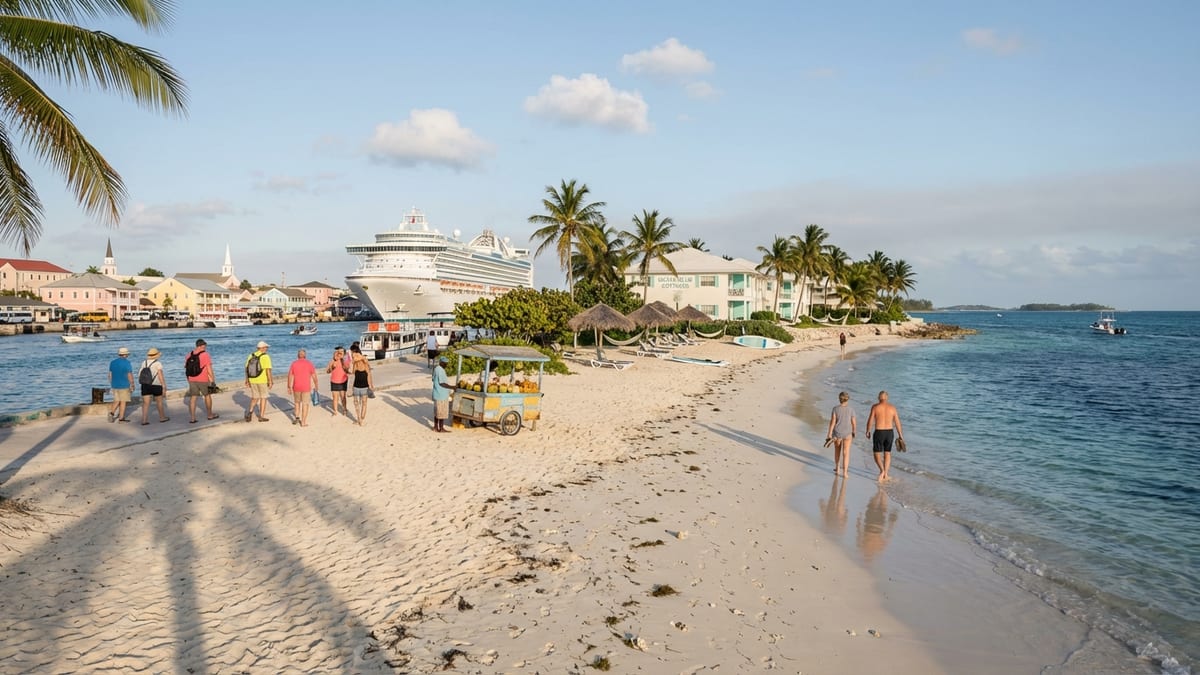
Incident at Corfu’s Main Cruise Harbor
Publicly available information indicates that the accident occurred in the evening hours of June 30, 2026, at Corfu’s main commercial harbor, a busy cruise gateway in the Ionian Sea. The Bahamas flagged vessel was alongside when weather conditions reportedly deteriorated, with sudden gusts affecting the ship while it was secured to the pier.
Reports from Greek and international outlets describe how several of the ship’s mooring lines, the heavy ropes that keep a vessel fixed to the dock, appear to have parted during the high winds. As the lines failed, the ship is said to have moved away from the quay, causing the gangway connecting the vessel to the pier to tilt and shift.
At that moment, a 56 year old passenger from New Zealand was walking on the gangway. As the structure moved, she reportedly lost her balance and fell into the water between the ship and the pier. Port personnel and crew members are reported to have responded quickly, pulling her from the harbor and arranging ambulance transport to a local hospital.
Medical updates cited in local coverage suggest the woman sustained minor injuries and shock but did not suffer life threatening harm. She was treated on Corfu and discharged after receiving care, according to regional news reports.
Captain Detained Under Greek Maritime Law
Following the incident, Greek law enforcement agencies initiated a standard investigation into the circumstances surrounding the fall. Public reports indicate that the ship’s 56 year old Italian captain was taken into custody on allegations related to endangering passengers, in line with provisions of the Hellenic Penal Code that hold a commanding officer responsible for safety during embarkation and disembarkation.
Several Greek language outlets describe the arrest as a procedural step that typically follows serious accidents in national ports. In this framework, the captain is formally questioned and may face prosecution if investigators determine that operational decisions, preparation, or adherence to safety protocols were inadequate in the prevailing weather conditions.
Industry focused publications note that the captain was in charge of a large international cruise ship with several thousand people on board, including passengers and crew. The vessel was reportedly on a multi port Mediterranean itinerary at the time of the event. Publicly available information so far does not identify the ship by name, although ship tracking data and cruise schedules circulating in specialist media point to a Bahamas registered vessel that was among a handful of cruise callers in Corfu on June 30.
As of the latest reports, there has been no widely distributed statement naming the operator or providing detailed company level commentary on the arrest or ongoing inquiry. Coverage instead focuses on the legal framework and the next steps for the captain, who may be released pending further investigation or face formal charges in Greek courts.
Questions on Weather Protocols and Port Safety
The incident has renewed attention on how cruise ships and ports manage sudden changes in wind and sea conditions, especially at exposed berths. Maritime analysts cited in trade coverage explain that strong crosswinds can place intense loads on mooring lines. If those lines part unexpectedly, even a brief movement of the hull away from the dock can destabilize a gangway.
Operational guidelines in the cruise sector generally call for close coordination between bridge teams, harbor pilots, and port authorities when adverse weather is forecast. This can include deploying additional mooring lines, using thrusters to maintain the ship’s position, or suspending passenger movement across the gangway until conditions improve. In some cases, cruise lines choose to cancel or shorten port calls to avoid risks associated with high winds.
Industry incident data compiled over recent years show that mooring related events, while relatively uncommon compared with the total number of port calls worldwide, do occur in a variety of destinations. Many such cases involve equipment damage or minor operational disruptions. Episodes in which a passenger falls into the water during a mooring failure are less frequent, which helps explain the high level of scrutiny this case is receiving in Greece and among maritime safety observers.
For Corfu, a major stop on Eastern Mediterranean and Adriatic itineraries, the episode may prompt a review of local procedures for handling cruise calls during strong winds. Public discussion in Greek media already touches on whether additional measures, such as temporary suspension of boarding or modified berth assignments, might further reduce risks during gusty conditions.
Impact on the Cruise Passenger and Voyage
While the passenger’s injuries have been described as minor, the fall into the harbor represents a serious and unsettling experience for those on board. Travelers posting on cruise forums and social media platforms have described scenes of confusion around the gangway area and heightened concern about the stability of the ship at the pier during the wind event.
Reports indicate that after the passenger was rescued and transported to hospital, officials conducted checks on the vessel’s seaworthiness and documentation. Routine drug and alcohol testing of the bridge team has been mentioned in some coverage as part of standard post incident procedures, although there has been no indication in public reports of impairment among senior officers.
The ship’s itinerary following the incident remains the subject of speculation in cruise tracking communities, with some observers suggesting minor schedule adjustments while others report that the vessel continued its program after clearance from local authorities. At this stage, there is no broad confirmation of extended delays or cancellations directly linked to the accident.
For the passenger involved, publicly available information has not included personal statements or detailed updates beyond the initial report of treatment and release. Privacy considerations typically limit the amount of personal data shared in such cases, and most coverage focuses instead on the technical and legal aspects of the event.
Broader Implications for Cruise Operations
Beyond the immediate legal process in Corfu, the arrest of a captain following a mooring line failure is likely to prompt internal reviews across the cruise industry. Safety departments at major operators routinely examine external incidents to determine whether their own procedures, training, and port selection criteria need refinement.
Maritime commentators note that climate and weather related variability, including more frequent sudden wind squalls, can challenge traditional assumptions about port safety. Ships have grown larger in recent decades, increasing windage and the forces exerted on mooring equipment. As a result, ports and operators are investing in upgraded bollards, stronger synthetic lines, automated tension monitoring systems, and revised standing orders for bridge teams during high wind alerts.
Professional bodies and regulators may also draw on this incident when updating guidance on passenger movement during mooring operations. Practical measures can include clearer announcements about temporary gangway closures, physical barriers at access points during maneuvers, and closer real time coordination between shore staff and shipboard security when conditions deteriorate.
For travelers, the Corfu episode serves as a reminder that embarkation and disembarkation are among the most sensitive phases of any cruise. While serious accidents remain rare in relation to the volume of global cruise traffic, this case highlights the combined importance of shipboard vigilance, robust infrastructure, and timely operational decisions whenever weather threatens the delicate balance between vessel, pier, and passenger access.