


More news on this day
More than 2,200 flights were delayed and at least 546 canceled across the United States as a mix of severe weather, staffing constraints and crowded summer schedules converged to create another day of widespread air travel disruption for passengers nationwide.
Get the latest news straight to your inbox!
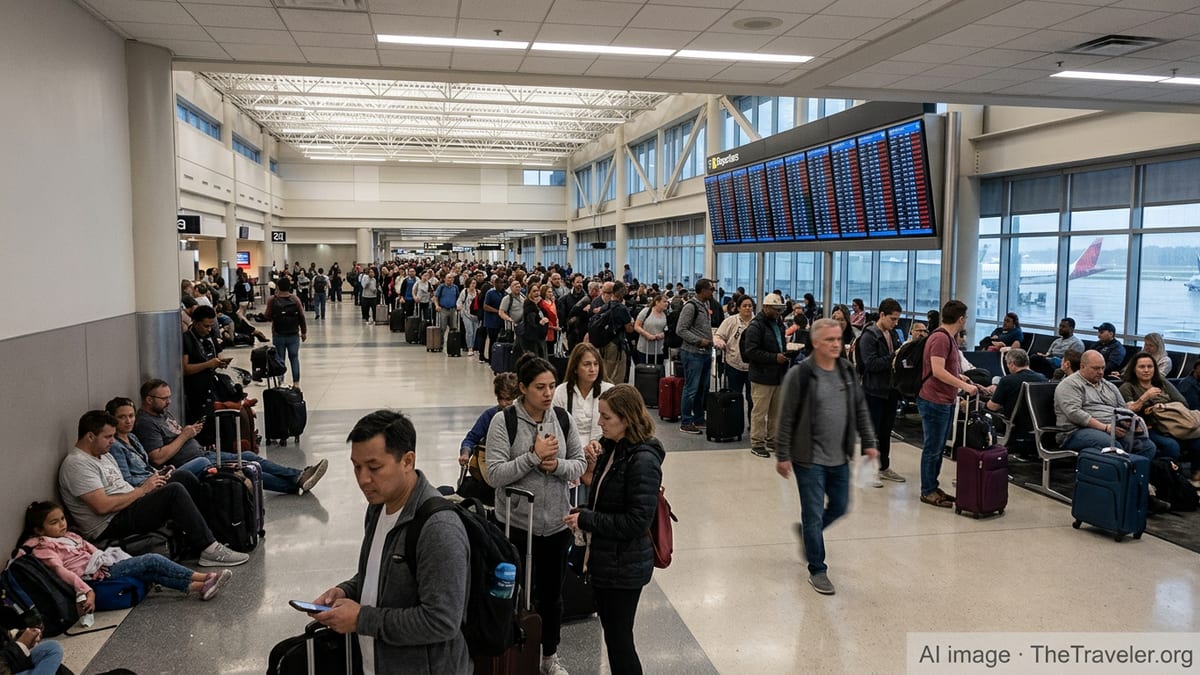
Delays Ripple Across Major U.S. Hubs
Publicly available data from flight-tracking services indicate that the latest wave of disruption affected flights across the country, with the heaviest delays clustered at the busiest hubs. Airports serving major metropolitan areas such as New York, Atlanta, Chicago and Dallas saw dozens of departures and arrivals pushed back, in some cases by several hours.
At the height of the disruption, more than 2,200 flights within, into or out of the United States were reported delayed, while at least 546 were canceled outright. The figures reflect the cumulative impact of rolling schedule changes throughout the day rather than a single incident, illustrating how quickly problems can compound when large hub airports begin to back up.
Traffic patterns show that when one or two key airports experience extended ground stops or arrival restrictions, delays tend to cascade through the network. Aircraft and crews that would normally cycle between cities become out of position, leading to secondary disruptions even at airports that are not directly hit by severe weather or operational limits.
Industry data from recent seasons suggest that these kinds of multi-airport disruptions are no longer isolated events. Instead, they have become a recurring feature of peak travel periods, particularly on busy weekends and holiday stretches when schedules are already operating near capacity.
Severe Weather and Strained Infrastructure Combine
Reports from meteorological services and aviation advisories indicate that thunderstorms and unstable weather across parts of the East and South contributed significantly to the latest round of flight problems. Convective storms, lightning and low visibility can force air traffic managers to slow arrivals, reroute aircraft and temporarily halt departures, especially at tightly scheduled hubs.
Weather alone, however, does not fully explain the scale of the disruption. Analyses from government and academic sources in recent years have highlighted how an aging air traffic control system and persistent staffing shortages can magnify the impact of storms. When controllers are stretched thin, facilities have less flexibility to absorb sudden changes in traffic flows or run complex rerouting plans at short notice.
Similar patterns have appeared during past high-profile disruption events, from winter storms that grounded thousands of flights to major technology incidents that temporarily took down airline or air traffic systems. Each time, the combination of weather, infrastructure constraints and tight scheduling has left airlines little margin to recover quickly once operations slide behind.
For travelers, that often translates into extended waits on the tarmac, missed connections and overnight airport stays, even when the original trigger for the disruption lasted only a few hours. The latest figures on delays and cancellations fit this broader trend of a system that can be highly efficient when everything goes right but struggles to regain balance once schedules begin to unravel.
Airlines Struggle With Tight Schedules and Crew Limits
Operational data and prior industry reviews suggest that airlines are operating with highly optimized, tightly packed schedules designed to maximize aircraft use. While this approach helps keep fares competitive, it also leaves limited slack in the system when something goes wrong, whether that is a thunderstorm, a maintenance issue or an unexpected ground stop.
Crew scheduling rules add another layer of complexity. Pilots and flight attendants are subject to strict duty-time limits designed to protect safety, and when delays stretch into hours, crews can reach their legal limits before a flight is able to depart. That can force last-minute cancellations or substitutions, particularly in the evening when there are fewer reserve crews available.
Recent disruption analyses indicate that once enough flights are delayed beyond a certain threshold, recovery can take multiple days. Aircraft and crews may end up in the wrong cities, and rebalancing the network requires a sequence of adjustments across multiple routes. As a result, travelers sometimes feel the effects long after the original weather system has moved on.
In some previous events, a single day with several thousand delays and cancellations has led to lingering schedule reshuffles well into the following week. The current pattern, with more than 2,200 delays and hundreds of cancellations in a single day, is consistent with those scenarios where the network needs time to reset before returning to normal on-time performance levels.
Passengers Face Missed Connections and Limited Options
For passengers, the statistics translate into missed family events, disrupted business plans and unexpected expenses. Social media posts and consumer reports frequently describe travelers sleeping in terminals, queueing at customer service counters and scrambling to rebook via alternative routings when direct options disappear.
Once cancellations reach several hundred flights nationwide, same-day alternatives can become scarce, especially on popular routes. Even when seats are available, travelers may be rebooked through different hubs or on itineraries with long layovers, adding hours to already extended journeys. In some cases, hotels near major hubs quickly fill with stranded passengers, limiting overnight options.
Consumer advocates point out that compensation and assistance policies vary by airline and by the cause of a disruption. Weather-related problems typically trigger fewer reimbursements than airline-controlled issues such as crew or maintenance shortages. Passengers are often encouraged to know their carrier’s policies in advance and to monitor their flight status closely through airline apps and airport displays.
Travel planners increasingly recommend building longer connection times into itineraries during busy seasons, especially when flying through storm-prone regions or late in the day. Some frequent travelers also favor early-morning departures, which are less likely to be affected by knock-on delays from earlier disruptions.
Calls Grow for Systemic Fixes and Clearer Protections
The latest wave of delays and cancellations has renewed attention on the resilience of the U.S. aviation system and the protections available to travelers. Policy papers and congressional briefings over the past two years have highlighted the need for expanded air traffic control staffing, modernization of critical systems and clearer communication standards when large-scale disruptions occur.
Government data show that millions of passengers experience significant delays each year, and large disruption events can affect hundreds of thousands of travelers in a single weekend. As climate change increases the likelihood of extreme weather and airlines continue to run dense schedules, analysts suggest that without structural improvements, similar days of 2,000 or more delays will remain a recurring feature of peak travel seasons.
In parallel, there is growing public interest in more transparent passenger rights. Federal agencies have proposed rules that would require airlines to cover certain expenses, such as meals or overnight lodging, when disruptions are within the carrier’s control. Consumer groups argue that clear, standardized rules would reduce confusion at the airport and create stronger incentives to invest in reliability.
For now, the latest figures on delayed and canceled flights underscore the reality facing U.S. air travelers: even on days without a major storm or headline-grabbing meltdown, a combination of weather, staffing and tight schedules can quickly lead to widespread disruption across the national network.