


More news on this day
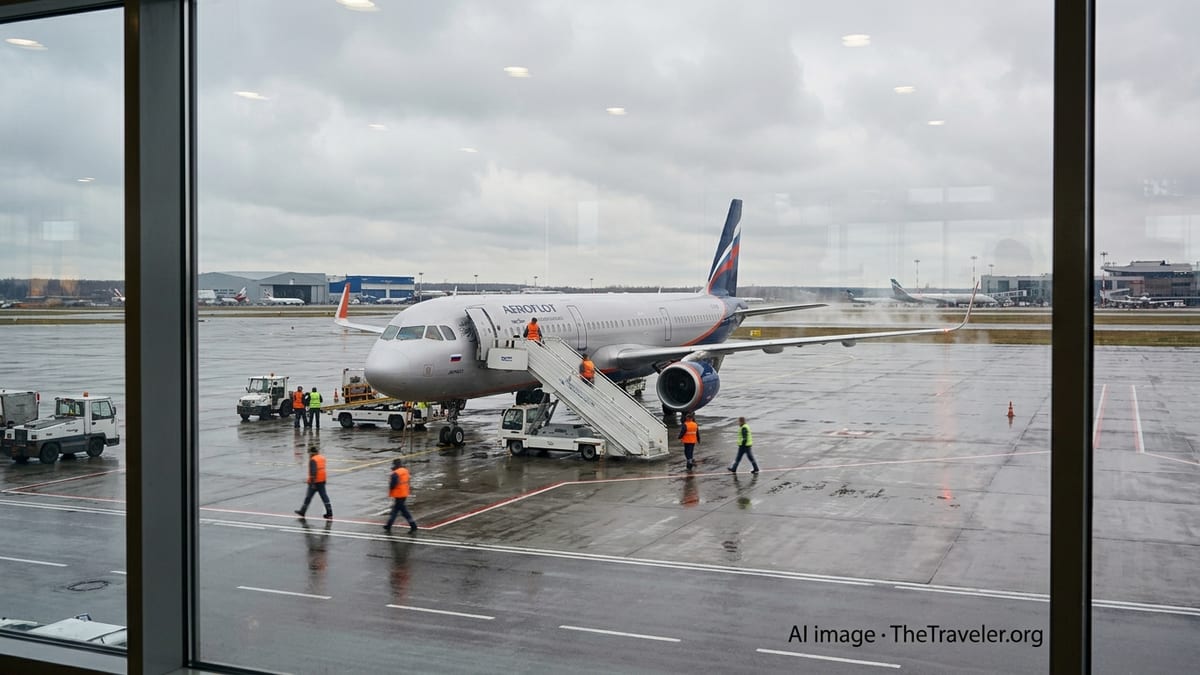
Dozens of passengers at a Moscow airport were left sitting on terminal floors and clustered around departure boards this week as a wave of flight delays and temporary restrictions disrupted schedules across the capital’s air network.
Get the latest news straight to your inbox!
Wave of Delays Follows Fresh Operating Restrictions
Recent disruption in Moscow’s aviation system has unfolded against a backdrop of recurrent operating restrictions at the city’s airports throughout August 2026. Publicly available information shows that, on August 14, all four of Moscow’s major airports temporarily paused regular operations under safety-related limitations on takeoffs and landings, interrupting normal passenger flows across the region.
Those constraints were followed by additional targeted measures later in the month. On August 28, Russia’s federal aviation regulator announced that Moscow’s Domodedovo and Zhukovsky airports were again operating under partial restrictions, accepting and dispatching flights only by prior coordination. Passengers were advised that schedules could change at short notice, with knock-on effects for connections and long-haul routes.
While the latest reports indicate that Domodedovo and Zhukovsky have now resumed routine handling of flights, the intermittent nature of these limits has contributed to a volatile operating environment. When restrictions are introduced for even a few hours, large numbers of aircraft can quickly fall out of position, creating backlogs that take much longer to clear than the initial pause itself.
For travelers on the ground, these network-level adjustments translated into hours of waiting at terminals as airlines re-timed departures, reassigned gates, and reshuffled crews. The visible result was crowded departure halls, long lines at information desks, and passengers settling in for extended stays amid uncertainty about revised departure times.
Stranded Travelers Face Long Waits and Limited Information
Images and eyewitness accounts shared on social platforms and in local coverage depict passengers at a Moscow airport camping out beside departure boards and along concourse walkways. Travelers could be seen sitting on luggage, stretching out on the floor, or queuing at customer service counters as they waited for updates on delayed or rescheduled flights.
According to published coverage, some flights experienced lengthy roll-on delays as operating windows shifted, particularly where departures were tied to airports operating under temporary constraints. In practice, this meant that services departing Moscow or arriving from other Russian regions could be postponed for many hours, leaving passengers in limbo while aircraft and crews were repositioned.
These scenes were not isolated. Earlier in August, more than 100 leisure travelers departing from Moscow’s Vnukovo airport for Bodrum were left waiting for roughly a full day after a technical issue with their aircraft forced a return to the terminal and multiple schedule revisions. That separate disruption illustrated how quickly a single aircraft problem, layered onto an already stretched schedule, can lead to extended airport stays for an entire flight’s worth of passengers.
For those stranded in the terminals, access to seating, refreshments, and clear communication about updated departure times emerged as the most pressing concerns. Passengers heading to popular summer destinations or onward international connections faced particular anxiety where missed links could mean the loss of hotel nights, tours, or nonrefundable ground arrangements.
Operational and Security Pressures Intersect
Throughout August, Moscow’s aviation sector has had to navigate a mix of operational constraints and security-related considerations. Public statements from Russia’s aviation authorities describe the temporary restrictions at Domodedovo, Zhukovsky, and other regional airports as measures taken for flight safety, with several facilities in central and southern Russia periodically halting departures and arrivals or working on a limited basis.
In practice, these safety-related pauses ripple outward through the country’s hub-and-spoke network. When airports in cities such as Samara, Yaroslavl, or Saratov temporarily stop handling flights, aircraft and crews bound for Moscow can be held on the ground, ultimately arriving late or out of sequence once operations resume. This can leave Moscow’s hubs processing clusters of delayed flights at once, straining ground handling, security screening, and baggage systems.
These pressures arrive as Russian aviation works within a constrained operating environment shaped by geopolitical tensions and sanctions. Industry observers note that spare parts shortages, the need to rotate aircraft more intensively, and the rerouting of international services can all reduce schedule resilience. When multiple stress factors coincide, the margin for absorbing disruption narrows, increasing the likelihood that passengers will face extended waits when problems arise.
The late-August delays at Moscow’s airports illustrate how a relatively short safety-mandated pause can intersect with existing operational fragilities. For passengers, the root cause of a delay is often less visible than its immediate consequences, but the pattern of periodic restrictions followed by waves of schedule changes has become a recurring feature of Russia’s current travel landscape.
What Passengers Can Expect in the Coming Days
With the latest information indicating that Domodedovo and Zhukovsky have resumed standard flight handling, immediate conditions at Moscow’s airports appear to be stabilizing. However, aviation analysts suggest that residual delays can persist for hours or even into the following day after a disruption, as airlines work through backlogs and reposition aircraft to their intended routes.
Travel industry commentary indicates that passengers flying through Moscow in the near term should remain prepared for schedule adjustments, particularly on routes that connect to airports previously subject to temporary restrictions. Checking flight status regularly, remaining in contact with airlines through official apps or hotlines, and allowing extra time for connections can help mitigate the practical impact of late-notice changes.
Publicly available guidance also highlights that compensation and care provisions vary by airline, ticket type, and the underlying reason for a delay. In some cases, travelers may receive meal vouchers, hotel accommodation, or the option to rebook at no extra cost, while in others an extended wait in the terminal may be the only outcome on offer. Passengers are therefore encouraged to review the specific conditions attached to their tickets and loyalty programs.
For now, the images of stranded passengers at a Moscow airport have drawn renewed attention to the fragility of air travel in regions where operational and security considerations frequently intersect. As the busy late-summer travel period continues, both airlines and travelers are likely to remain alert to the possibility that further short-notice measures could once again reshape itineraries across Russia’s aviation network.
Sources
TheTraveler.org: Passengers Stranded at Moscow Airport Amid Wave of Delays
Interfax: Domodedovo and Zhukovsky resume flight handling after temporary limits
Interfax: All Moscow airports briefly suspend regular operations on August 14
Lenta.ru: Over 100 tourists stranded at a Moscow airport after aircraft malfunction