


More news on this day
A senior UK MPs’ committee figure has warned that failure to secure urgent changes to the EU’s new biometric Entry/Exit System could trigger “significant” disruption for British holidaymakers and freight traffic at key Channel crossings this summer.
Get the latest news straight to your inbox!
Committee concerns focus on Dover and the Short Straits
Recent correspondence between the Port of Dover and the UK Parliament’s Business and Trade Committee has underlined growing anxiety over the impact of the Entry/Exit System on one of Europe’s busiest short sea corridors. Publicly available information shows that Dover’s chief executive has warned of the risk of another “critical incident” if traffic management and border processes are not strengthened before peak holiday season.
The Business and Trade Committee chair has echoed those concerns in messages to ministers, highlighting analysis that queues generated by EES checks on car and coach passengers could rapidly spill back onto approach roads in Kent. The committee’s position, as reported in UK parliamentary updates, is that doing nothing ahead of the first full summer of EES use is not a realistic option if the government wants to avoid a repeat of past holiday gridlock around the port.
Evidence submitted to parliamentary committees over recent years has consistently underlined the structural vulnerability of the Short Straits route. Operators have warned that even modest extra processing time per passenger at juxtaposed border controls can trigger hours of congestion once volumes approach peak levels. Against that backdrop, MPs are pressing for more detailed contingency planning, arguing that the combination of EES checks and strong leisure demand is a clear risk factor.
The concerns extend beyond passenger inconvenience. Committee papers and industry briefings indicate that prolonged disruption around Dover could undermine the commercial attractiveness of the UK land bridge for hauliers serving Ireland and continental Europe. MPs fear that repeated crises would accelerate a shift to direct sea routes that bypass Britain altogether, with long term implications for ports, logistics employment and regional economies linked to Channel traffic.
Industry warnings of queues lasting hours at EU borders
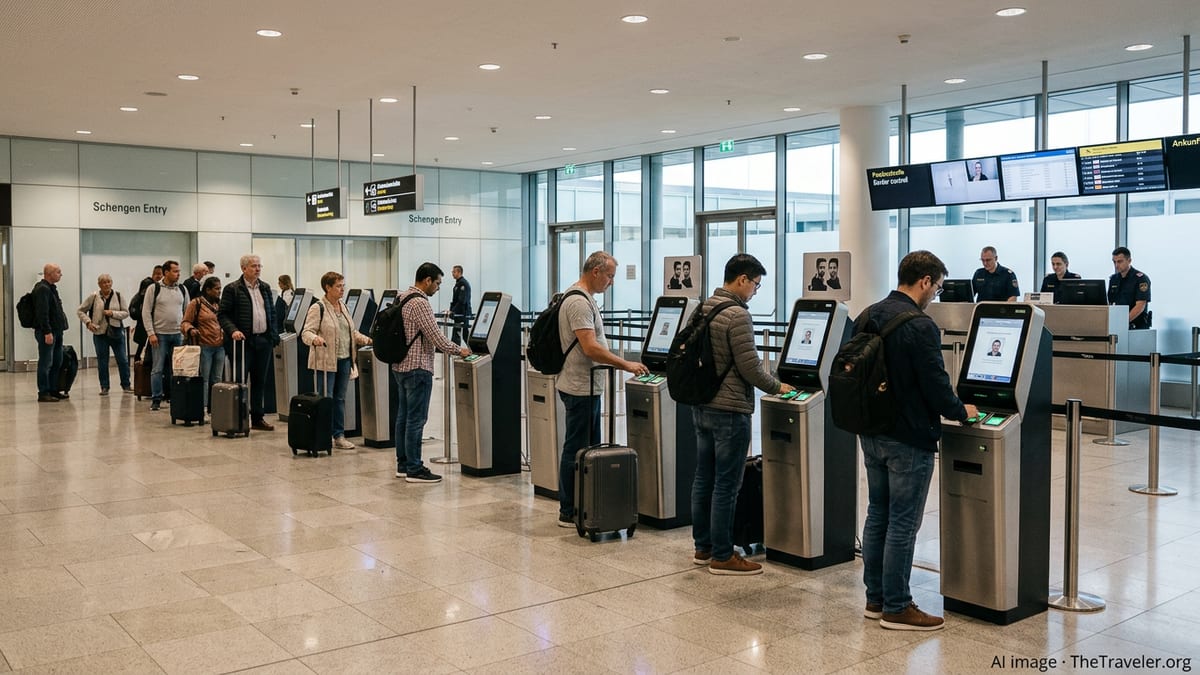
Across Europe, airports, airlines and port operators have been warning for months that EES is already producing long waits at border control. Industry bodies representing airports and airlines have described systemic delays at some Schengen entry points during the phased roll out, attributing them to a combination of staffing shortages, complex procedures and patchy take up of pre-registration tools.
Joint statements from major industry groups have argued that, without rapid improvements, mandatory biometric registration of all eligible third country nationals during the peak summer months could push waiting times at some gateways to four hours or more. Although those forecasts are framed as worst case scenarios, they have helped sharpen political focus in the UK on what might happen at particularly constrained locations such as Dover and the Channel Tunnel terminals.
French regional authorities and airport operators have also raised red flags. Public comments from senior figures at large French airports have pointed to “teething problems” during limited EES trials and have urged a gradual, flexible approach to wider deployment. These signals from the French side are of special interest to UK policymakers, given that British travellers heading for the continent by road or rail are reliant on French border police and infrastructure at juxtaposed controls.
For travel businesses, the combination of official caution and industry alarm has been a call to action. Travel trade coverage shows ferry companies, tour operators and airport managers lobbying both national governments and the European Commission for more pragmatic implementation, ranging from flexible staffing rules to temporary suspension mechanisms during extreme peaks.
Government under pressure over mitigation and messaging
Written parliamentary material in June set out the government’s broad stance that EES is an EU scheme and that member states retain responsibility for how it is delivered at their borders. At the same time, responses to questions in Parliament and committee correspondence make clear that UK officials have been holding technical discussions with France and other partners on how to minimise congestion at locations where border checks are juxtaposed.
The MPs’ committee chair who raised the alarm over “significant” disruption is now pressing for more transparency on these talks. According to summaries published by trade and political outlets, the committee wants ministers to detail what flexibilities they have asked the EU and member states to consider, and how quickly any operational changes could be agreed and implemented.
Domestic communication is another area of scrutiny. Recent parliamentary news releases relating to Dover underline fears that, without clear and timely public information, travellers will arrive at ports unprepared for new procedures. MPs have urged the government and industry to coordinate messaging across official channels and travel retailers so that holidaymakers understand what documents, timings and check in processes they will face under EES.
Consumer advocates argue that better information alone will not prevent bottlenecks if infrastructure and staffing remain inadequate. However, they contend that accurate guidance on likely wait times and recommended arrival windows could at least reduce the incidence of missed sailings and flights, and help spread demand more evenly across the day at constrained terminals.
Freight operators fear knock on effects from tourist queues
While most heavy goods vehicle drivers are not expected to undergo full biometric registration under the current EES rules, the freight sector is increasingly vocal about indirect impacts. Trade press reports on recent letters from Dover’s leadership to Parliament describe concerns that lorry traffic could become trapped behind long car and coach queues on key approaches, particularly the motorways feeding the port.
Hauliers’ organisations warn that such disruption would reverberate through time sensitive supply chains linking factories, supermarkets and just in time industrial operations on both sides of the Channel. With margins already tight and schedules finely balanced, additional hours added to a cross Channel round trip can quickly erode profitability and reliability.
Logistics analysts quoted in specialist outlets suggest that recurring EES related congestion could hasten a reshaping of freight routes in north west Europe. Some operators are already increasing use of alternative ports and longer sea crossings that bypass the UK, in part to reduce exposure to road gridlock in Kent. MPs on the relevant select committees are keenly aware that trends of this kind, once established, can be difficult to reverse.
Against this background, parliamentary figures are seeking assurances that contingency measures such as contraflow systems, holding areas and smart traffic management will be in place well before the busiest weeks of the school holidays. They argue that a failure to protect freight flows, as well as passenger journeys, would carry broader economic risks that extend far beyond the immediate inconvenience to holidaymakers.
Calls grow for phased implementation and structural fixes
A central theme running through both parliamentary scrutiny and industry commentary is the need for a more phased and flexible implementation of EES. Airport and airline associations have urged EU institutions to make full use of recently agreed provisions that allow for progressive roll out and, where necessary, temporary suspension at specific locations if biometrics capture rates fall short of targets.
MPs on the UK side, while recognising they cannot dictate EU border policy, are effectively aligning themselves with these calls for pragmatism. The committee chair’s warning about “significant” disruption if no action is taken has been interpreted in the travel sector as support for measures such as extended trial periods, targeted staffing boosts and greater investment in automated gates where infrastructure allows.
Longer term, both politicians and operators acknowledge that structural changes are likely to be needed at pinch points such as Dover, Folkestone and major French ferry ports. Ideas already in circulation include reconfiguring check in areas, expanding inspection zones and exploring new digital tools for pre clearance of frequent travellers, all aimed at reducing the amount of processing required at the physical frontier.
For now, however, attention is fixed on the coming weeks. With peak summer departures imminent and warnings from MPs, port chiefs and airline groups all pointing in the same direction, the test for governments and border agencies will be whether the combination of short term fixes and diplomatic engagement is enough to keep queues manageable when EES meets real world holiday traffic for the first time at scale.