


More news on this day
Across the United States, regional airports, fire departments, medical teams, and volunteer groups are stepping up multi-agency training drills designed to strengthen community safety before the next real emergency strikes.
Get the latest news straight to your inbox!
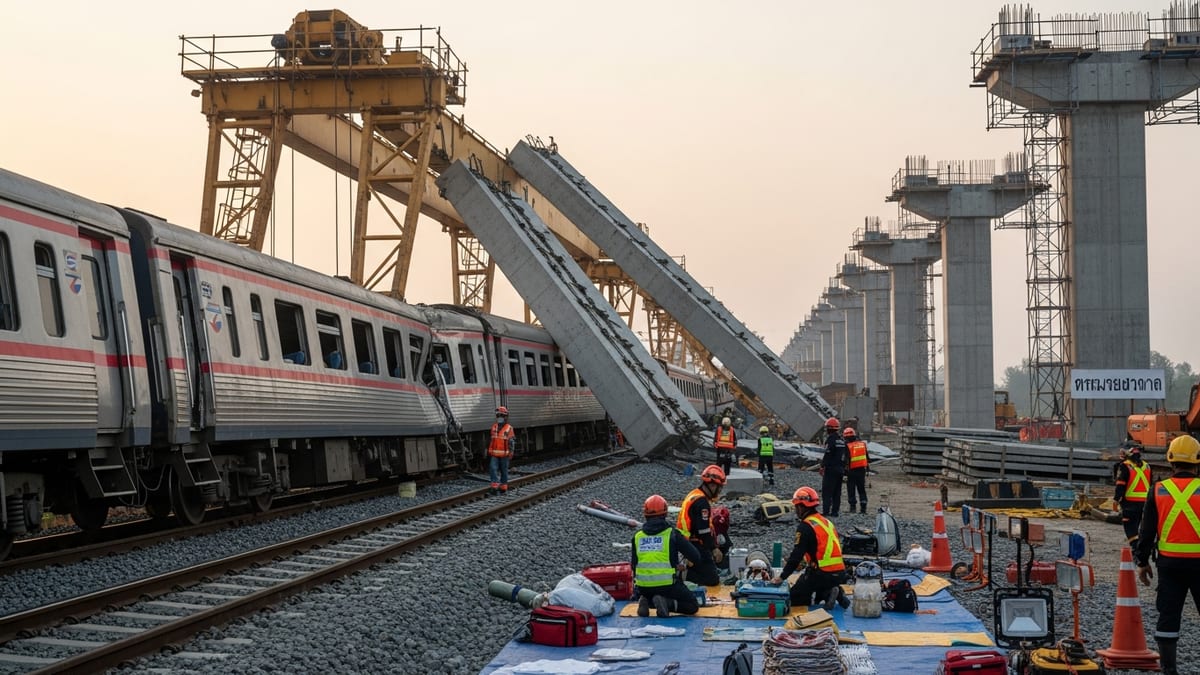
Airport drills put coordination under pressure
Recent full-scale exercises at regional airports highlight how complex emergencies demand coordinated action from multiple agencies. Simulated aircraft incidents are being used to test how aviation staff, firefighters, law enforcement, emergency medical services, and federal partners align their responses under time pressure and public scrutiny.
At several airports, exercises have involved staged aircraft crashes, mass-casualty scenarios, and disabled passengers, all designed to push local systems beyond routine operations. Publicly available reports on these drills describe timed responses, triage stations, patient tracking, and communications checks between airport operations centers and outside agencies.
These events are part of regular requirements for many commercial-service airports, which must periodically demonstrate that emergency plans, runway access routes, and mutual-aid agreements are functional. Organizers characterize them as an opportunity to validate years of planning, identify gaps, and rehearse how a real incident would unfold from the first alert to the final transport of patients.
For nearby communities, the most visible impacts are often temporary road closures, a surge of emergency vehicles, and controlled smoke or fire effects. Local announcements typically emphasize that the activity is only a drill, aiming to reassure residents while still allowing responders to treat the scenario as realistically as possible.
Volunteer networks integrate with professional responders
Multi-agency training is not limited to uniformed services. Community Emergency Response Teams, amateur radio operators, search-and-rescue groups, and medical reserve volunteers are increasingly woven into regional exercises that simulate earthquakes, severe weather, or transportation accidents.
Training calendars from several states show joint sessions where volunteers practice staffing emergency operations centers, managing spontaneous volunteers, and supporting shelter or donations management functions alongside municipal and county agencies. These events often combine classroom instruction with field exercises that require volunteers to follow formal incident command structures.
Reports indicate that such integration has two goals. First, it prepares volunteers to plug into official response frameworks without slowing operations. Second, it gives professional responders a clearer understanding of what trained community members can safely and reliably contribute, from damage assessments to wellness checks.
For travelers and residents, the presence of these trained volunteers can be a quiet but important layer of resilience. In a large-scale emergency, they provide additional hands and local knowledge that can help extend limited public-safety resources.
Wildfire and weather scenarios support seasonal readiness
In regions facing heightened wildfire and severe weather risk, aviation facilities are being used as hubs for multi-agency preparedness drills. Recent public information from local governments describes airports hosting wildfire aviation training, where pilots, ground crews, and incident managers coordinate air tanker operations and helicopter support with local fire agencies.
These exercises focus on aircraft movements, fueling, loading, and airspace management, but they also test information sharing between wildfire incident command posts and municipal emergency managers. The goal is to ensure that when fire conditions spike, air and ground operations can scale up quickly without compromising safety on or off the airfield.
Elsewhere, statewide emergency management agencies are organizing seasonal workshops and table-top exercises around hurricanes, floods, and severe storms. Training schedules show multi-day events where transportation officials, utility representatives, and local governments rehearse how evacuations, sheltering, and infrastructure repairs would be handled if a major system were disrupted.
For the broader public and the travel sector, these seasonal drills are intended to reduce the likelihood of prolonged disruptions. When agencies practice scenarios in advance, airports and transit systems are better positioned to restore operations safely after a storm or wildfire passes.
National guidance shapes local training agendas
Many of the latest exercises reflect evolving national and international guidance on transportation and emergency safety. Reference documents from aviation authorities, safety investigation bureaus, and emergency management agencies emphasize full-scale drills, functional exercises, and joint planning as key tools for reducing risk.
Program guides from state-level emergency management offices describe multi-year exercise plans that cycle through different hazards, venues, and agency combinations. These plans encourage local jurisdictions to move beyond classroom instruction and test their capabilities in realistic conditions, including communication failures, unexpected weather, or simulated equipment problems.
At the same time, sector-specific safety calendars and regional action plans promote shared standards for runway safety, mass-casualty response, and incident command. This broader framework is influencing how airports and partner agencies design their scenarios, injects, and performance metrics.
While each community adapts guidance to its own geography and risks, the overall trend is toward more frequent, more integrated, and more transparent training. Agencies are increasingly publishing notices in advance of drills and summarizing key lessons afterward, providing travelers and residents with a clearer view of the safety work taking place behind the scenes.
What these drills mean for travelers and residents
For people passing through an airport or living near a training site, a multi-agency exercise can be a surprising spectacle of flashing lights and simulated injuries. Public notices typically advise that travelers may encounter minor detours, emergency vehicles on the airfield, or brief delays as drills unfold.
Travel-industry observers note that these short-term inconveniences are intended to prevent longer, more serious disruptions in the event of a real crisis. When agencies rehearse together, they can refine passenger notification procedures, improve wayfinding for evacuations, and streamline handoffs between airport staff and off-site hospitals or shelters.
Community members who are not directly involved still play a role by staying informed about announced drills, following local guidance, and treating unusual emergency activity near airports or major venues as a potential exercise unless advised otherwise by official alerts. Clear communication before and during these events helps prevent confusion and unnecessary alarm.
As multi-agency training expands, the underlying message is that safety is a shared responsibility. Airports, emergency services, volunteers, and residents are all part of a broader network that benefits when practice happens in realistic environments, long before an actual emergency tests the system.