

More news on this day
Mumbai’s fast‑growing metro network is entering a new phase of expansion, creating stronger links between historic waterfront promenades, business districts, airports and emerging tourist hubs across the metropolitan region.
Get the latest news straight to your inbox!
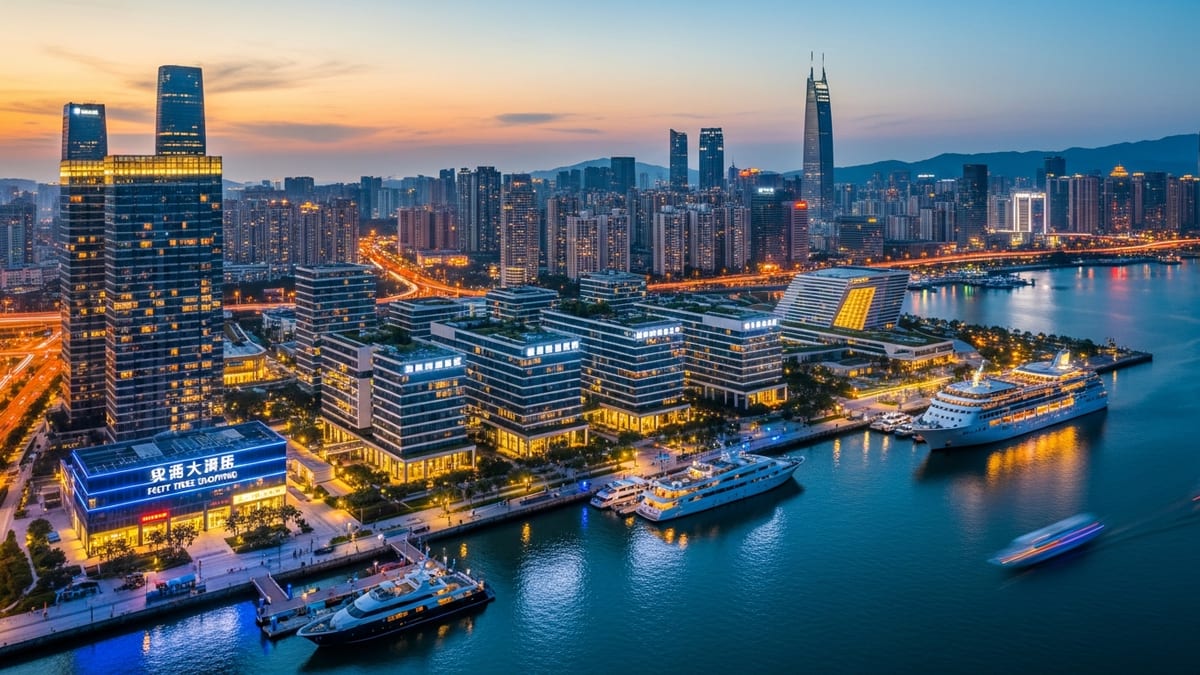
Underground Aqua Line Connects South Mumbai’s Visitor Corridor
The fully underground Aqua Line, or Metro Line 3, has rapidly become the backbone of north–south travel for visitors, with publicly available information showing that ridership crossed 40 million passenger journeys in April 2026. The 33.5 kilometre corridor runs from Aarey in the north to Cuffe Parade in the south, stitching together office clusters, residential neighbourhoods and several of Mumbai’s most recognisable visitor districts.
According to recent coverage of the project, the line links Nariman Point, Cuffe Parade, Churchgate and other parts of the old downtown with Bandra Kurla Complex and the SEEPZ business zone. For travellers, this underground spine reduces exposure to surface congestion while placing museum districts, heritage architecture, the Kala Ghoda arts area and the Marine Drive promenade within predictable commuting times.
The Aqua Line’s interchange at Churchgate and connections to the Western Railway corridor also improve access for domestic tourists staying in suburban hotels. Visitors can now pair a stay in northern neighbourhoods with day trips to South Mumbai’s colonial-era landmarks, art galleries and sea-facing boulevards, using a single continuous rapid transit route.
Reports on the line’s early operations note that the underground stations have been designed with wide concourses, multiple entry points and links to feeder bus routes, which is gradually easing the pressure on older suburban rail stations that have long served as gateways to South Mumbai’s attractions.
West–East Corridors Tie Juhu, Andheri and BKC to Tourist Circuits
On the western side of the city, the opening of elevated corridors on Lines 2A and 7 has already transformed access to busy leisure zones such as Lokhandwala, Andheri and the Juhu beach belt. These routes, which run broadly parallel to the Western Express Highway and Link Road, provide an alternative to road traffic that routinely slows airport transfers and hotel check‑ins in the area.
Expansion of the adjoining Line 2B toward Bandra, Bandra Kurla Complex and the eastern suburbs is now progressing, with recent project documents and regional reports indicating key construction milestones on sections near the airport funnel zone. When operational, the combined 2A–2B corridor is expected to form a continuous west–east link from Andheri West through Bandra and BKC to Chembur and Mandale, offering tourists a rail option between seaside nightlife districts and more residential, food‑focused neighbourhoods in the eastern suburbs.
Urban mobility observers highlight that this mesh of elevated and underground lines is particularly important for visitors whose itineraries combine film studio tours, shopping in Andheri and Bandra, and evenings along the waterfront. With multiple interchanges planned between Lines 2, 3 and 6, travellers will be able to move between Juhu, BKC and South Mumbai without relying entirely on taxis or app‑based cabs.
City bus operator initiatives to position bus stops closer to metro stations on Lines 2A and 7 have also been reported, improving last‑mile links to hotels, guesthouses and smaller beach-front lanes that may never be directly served by metro infrastructure.
Stronger Airport Connectivity Shapes New Tourist Gateways
Mumbai’s role as a major entry point for international and domestic tourism is being reinforced by metro corridors designed around airport access. The Aqua Line already serves stations near both terminals of Chhatrapati Shivaji Maharaj International Airport, providing an underground alternative to road transfers that can be affected by peak‑hour congestion.
Supplementary projects are in various stages of development, including the Red Line extensions often referred to as Lines 7A and 9, which aim to connect northern suburbs such as Dahisar and Mira‑Bhayandar to the airport precinct. Planning documents from multilateral lenders and metropolitan authorities describe these links as part of a broader strategy to channel more airport traffic onto rail, reducing travel times for visitors staying in outlying coastal areas.
On the eastern flank of the metropolitan region, the new Navi Mumbai International Airport is being framed as a multi‑modal hub with planned connections to metro, suburban rail, highways and even water transport. Public reports on the project note that these links are intended to distribute passenger flows more evenly across the harbour, opening up new stay options around Navi Mumbai’s waterfront and hill‑facing neighbourhoods for short‑haul holidaymakers.
For tour operators and hoteliers, the emerging airport–metro integration is expected to reshape traditional booking patterns that have long concentrated around South Mumbai and western suburb hotels. Easier rail‑based transfers make it more feasible to market itineraries that combine stays near the new airport, excursions into the core city and side trips to seaside belts beyond the historic centre.
New Lines Target Eastern Waterfronts and Cultural Districts
East–west lines under construction are set to play a pivotal role in unlocking access to lesser‑known cultural districts and waterfronts on the city’s eastern side. Line 4 and its 4A extension, for example, are planned to run from Wadala through Thane, connecting older residential zones and business clusters that are gradually adding arts venues, local markets and lakefront promenades to their visitor appeal.
Line 6, running broadly along the Jogeshwari–Vikhroli corridor, is projected in recent analyses to create several new interchanges with existing routes, including the Aqua Line and Western and Central Railway corridors. This will allow both residents and tourists to traverse the city’s interior more easily, pairing visits to Sanjay Gandhi National Park, Powai Lake and emerging café districts in the eastern suburbs.
Published coverage on Mumbai’s infrastructure pipeline also highlights the proposed airport metro link connecting the existing international airport with the upcoming Navi Mumbai facility across the harbour. If completed as envisioned, this would offer visitors a high‑capacity rail option for twin‑airport itineraries or domestic connections that currently depend almost entirely on surface roads.
These east‑facing corridors complement long‑debated projects such as the Coastal Road and the Thane–Borivali twin tunnel, which are expected to reduce cross‑town travel times by road. Together with the metro, they are being positioned in policy documents and transport studies as part of an integrated mobility grid that supports both daily commuting and leisure‑oriented travel.
Metro Expansion Repositions Mumbai on the Domestic Tourism Map
Recent reporting places the Mumbai Metropolitan Region as the second‑largest metro network in India by operational route length, behind only Delhi. The rapid scaling up of corridors in and around the city is already influencing how domestic travellers perceive the practicality of multi‑day stays that combine business, shopping and sightseeing.
For weekend visitors from other Indian metros, the expansion means that hotel bookings in suburbs such as Thane, Mira‑Bhayandar or Navi Mumbai can now be considered alongside more traditional areas like Colaba, Fort and Juhu. As more interchanges open and feeder bus services are aligned with stations, these outlying zones may benefit from spillover demand driven by lower room rates and easier metro access to central attractions.
Travel industry analysts note that the metro build‑out also aligns with broader national efforts to shift a greater share of urban travel from private vehicles and overcrowded suburban trains to modern mass transit. In Mumbai’s context, this rebalancing is especially significant for tourism, where reliability and perceived safety of transport options play a key role in destination choice and length of stay.
While challenges remain, including integration of ticketing systems, mobile connectivity in underground stretches and consistent last‑mile infrastructure, the overall direction of travel is clear. With each new section that opens, Mumbai’s metro network is binding together its heritage waterfronts, business enclaves, airports and emerging neighbourhoods into a more coherent experience for visitors and residents alike.