


More news on this day
Heavy monsoon rain and severe weather have thrown operations at Mumbai’s Chhatrapati Shivaji Maharaj International Airport into disarray, with reports indicating that at least 13 flights were suspended and more than 200 services delayed, disrupting busy domestic sectors as well as key international routes to London and other hubs.
Get the latest news straight to your inbox!
Runway Disruptions as Monsoon Weather Intensifies
Publicly available information shows that intense rainfall, strong crosswinds and sharply reduced visibility over the weekend and into Monday led to repeated interruptions to runway operations at Mumbai’s main international gateway. On Sunday morning, runway use was halted for around an hour after a band of particularly heavy rain and gusts of over 40 knots moved across the airfield, forcing air traffic controllers to suspend arrivals and departures until conditions improved.
On Monday 6 July 2026, the disruptive pattern continued as fresh showers and low cloud persisted over the city. Data compiled from flight-tracking platforms and local media tallies indicated that by late morning at least 13 flights had been suspended across multiple carriers and around 211 services had been delayed, with knock-on effects across India’s domestic network and on longer-haul itineraries linking Mumbai with Europe, including London.
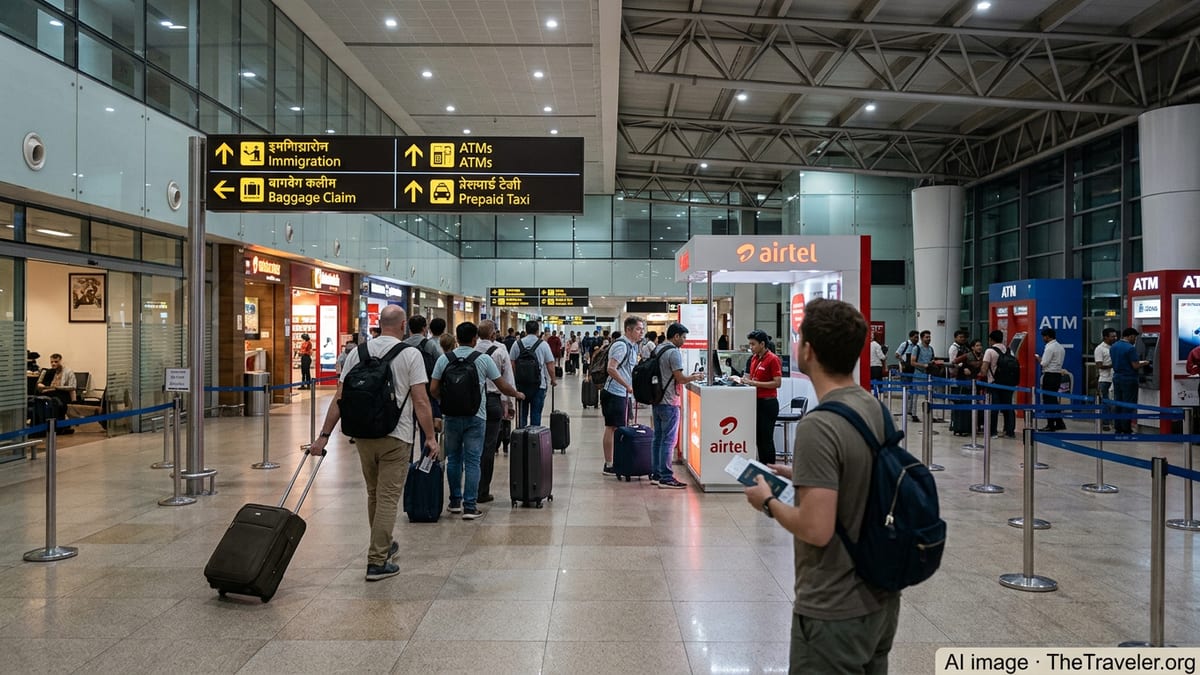
Reports from aviation trackers pointed to unusually high levels of congestion in the terminal and on the apron, with aircraft waiting for departure slots and inbound services placed in holding patterns or diverted to alternative airports. While operations were gradually restored each time weather conditions marginally improved, the stop-start nature of the monsoon cells meant delays accumulated throughout the day.
Major Airlines Issue Advisories and Trim Schedules
According to published coverage, the scale of the disruption prompted a coordinated response from several of India’s largest airlines. IndiGo, Akasa Air, Air India and SpiceJet all issued public advisories urging passengers to check flight status before heading to the airport, warning that departures and arrivals at Mumbai remained highly vulnerable to sudden weather-related changes.
Operational data cited in local reports suggest that IndiGo, the country’s largest carrier by market share, saw multiple departures and arrivals affected, including services connecting Mumbai with Delhi, Bengaluru and Pune, as well as selected international routes. Some IndiGo flights were among those suspended or diverted when visibility dropped and crosswinds reached levels that made landings and take-offs unsafe.
Akasa Air and SpiceJet, both significant operators on domestic and short-haul routes, also faced cascading delays as aircraft and crew were left out of position by the repeated suspensions. Schedules for Monday showed extended turnarounds and revised departure times as airlines attempted to re-balance aircraft rotations while keeping within duty-time limits for crews.
Flag carrier Air India reported similar challenges on its Mumbai network, including on widebody operations that feed long-haul routes. With runway availability constrained and airspace around Mumbai congested, even minor timetable adjustments rippled across the day’s flying programme.
London and Other International Routes Experience Knock-on Effects
The disruption at Mumbai did not remain confined to domestic operations. Publicly available flight-status data and media round-ups indicate that services linking Chhatrapati Shivaji Maharaj International Airport with key international destinations also experienced extended delays, including routes to London operated directly from Mumbai and via domestic connections through Delhi and other Indian hubs.
Passengers booked on itineraries connecting to London reported irregular departure sequences, late-night rescheduling and, in some cases, missed onward connections in Europe as departure slots out of Mumbai slipped by several hours. Where aircraft remained stuck on the ground in Mumbai awaiting clearer weather or a departure slot, downstream services were forced to operate late or be consolidated.
Travel analysts note that Mumbai’s role as a major transit point for both business and leisure passengers heading from India to the United Kingdom magnifies the impact of any weather-related disruption. Even when London-bound flights ultimately operate, significant delays in Mumbai can force rebookings, overnight stays or rerouting via alternative gateways such as Dubai, Doha or Istanbul.
Passengers Face Long Delays, Diversions and Rebookings
Reports from local media and passenger accounts posted online describe crowded terminals, long queues at check-in and customer service counters, and extended waits at boarding gates as airlines worked through the backlog. Many travellers attempting to depart Mumbai on Monday morning and afternoon encountered rolling delay estimates as ground operations paused whenever rain intensity and winds picked up.
Flight-tracking snapshots released through the day showed a high proportion of departures leaving at least an hour behind schedule, with some sectors waiting much longer for a take-off window. Inbound flights from cities such as Delhi, Raipur and Singapore were among those diverted to airports including Hyderabad and Ahmedabad when weather conditions briefly deteriorated again over Mumbai.
For some passengers, especially those on multi-leg journeys toward Europe or North America, missed connections created additional uncertainty around accommodation, visas and reissued tickets. Airlines indicated through public advisories that they were working within regulatory frameworks for rebooking and refunds, but the combination of monsoon-season load factors and limited spare capacity meant that alternative seats were not always available on the same day.
Authorities Warn of Continued Weather Risk as Monsoon Season Peaks
India Meteorological Department bulletins issued for Mumbai and surrounding districts on 5 and 6 July highlighted the likelihood of continued heavy rainfall, with red and orange alerts covering parts of the metropolitan region. These warnings reflect the broader pattern of the southwest monsoon, which typically brings intense, localized storms that can overwhelm drainage, reduce visibility and generate sudden wind shifts around coastal airports.
Aviation observers note that Mumbai’s single-runway configuration for simultaneous take-offs and landings leaves the airport particularly exposed when weather conditions deteriorate. When the runway is unavailable, even for short intervals, the queue of arriving and departing flights can build rapidly, and it may take several hours before operations return to anything close to normal.
With the monsoon expected to remain active through the coming weeks, travel industry commentators are advising passengers using Mumbai to build additional buffer time into itineraries, particularly when connecting to long-haul flights such as those to London. Flexible tickets, awareness of rebooking options and close monitoring of airline and airport updates are being highlighted as practical steps for travelers hoping to avoid the worst of the disruption as the season continues.