


More news on this day
Crews in northern Ohio are working through the day to remove derailed railcars and stabilize a freight train that left the tracks near Bucyrus, shrinking an earlier evacuation zone and beginning the long process of restoring normal rail operations.
Get the latest news straight to your inbox!
Evacuation area narrows as situation stabilizes
Publicly available information from local outlets indicates that the derailment occurred late Sunday near Whetstone Street on the south side of Bucyrus, a small city in northern Ohio. A Norfolk Southern freight train hauling mixed cargo, including tankers, left the tracks, sending a line of cars off the rails beside nearby homes and businesses.
Initial reports describe an evacuation order within a one mile radius of the derailment site, prompted by concern over a tanker that was believed to be carrying hydrochloric acid. Residents were directed to leave their homes as a precaution while hazmat teams evaluated the scene and air monitoring equipment was set up around the affected blocks.
By early Monday, updated coverage from regional newsrooms reported that the evacuation area had been reduced to a quarter mile, after inspections found no active leaks from the derailed tank cars. The shift allowed many residents to return home while crews remained focused on the immediate impact zone along the tracks.
Bucyrus High School has been operating as an emergency shelter for those still displaced, according to local reporting. Volunteers and community groups have been assisting evacuees while rail and emergency teams continue work at the scene.
Heavy equipment moves in to lift and re-rail cars
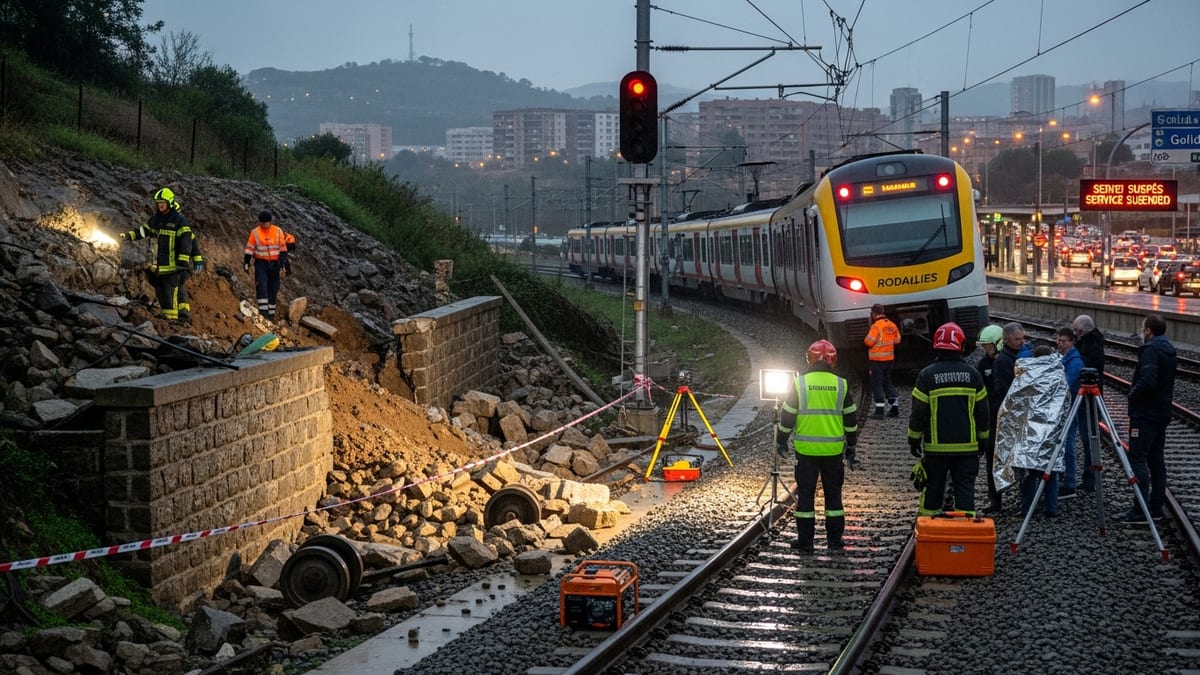
Cleanup images shared in local coverage show a familiar pattern from other recent rail incidents across the United States: heavy cranes, excavators and specialized maintenance vehicles are positioned along the right of way to lift, cut and move mangled railcars away from the main line. In Bucyrus, similar equipment has been brought in to begin the slow process of separating derailed cars and setting intact equipment back onto the rails.
Reports indicate that crews have already stabilized several of the cars that remained upright and are working their way through a cluster of derailed freight and tanker cars closest to the street crossing. Once separated, damaged cars are expected to be moved to a secure staging area for further inspection and eventual removal from the community.
Railroad contractors typically work in shifts around the clock in the first days after a derailment, using side boom tractors, hi rail trucks and mobile cranes to clear enough debris to reopen at least one track. While the Bucyrus line is not a major passenger corridor, it is an important freight route in northern Ohio, and partial service is likely to resume before all visible wreckage is gone from the site.
Experience from similar freight derailments in nearby states suggests that track replacement, ballast restoration and signal checks will continue even after trains begin rolling again. In many cases, temporary speed restrictions remain in place until inspections confirm that new rail and ties are performing as designed.
Hazardous cargo concerns loom after East Palestine
Even as reports from Bucyrus emphasize that no active leak has been detected from the derailed tank cars, the presence of potential hazardous materials is drawing regional attention. The incident comes just over three years after the high profile derailment in East Palestine, Ohio, which involved tankers carrying vinyl chloride and led to widespread concern about air and water contamination.
Public documents from environmental agencies describe how hazardous materials cleanup at derailment sites includes continuous air monitoring, soil sampling and strict control over any contaminated debris that must be removed. Those procedures are likely informing decisions in Bucyrus, where teams are working close to homes and local businesses.
Residents in communities across Ohio have become more attuned to the risks posed by long freight trains hauling chemicals and fuels through small towns. According to infrastructure assessments for the state, derailments remain statistically rare compared with the volume of cargo moved each year, but the consequences can be severe when hazardous loads are involved.
For travelers and drivers passing through northern Ohio, rail incidents like the Bucyrus derailment can bring temporary road closures, detours and delays. Local coverage notes that certain crossings in the area have been blocked while cranes and heavy trucks occupy the approaches to the tracks.
Impact on regional travel and rail traffic
While Bucyrus is not a primary tourist destination, the derailment has short term implications for travel across a broader swath of northern Ohio. Freight lines in this region intersect with highways that connect Toledo, Cleveland and Columbus, and temporary rail disruptions can ripple through trucking routes, intermodal yards and nearby commuter corridors.
In this case, publicly available information so far points to localized effects: drivers in Bucyrus are encountering closures near Whetstone Street, and some neighborhood streets are restricted to allow cranes and utility trucks to maneuver. Travelers using smaller state routes may encounter detours or slow moving vehicles as debris is hauled away from the site.
For rail passengers elsewhere in the state, the Bucyrus incident joins a series of recent freight derailments that have periodically affected regional services. Previous events near Toledo and along other Midwestern freight corridors have prompted limited schedules or rerouting while damaged track segments were rebuilt. Even when passenger trains do not share the exact line, power outages and signaling work linked to a derailment can spill over to adjacent networks.
Travel industry observers note that such disruptions rarely last more than a few days, but they add an element of unpredictability to itineraries involving smaller junction towns and mixed freight corridors. Travelers crossing Ohio by car or rail are increasingly encouraged to check local news or transit alerts when passing near active cleanup sites.
Community recovery and ongoing investigations
As the cranes and wreckers continue their work outside Bucyrus, attention is already turning to longer term questions about what caused the train to leave the tracks. According to published coverage of past derailments, investigations commonly examine track condition, train speed, equipment maintenance records and train handling in the minutes leading up to an incident.
National transportation investigators typically review rail inspection logs, wheel bearing performance data and signaling records to understand whether a specific defect or a combination of factors played a role. Findings from earlier Ohio derailments have highlighted issues such as overheating components, worn rail and evolving industry practices around train length and crew workloads.
For Bucyrus residents, the more immediate concern remains air quality and the speed at which normal life can resume. Public information to date suggests no detected release from the hazardous materials cars and a steady reduction in the evacuation area, steps that are likely to reassure many of those who spent the night at shelters or with friends and family.
Once the last derailed cars are removed, the site near Whetstone Street will continue to attract attention as repairs are completed and investigators document the rebuilt track. For travelers, the scene offers another reminder of how heavily modern mobility depends on freight networks that run through small communities, and how quickly plans can change when those networks are disrupted.