


More news on this day
Mumbai and large parts of coastal Maharashtra are under a red alert after days of intense monsoon rain flooded key neighbourhoods, disrupted air and rail travel, and left at least one person dead, according to local media reports and official bulletins.
Get the latest news straight to your inbox!
Red alert across Mumbai and the Konkan coast
The India Meteorological Department has placed Mumbai and adjoining coastal districts, including Thane, Palghar and Raigad, under a red alert for July 5 following what forecasters describe as extremely heavy rainfall over the weekend. Publicly available forecasts indicate that rain activity is likely to remain intense over the Konkan belt through at least the early part of next week.
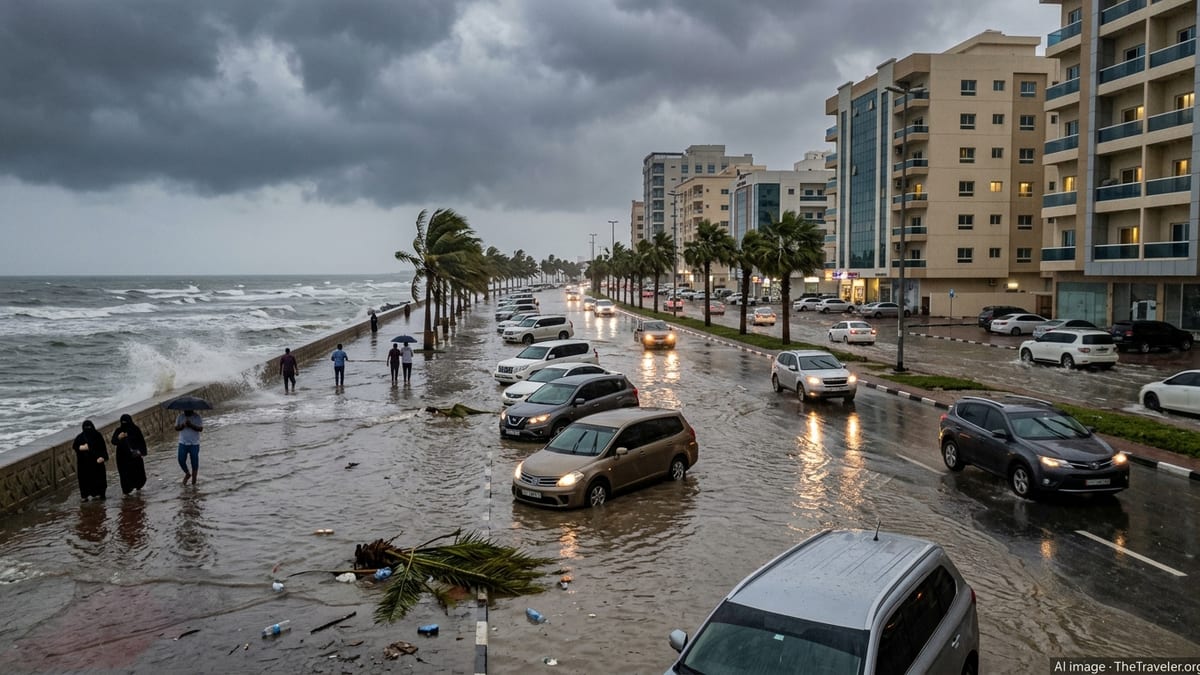
Coverage in national and regional outlets shows that several areas of Mumbai recorded more than 200 millimetres of rain in 24 hours, with some neighbourhoods approaching 80 percent of the city’s average July rainfall in just the first four days of the month. Photos and video circulating in local news bulletins show vehicles half-submerged on arterial roads and commuters wading through waist-deep water in low-lying zones.
The red alert, the highest level in the Indian meteorological warning system, signals a continued risk of very heavy to extremely heavy rain, possible flash flooding and landslides, particularly along the coastal strip and in the foothills of the Western Ghats. Civic advisories reproduced in the press are urging residents to avoid non-essential travel and stay away from seafronts and waterlogged underpasses.
Flights diverted, delays ripple through air travel
Operations at Mumbai’s Chhatrapati Shivaji Maharaj International Airport have been significantly affected, with aviation coverage reporting multiple diversions and delays as downpours reduced visibility and waterlogging snarled access roads. According to live updates compiled by business and general news outlets, at least five Mumbai-bound flights were diverted on Saturday, including services operated by IndiGo and Air India, while several others experienced extended holding patterns.
Airlines have issued public advisories asking passengers to track real-time flight status and allow extra time to reach the airport due to congestion and localized flooding around key approach roads. Social media updates cited in news reports show images of long queues at check-in counters, as staggered departures and weather-related ground-handling constraints slowed turnaround times.
While runway operations have largely continued, observers note that ongoing intense showers, combined with the prospect of another spell of very heavy rain during high tide, could lead to further disruption through Sunday. Travel analysts quoted in published coverage suggest that knock-on delays are likely across domestic networks, particularly on routes that depend on tight rotations through Mumbai.
Rail and road networks struggle under flooding
On the ground, Mumbai’s suburban rail system and major road corridors have borne the brunt of the deluge. Local media describe widespread waterlogging on central and western railway lines, with several trains cancelled, rescheduled or forced to run at reduced speeds through inundated sections. Images from key stations show crowded platforms as commuters waited for reduced services.
Metro operations were also partially affected where access roads and station approaches went under water, although core services continued on most stretches with cautionary speed restrictions. Transport updates compiled by newsrooms point to closures of key underpasses and coastal roads, including sections near popular commuting arteries, as civic teams deployed pumps and barricades.
Road travel beyond the city limits has been difficult across parts of coastal Maharashtra. Reports from highway patrols and district authorities, cited in regional press, highlight landslip risks on hilly stretches of the Mumbai–Goa and Mumbai–Pune corridors, as well as slow-moving traffic in tourist gateways such as Lonavala and Karjat where heavy rain has persisted.
Casualties, civic impact and school closures
Amid the widespread disruption, at least one rain-linked death has been reported in the city, with news outlets drawing particular attention to an incident in the Saki Naka area that has renewed scrutiny of open manholes and drainage safety. Several other cases of rain-related injuries have been mentioned in hospital and police summaries carried by local media.
With flooding reported in residential pockets and informal settlements, civic control rooms and volunteer networks have been fielding calls about water entering homes, fallen trees and power outages in scattered neighbourhoods. Footage broadcast on television and shared across digital platforms shows residents moving belongings to higher ground and small shops bailing out ankle-deep water.
As conditions worsened on Saturday, the city’s municipal corporation announced a holiday for afternoon sessions in schools and colleges, according to multiple news reports, citing student safety and transport difficulties. Debate over whether Mumbai should institutionalize “monsoon holidays” has resurfaced on local forums, with parents pointing to recurring mid-year disruptions that often leave children stranded during severe downpours.
Travel advisories and what visitors should know
With Mumbai serving as a key gateway for both domestic and international travel, the timing of the deluge in the middle of the busy monsoon tourism season is creating complications for visitors bound for the Konkan coast and the Western Ghats. Travel and weather briefings carried by national outlets are advising tourists to reconsider non-essential trips to hill stations and coastal retreats through at least July 7, as saturated slopes, overflowing rivers and blocked roads increase the risk of localised emergencies.
For travellers already in the region, publicly available advisories recommend monitoring airline and railway updates frequently, keeping flexible itineraries, and allowing generous buffers for airport and station transfers. Hotels in low-lying parts of the city are reported to be coordinating with guests on late check-outs and alternative arrangements where access roads are heavily waterlogged.
Despite the severe conditions, meteorological projections suggest that such intense multi-day rain events are likely to become more common as the climate warms, especially for coastal megacities like Mumbai where sea-level exposure and rapid urbanisation compound drainage challenges. Urban planners and environmental groups quoted in recent analyses argue that the latest flooding underscores the urgency of investing in resilient drainage, protecting natural floodplains and rethinking how India’s financial capital prepares for the monsoon each year.