


More news on this day
Russia’s Nordwind Airlines is maintaining a monthly passenger route between Moscow and Pyongyang, sustaining one of the very few direct air corridors into tightly controlled North Korea as political and economic ties between the two countries deepen.
Get the latest news straight to your inbox!
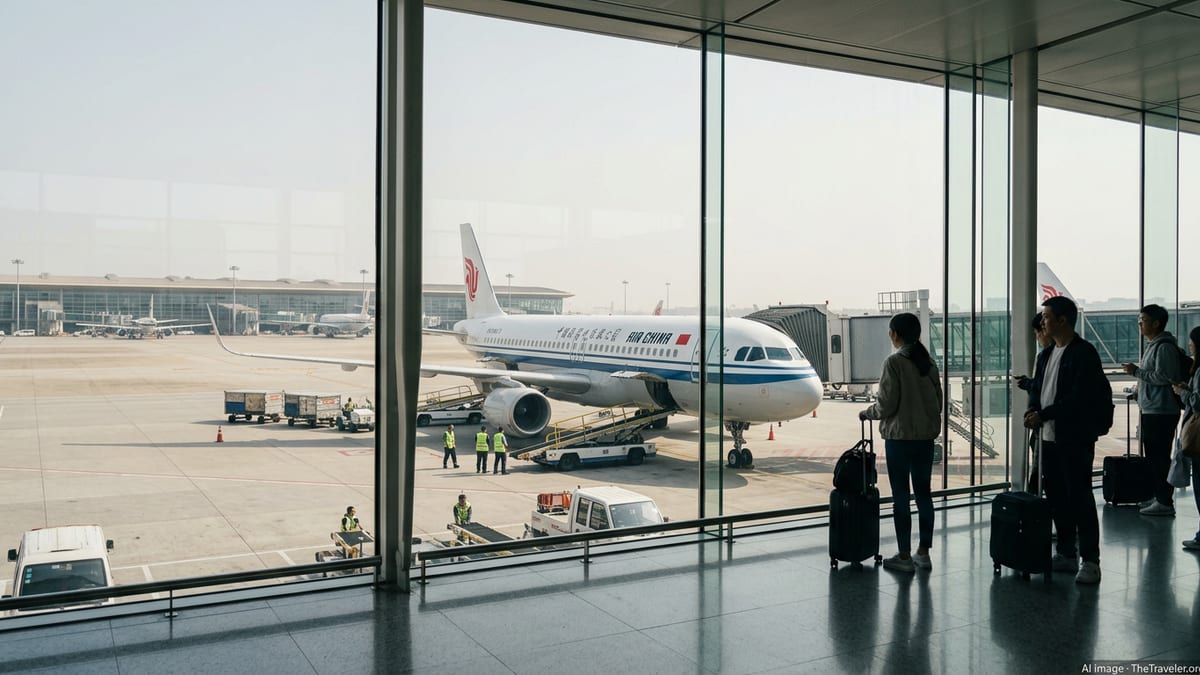
A rare commercial bridge between Moscow and Pyongyang
Publicly available aviation and tourism data indicate that Nordwind’s Moscow–Pyongyang flights, launched in July 2025, continue to operate on a limited monthly basis. The service restored a direct air connection between the two capitals for the first time in decades and remains a rarity in a country that only reopened its borders to most foreign travelers in 2023.
The Russian leisure carrier was licensed to operate the route by Russia’s civil aviation regulator after an announcement by the Association of Tour Operators of Russia that charter flights would begin between Moscow’s Sheremetyevo Airport and Pyongyang. Early information from Russian tourism operators described the flights as technically approved to run several times a week but scheduled only once a month in order to test demand.
While the overall global network to North Korea remains extremely thin, Nordwind’s operation sits alongside Air Koryo’s limited links from Pyongyang to Beijing, Shenyang and Vladivostok. Tracking by aviation enthusiasts and timetable data show that the Russian service has so far retained its low-frequency pattern, signaling a cautious approach in matching capacity to a niche but politically significant market.
Observers note that the continuation of the monthly service offers a tangible symbol of growing alignment between Moscow and Pyongyang, at a time when both are subject to extensive international sanctions and are seeking alternative economic and diplomatic partners.
Tourism tightly controlled, but Russian interest is rising
Despite the resumption of commercial flights, entry into North Korea remains heavily restricted, with leisure travel permitted only through authorized tour operators and under close supervision. Accounts from Russian travelers and agencies describe packages that bundle Nordwind’s flights with tightly choreographed itineraries in Pyongyang and a small number of other locations, often requiring group travel, prepayment in hard currency and the surrender of passports in advance for visa processing.
These packages are primarily marketed to Russian citizens, positioning North Korea as an unusual destination for those seeking something beyond mainstream resort travel. Russian-language online forums and travel reports suggest that the novelty factor, combined with relatively low basic package prices before on-the-ground costs, is driving a steady trickle of demand even as broader geopolitical tensions continue.
Regional data on visitor flows from Russia to North Korea point to a sharp increase in Russian arrivals since the country’s post-pandemic border reopening. Statistics referenced in Korean media indicate that total Russian visitor numbers, while still modest, have climbed many times over from 2023 levels, coinciding with the introduction of Nordwind’s route and the expansion of rail connections.
Travel remains far from frictionless. Tourists face strict rules on movement, photography and contact with local residents, and itineraries are closely monitored. Yet the existence of a regular, if infrequent, direct flight from Moscow simplifies logistics compared with overland journeys via China or multi-leg itineraries through Chinese hubs.
Air link mirrors broader Russia–North Korea alignment
The Nordwind route has unfolded against a backdrop of rapidly tightening ties between Russia and North Korea. The two states signed a wide-ranging strategic partnership agreement in 2024, and subsequent reporting from think tanks and intelligence assessments has detailed alleged exchanges of military equipment and personnel.
Transport links have expanded in parallel. In addition to the monthly flight, rail services between Pyongyang and Moscow have been restored along one of the world’s longest passenger routes, with limited but symbolic twice-monthly operations. Freight connections across the short land border near the Russian settlement of Khasan have also been strengthened, facilitating trade in goods that are less accessible through traditional partners.
In this context, Nordwind’s presence at Pyongyang’s Sunan International Airport carries more weight than typical charter leisure traffic. Analysts note that aviation connectivity often tracks political priorities, and the decision to maintain at least a monthly schedule suggests that both governments view the route as strategically useful, even if commercial demand alone might not justify year-round operations.
For North Korea, direct service to Moscow provides a rare additional gateway to the outside world beyond China, which accounts for the bulk of its limited international air and land traffic. For Russia, the flights complement a broader push to deepen engagement with countries viewed as politically aligned or outside the Western sanctions regime.
Operational limits and sanctions backdrop
Nordwind’s operations exist within a complicated sanctions environment. The airline itself has faced trade and export-control restrictions from Western authorities including the United States, which has highlighted past aircraft movements as part of enforcement actions. These measures have raised questions about long-term fleet maintenance and access to spare parts, issues that affect many Russian carriers operating Western-built aircraft since 2022.
Despite those constraints, schedule data and Russian regulatory filings suggest that Nordwind continues to sustain a network of leisure-oriented services to destinations in Asia, the Middle East and beyond. The Pyongyang route, while unusual, fits the pattern of the carrier’s charter and niche-market focus, albeit in a particularly sensitive geopolitical setting.
Operationally, the long overflight segment between Russia’s Far East and the Korean Peninsula requires coordination with North Korean airspace controllers and the careful routing of aircraft across regions where international radar coverage is patchy. Aviation hobbyists tracking the flights note that aircraft often appear and disappear on public flight-tracking platforms as they move into and out of North Korean-controlled skies.
The modest monthly frequency, however, limits overall exposure and allows the airline to concentrate specialized crew and operational planning on a handful of rotations, rather than committing to a heavy schedule on a route that may face abrupt political or regulatory changes.
What the monthly connection means for future access
For now, Nordwind’s Moscow–Pyongyang service remains a niche operation, but its persistence has implications beyond the small number of passengers on each flight. Travel specialists point out that air links often serve as precursors to broader flows of people and goods, even when they begin with low-frequency or charter models.
If Russia and North Korea continue to deepen cooperation, the monthly schedule could be ramped up, either by Nordwind or by other carriers that might be cleared to operate similar routes. Russian media reports at the time of the launch suggested that higher frequencies were technically authorized and could be activated if demand and political conditions allowed.
In the wider landscape of global travel, a single monthly flight might appear insignificant. Yet in the unique context of North Korea, where international tourism is sharply constrained and most carriers have long since exited the market, Nordwind’s continued presence underscores how geopolitical realignments can reshape even the most obscure corners of the aviation map.
For travelers, the route offers one of the very few direct options into the isolated state, albeit under strict controls and with eligibility largely limited to Russian citizens and organized groups. For policymakers and observers, each departure from Sheremetyevo bound for Pyongyang provides a small but telling indicator of how the Russia–North Korea relationship is evolving in real time.