


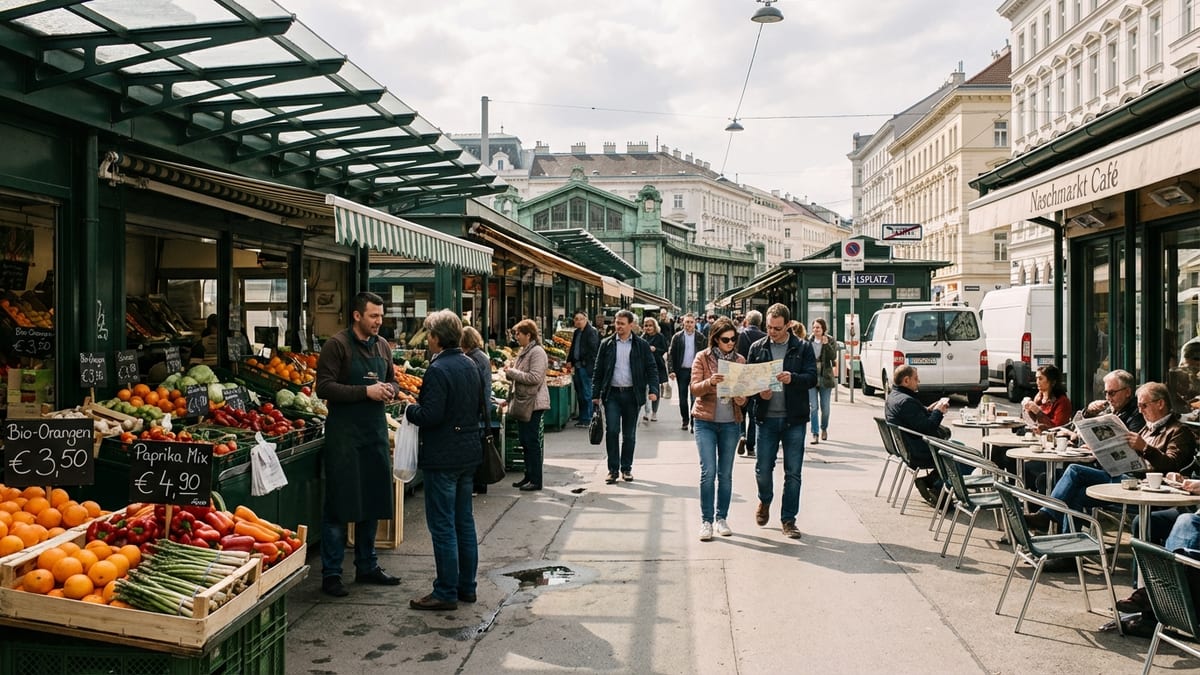
Late-morning scene at Vienna's Naschmarkt with locals shopping and dining. Naschmarkt Opening Hours, Best Time to Visit & Crowd Tips
Naschmarkt is not just Vienna’s most famous market, it is one of the city’s liveliest public stages. From dawn fruit deliveries and steaming coffee to late evening drinks and Saturday’s legendary flea market, its pulse changes dramatically across the day and week. Understanding opening hours, peak times and how crowds ebb and flow can turn a rushed, overwhelming visit into a relaxed highlight of your stay in the Austrian capital.
Naschmarkt Opening Hours at a Glance
Naschmarkt stretches for more than a kilometer along Wienzeile between Karlsplatz and Kettenbrückengasse, and it operates as a combination of produce market, specialty food emporium and restaurant row. Officially, the core market area opens early every morning from Monday to Saturday and closes in the evening, with Sunday remaining a rest day. The City of Vienna lists standard market hours from 06:00 to 21:00 on weekdays and from 06:00 to 18:00 on Saturdays, which frames the general window when stalls may trade.
Within that broader window, the behavior of different stall types is more nuanced. Classic produce and deli stalls typically trade Monday to Friday from about 06:00 until roughly 19:30 in the evening, and on Saturday from 06:00 until around 17:00. Many traders start closing shutters in the last hour, especially in bad weather or outside the summer season, so if you want to see the market fully alive it is wise to arrive earlier than the official end time.
Restaurants, cafes and bars at Naschmarkt follow a slightly later rhythm. Many open around 09:00 for breakfast and continue serving through lunch and into the evening, commonly until 23:00 from Monday to Saturday. A handful of venues, particularly popular wine bars or modern eateries, may stay open close to midnight, especially on Fridays and Saturdays. On Sundays and public holidays, the traditional food market remains closed, but some restaurants around the edges of the market operate with reduced hours, typically late morning to early evening. If you are planning a Sunday walk through the neighborhood, you can expect far less activity and only limited dining options.
The Saturday flea market, held at the Kettenbrückengasse end, has its own timetable. It is officially scheduled from 06:30 to the early afternoon, with most sources converging around a closing window between 14:00 and 15:00. Serious treasure hunters arrive at dawn, but casual visitors will still find plenty to explore midmorning. By midafternoon, however, the area is largely packed down and the character of that end of Naschmarkt shifts back to its regular food stalls and cafes.
Weekday vs Weekend: How the Atmosphere Changes
One of the most important decisions when planning a visit to Naschmarkt is whether to come on a weekday or Saturday. The physical marketplace is the same, but the atmosphere changes dramatically. On weekdays, especially from Monday to Thursday, the market serves a balanced mix of locals shopping for produce, office workers grabbing lunch and a manageable stream of visitors. You can chat with traders about cheeses or spices, compare prices and stop to photograph displays without constantly dodging tour groups.
Fridays are noticeably busier as residents stock up ahead of the weekend and more visitors have arrived in town. Lunchtime can be particularly crowded as nearby offices empty into the market’s restaurants. Even so, the experience usually remains pleasant and navigable if you avoid the narrowest sections at peak lunch hour. Many travelers find Friday morning an ideal compromise, with vibrant energy and full stalls but without the heaviest weekend crush.
Saturdays transform Naschmarkt into a full-scale spectacle. The regular market operates alongside the flea market, and the combination can attract thousands of people on a sunny day. Families, students, antique hunters and tour groups mix with locals out for brunch or a late lunch. The energy is festive and cosmopolitan, with live street musicians often adding to the atmosphere. For some, this is the quintessential Naschmarkt experience. For others, especially those who dislike tight crowds, the density can quickly become exhausting.
Sundays, in contrast, are quiet. With the traditional market stalls closed, the long rows of metal shutters give the strip a different mood. A few eateries closer to Karlsplatz or just off the market lane open to serve brunch or coffee, but the characteristic bustle is absent. If your main goal is shopping for food and browsing stalls, Sunday is not the day to come. If you simply want a peaceful stroll through the area, perhaps combining it with nearby attractions, the stillness can be surprisingly atmospheric.
Best Time of Day to Visit
The rhythm of a day at Naschmarkt is distinct, and choosing the right time can define your experience. Early morning, roughly between 07:00 and 09:00, is when you will see the market at its most local. Delivery vans arrive, traders stack fruit and vegetables into pyramids, fish is iced down, and coffee machines hiss from the first open cafes. This is the best time for photographers and travelers who enjoy a more authentic, workaday feel. It is also when you are likely to get the most personal attention from stall owners, assuming you are comfortable with a bit of organized chaos.
Late morning, between about 09:30 and 11:30, is the sweet spot for many visitors. By then most stalls are open, baked goods and deli counters are fully stocked and restaurants begin serving more substantial breakfasts and early lunches. Crowds are present but usually manageable on weekdays. This window is particularly attractive from Tuesday to Thursday, when tour groups are smaller and many visitors are still at other city landmarks.
The midday to early afternoon period, roughly 12:00 to 15:00, is the peak for restaurant trade. On sunny days, patios fill up quickly as both locals and travelers claim tables for long lunches. The central corridor can become congested, especially near popular eateries and dessert stands. If you plan to eat at one of the well-known restaurants without a reservation, it is wise to arrive slightly before noon or closer to 14:00 when the first wave of diners starts to thin out.
Late afternoon into early evening, from around 16:00 to 19:00, brings a shift in character. Many produce vendors begin to close, though some remain open into the evening, particularly on weekdays. At the same time, the market’s role as a dining and social hub increases. Locals meet friends for an aperitif, glasses of regional wine appear on tables and the pace relaxes. This is an excellent time to visit if your focus is food and atmosphere rather than shopping for raw ingredients. The light in warmer months can be beautiful, and the overall crowd level, while still lively, tends to be more spread out.
Seasonal Considerations and Weather
Naschmarkt is a year-round market, but the experience differs in each season. Spring, typically from March to May, is one of the most appealing times to visit. Warmer days bring asparagus, fresh herbs and early berries to the stalls, and outdoor seating areas begin to fill reliably. Crowds increase around Easter and on sunny weekends, yet the temperatures are comfortable for strolling and the morning chill keeps the earliest hours pleasantly quiet.
Summer, from June through August, is the market’s busiest tourist season. Long daylight hours mean early starts and lingering evenings, and the restaurant terraces can be buzzing from morning until closing. On particularly hot days, the narrow lanes can feel humid and the stone surfaces radiate heat. If visiting in midsummer, consider arriving early in the morning or later in the evening, and plan a shaded coffee break or a sit-down meal to escape the midday sun. The upside is an abundance of ripe fruit, vibrant displays and an unmistakably festive atmosphere.
Autumn, from September into November, brings a different culinary palette. Mushrooms, pumpkins, chestnuts and root vegetables feature prominently, and many restaurants adjust their menus to reflect seasonal Austrian cooking. The main tourist wave has begun to ebb, which often results in more elbow room during the week while still keeping weekends energetic. Cooler air can make afternoon visits particularly comfortable, and the softer light adds to the market’s visual charm.
Winter visits are more weather dependent. Cold, drizzle or snow can discourage some traders and diners from staying out as long, and outdoor seating areas are reduced. However, for visitors who prefer fewer crowds, winter weekdays can be ideal. The core of the market remains open, and restaurants shift to cozy indoor dining. As the Christmas season approaches, Vienna in general becomes busier, and Naschmarkt benefits indirectly from the increased number of travelers in town, though it is not itself a traditional Christmas market.
Crowd Patterns and How to Avoid the Worst of Them
Because Naschmarkt is both a functioning local market and a major visitor attraction, understanding crowd patterns can save you time and frustration. On weekdays, the busiest moments typically coincide with local routines: the midmorning grocery rush and the lunchtime restaurant peak between about 12:00 and 14:00. If you would prefer to browse calmly, aim for early morning or the midafternoon lull between roughly 14:30 and 16:30, when some office workers have returned to their desks and many tourists have moved on to museums or palaces.
On Fridays and especially Saturdays, patterns intensify. The flea market on Saturdays begins very early, and by around 09:00 the Kettenbrückengasse end can already be packed with bargain hunters. The main central spine of Naschmarkt becomes progressively more crowded through the morning. Between 10:30 and 13:30, on a warm Saturday during peak season, the flow of people can at times slow to a shuffle. If crowds make you uncomfortable, try to arrive at the flea market shortly after opening and then shift into the food market zone by midmorning, leaving before the heaviest lunch wave.
A simple crowd management strategy is to plan your route in sections. Start at one end of the market and proceed steadily rather than darting back and forth between stalls, which can be difficult once corridors are full. If you find a dense cluster near a particularly popular restaurant or delicatessen, walk a little further before stopping to look around again. Often, just a few dozen meters away, the path widens or the flow eases. Stepping off into one of the side passages or small courtyards for a brief pause can also make the experience feel more relaxed.
Time of year also influences crowd density. Summer weekends, Easter and public holidays bring more visitors, while midweek days in late autumn or winter are vastly quieter. If your schedule allows, pairing a weekday visit in the shoulder seasons with an early arrival gives you the best chance of experiencing Naschmarkt at a pleasant pace. Regardless of season, it is sensible to factor in at least two to three hours for a full visit that includes browsing, tasting and a sit-down meal, so that you are not rushing through peak times.
The Saturday Flea Market: Timetable and Tactics
The Saturday flea market at Naschmarkt, clustered around Kettenbrückengasse, is an institution in its own right. Official city information describes it operating from 06:30 until early afternoon, with most vendors wrapping up by 14:00. Some stalls, especially those run by professional dealers, stay active closer to 15:00 on busy days, but by midafternoon the market is effectively over. If you are serious about hunting for antiques, vintage clothing, vinyl records or quirky household items, arriving between 07:00 and 09:00 offers the best combination of fresh stock and relatively open aisles.
Between about 09:30 and 12:00, the flea market reaches its peak energy. Private sellers and long-time traders stand side by side, and the variety on offer can be dizzying. This is a wonderful time to soak up the atmosphere, but it is also when the area becomes most crowded. Narrow gaps between trestle tables can clog easily when several people stop to inspect the same collection of books or ceramics. Comfortable walking shoes and a bit of patience are essential. If you prefer space, consider doing a quick reconnaissance loop right after breakfast, then retreating to the main food market for an early lunch.
By early afternoon, many of the best bargains have been claimed and some sellers begin to pack away unsold items. This later window can be useful if you are looking for last-minute discounts or if your priority is simply to see the spectacle without worrying too much about purchases. However, it is risky to plan your entire flea market visit for after 13:00, as weather, footfall and vendor preferences can all prompt an earlier end on a given day.
Because the flea market occupies space that is otherwise a quieter part of Naschmarkt, Saturdays feel particularly intense at this end of the strip. A smart approach for travelers who want a complete experience is to start at Kettenbrückengasse for the flea market right after opening, then move gradually toward Karlsplatz as the morning advances. This naturally guides you from vintage wares and curiosities to spices, cheeses, pastries and restaurant terraces, and it helps you stay half a step ahead of the densest waves of visitors.
Practical Tips for Timing Your Visit
Choosing when to visit is about more than just the hour on the clock. A few practical habits can make the difference between a stressful rush and a smooth, rewarding outing. One key tip is to check the local weather forecast on the previous day. While many stalls operate in most conditions, heavy rain, strong wind or extreme cold can reduce both the number of traders and the number of visitors. On such days, some vendors close earlier than usual. Planning your visit for the day with the most stable conditions during your stay will typically give you a richer market experience.
Think about how Naschmarkt fits into your wider Vienna itinerary. The market is walking distance from landmarks such as the Secession building, Karlskirche and the State Opera. Many travelers enjoy pairing an early morning market visit and breakfast with a late-morning tour of nearby museums or churches, or reversing the order and ending a sightseeing day with drinks and dinner at the market. In either case, allow buffer time: it is easy to linger longer than planned, whether over a plate of mezze or at a stall that lets you taste half a dozen varieties of cheese.
If your main aim is to eat at a particular restaurant in Naschmarkt that is known to be popular, consider either booking in advance where possible or timing your arrival just before the main lunch or dinner rush. For lunch, this typically means arriving before 12:00. For dinner, arriving between 18:00 and 19:00 often secures a table more easily than later in the evening. Midweek evenings tend to be gentler than Fridays and Saturdays, which are favored by locals kicking off their weekend.
Finally, accept that part of Naschmarkt’s charm lies in its unpredictability. Individual stalls may close for holidays, renovations or personal reasons, and opening hours can vary subtly across different businesses even within the official framework. Treat the times listed by the city and by recent travel guides as a reliable baseline, but approach the market with a flexible mindset. If a particular stall is closed, the next one along may surprise you with something even better.
The Takeaway
Experienced travelers know that markets are living organisms, and Naschmarkt exemplifies this. Understanding its structure and rhythms allows you to shape your visit around what matters most to you. If you want to watch Vienna wake up, come early on a weekday and follow the scent of coffee and freshly baked bread. If your dream is to browse antiques and then linger over brunch, set your alarm for the Saturday flea market and aim to arrive by midmorning. For a social evening of food and wine, target the early dinner window when restaurants are alive but not yet overwhelmed.
In practical terms, plan your visit between Monday and Saturday, remember that Sunday is quiet and always factor in at least a couple of hours. Use weekday mornings or midafternoons to avoid the worst crowds, and be prepared for more intense foot traffic at lunchtime and on Saturdays, especially during the warmer months. Whether you are a first-time visitor to Vienna or returning for a deeper dive into its everyday life, Naschmarkt rewards those who give it time and attention. With thoughtful timing, you can experience not only its flavors and colors but also its role as a living, breathing part of the city.
FAQ
Q1. What are the standard opening hours for Naschmarkt?
Naschmarkt typically operates from Monday to Friday starting around 06:00 and running until roughly 19:30 to 21:00 depending on the stall, and on Saturday from 06:00 until about 17:00 to 18:00. Restaurants and bars usually open around 09:00 and remain active until late evening, often around 23:00.
Q2. Is Naschmarkt open on Sundays?
No, the main food and produce stalls are closed on Sundays. Some surrounding restaurants and cafes may open with reduced hours, but the classic market experience with rows of vendors and full activity is limited to Monday through Saturday.
Q3. When does the Saturday flea market take place?
The flea market at the Kettenbrückengasse end of Naschmarkt takes place every Saturday morning. Official times begin at 06:30 and run into the early afternoon, with most stalls finishing between 14:00 and 15:00.
Q4. What is the best time of day to visit if I want to avoid crowds?
The quietest periods are early morning between about 07:00 and 09:00, and midafternoon between roughly 14:30 and 16:30 on weekdays. Visiting in these windows lets you browse comfortably, talk to vendors and take photographs without constantly weaving through dense crowds.
Q5. Which day is best for first-time visitors?
For many first-time visitors, a weekday such as Tuesday, Wednesday or Thursday offers the best balance of atmosphere and comfort, with plenty of activity but fewer crowds than Fridays and Saturdays. If you specifically want to experience the flea market and a festival-like mood, then Saturday morning is ideal, accepting that it will be much busier.
Q6. How long should I plan to spend at Naschmarkt?
If you want to walk the full length of the market, browse stalls and enjoy a sit-down meal or coffee, plan for at least two to three hours. Flea market enthusiasts on Saturdays may want to add another hour or two, especially if they intend to sift carefully through antiques and collectibles.
Q7. Are the opening hours the same all year round?
Official market hours remain broadly consistent throughout the year, but in practice individual stalls may adjust their schedules slightly depending on season, weather and demand. In winter or on very rainy days, some vendors close earlier than usual, while in summer popular eateries may stay active later into the evening.
Q8. Do I need a ticket or reservation to visit Naschmarkt?
No ticket is required to enter Naschmarkt. It is a public market and access is free. Reservations are not necessary to walk around, but if you plan to eat at a well-known restaurant during peak lunch or dinner hours, particularly on Fridays and Saturdays, making a reservation or arriving early can be a good idea.
Q9. What is the best way to combine Naschmarkt with other sightseeing?
Naschmarkt lies between Karlsplatz and Kettenbrückengasse, close to attractions like Karlskirche, the Secession building and the State Opera. Many visitors start the day with breakfast at the market and then walk to these sights, or explore museums first and end with an early dinner at Naschmarkt. Allow flexible time so you can linger if a particular stall or terrace captivates you.
Q10. Is it worth visiting Naschmarkt if I am not planning to shop?
Yes, even if you do not intend to buy groceries or souvenirs, Naschmarkt is worth visiting for its atmosphere alone. You can sit at a cafe terrace, sample small dishes, watch local routines and enjoy the colors and aromas of the market. Timing your visit to a quieter period lets you soak in the ambiance at a relaxed pace, while Saturdays offer a more intense but memorable spectacle.