


More news on this day
Thousands of travelers across Asia and the Gulf faced severe disruption this week as airports in Indonesia, China, India, Thailand and the United Arab Emirates reported 5,976 flight delays and 555 cancellations, with major carriers including China Eastern, UTair, Citilink, Qatar Airways and Tibet Airlines among those affected.
Get the latest news straight to your inbox!
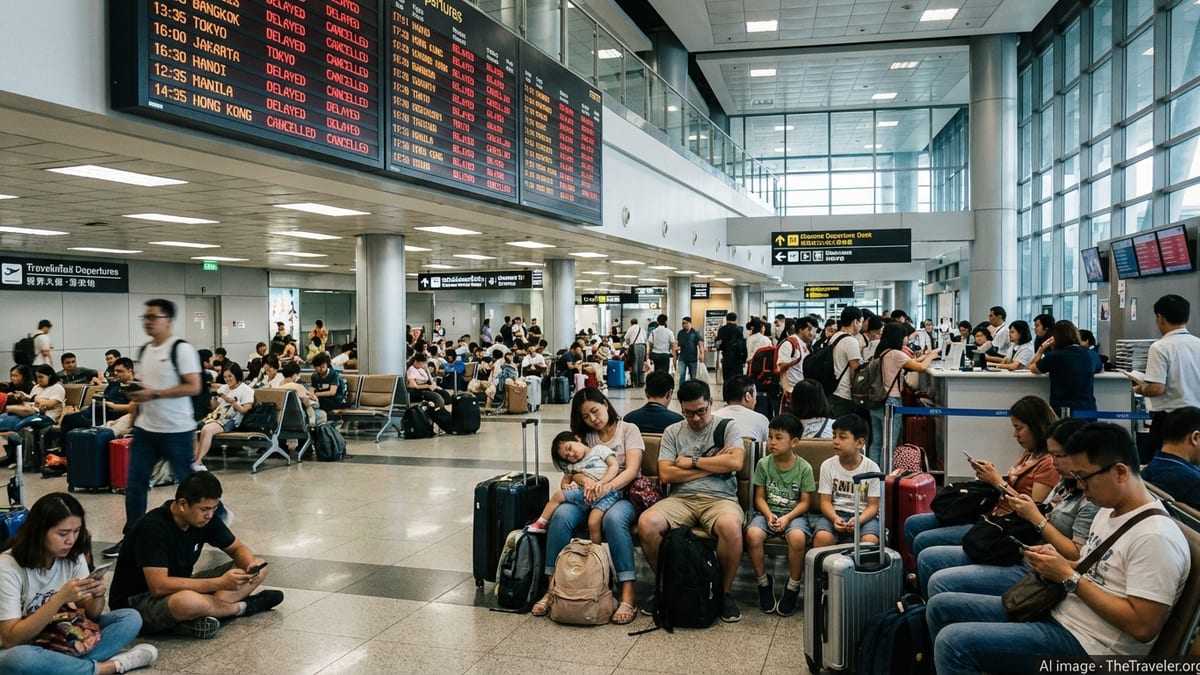
Major Hubs From Jakarta to Dubai Hit by Rolling Disruptions
The latest wave of disruption has centered on some of the region’s busiest gateways, including Jakarta Soekarno Hatta, Shanghai Pudong, Hong Kong International, Delhi Indira Gandhi, Bangkok Suvarnabhumi and Dubai International. Publicly available flight-tracking dashboards on June 16 indicated densely packed delay boards at several of these hubs, with departure banks pushed back by 30 minutes to several hours and clusters of outright cancellations on regional and long haul routes.
Operations data compiled from aviation analytics platforms and airport status feeds point to more than 5,900 delays and over 550 cancellations across Asia and selected Gulf airports within a 24 hour period. The pattern mirrors earlier waves of disruption reported since late February, when airspace closures and fuel price volatility began to reshape airline schedules between Europe, the Middle East and Asia.
Local carriers such as Citilink in Indonesia and Tibet Airlines in China have been joined by larger network airlines including China Eastern, Qatar Airways and Russian operator UTair in reporting schedule changes, cancellations or extended ground times on routes touching the affected hubs. Low cost operators in Southeast Asia and India are also represented in the disruption tallies, particularly on heavily trafficked leisure and migrant worker corridors.
The result for passengers has been a familiar scene at check in halls and transfer desks: long queues, rolling rebooking announcements and last minute airport hotel searches, especially for travelers attempting to connect between Southeast Asia, India and destinations in Europe or North America via Gulf and East Asian hubs.
Airspace Restrictions, Fuel Costs and Weather Amplify Delays
Industry coverage over recent months has traced much of the current instability to overlapping structural pressures. Ongoing conflict in West Asia has forced airlines to avoid significant stretches of airspace, lengthening flight times between Europe, the Gulf and Asia and concentrating traffic on a smaller number of viable corridors. Published analyses of March and April disruption patterns show repeated cancellation spikes whenever new restrictions or security advisories are issued over key transit regions.
These reroutings have collided with rising jet fuel prices, squeezing margins and prompting several Asian and Gulf airlines to trim schedules for the northern summer. Reports from India, for example, describe Air India cutting more than 100 weekly international flights between June and August, while carriers in Southeast Asia and China have scaled back capacity on selected routes or reduced daily frequencies in an effort to contain fuel burn.
Weather has added further volatility. Seasonal storms over the Bay of Bengal, the South China Sea and the Indonesian archipelago have repeatedly disrupted narrow body operations on domestic and regional sectors, with knock on effects for crews and aircraft needed later in the day on international services. Flight status bulletins from Japanese and Korean airlines in mid June have warned of potential last minute delays or diversions on routes passing through these systems, and similar advisories have appeared on some Chinese and Southeast Asian carrier portals.
At hub airports, the combined impact is felt as congestion in both airspace and at the gate. Aircraft arriving off longer rerouted flights can miss their slots, forcing further delays on departures that rely on the same stand or crew. Once delay totals pass a certain threshold, cancellations become the primary tool for restoring some level of operational stability, which is reflected in the elevated cancellation counts recorded over the current disruption period.
Thailand, Indonesia and China Among Most Exposed Markets
Recent regional analysis highlights Thailand and Indonesia, particularly Bali and Jakarta, as highly exposed to the present airspace and fuel shock. These markets are deeply reliant on long haul visitors from Europe and the Middle East, many of whom travel via Gulf carriers or Northeast Asian hubs. As services are rerouted or reduced, tourism boards and airport authorities in the region have warned of softer arrival numbers and higher average fares going into the mid year peak.
In Thailand, local media have reported more than 1,000 flight cancellations from Middle Eastern airlines to the country since late February, largely attributed to conflict related airspace issues and fuel cost concerns. These cuts have combined with sporadic schedule adjustments by Asian low cost carriers to thin out options between Bangkok, Phuket and secondary Thai cities and popular origin points in the Gulf, India and Europe.
Indonesia has faced similar headwinds. Low cost and hybrid operators serving Jakarta and Denpasar have periodically pulled back frequencies or reshuffled departure times as fuel surcharges rise, while full service airlines shifting away from certain long haul city pairs indirectly reduce connection options for Indonesian travelers. Citilink and other local players have been visible in delay and cancellation statistics, particularly on domestic links feeding international departures.
China’s main coastal hubs, including Shanghai and Hong Kong, have also emerged as key pressure points. Flight tracking data from earlier disruption waves showed triple digit daily delay counts at major Chinese airports as aircraft and crew flows adjusted to changes in Middle East overflight options. As capacity is reconfigured, airlines such as China Eastern and Tibet Airlines are more frequently tweaking schedules at short notice, affecting both domestic itineraries and cross border routes into Southeast Asia and the subcontinent.
Gulf Hubs and Qatar Airways Face Knock On Effects
Dubai and Doha, central to connecting traffic between Asia, Europe and Africa, have been repeatedly cited in disruption tallies since early March. Published reports have detailed periods when Dubai International and Abu Dhabi International operated below normal capacity as carriers including Emirates, Etihad, Flydubai and Air Arabia pared back certain services or adjusted routing to avoid closed or high risk airspace.
Qatar Airways, one of the main global network carriers linking Southeast Asia, China and India with Europe and the Americas, has also had to reconfigure schedules in response to changing flight paths and slot constraints. When services into or out of Doha are delayed or canceled, ripple effects quickly appear in departure boards at Asian origin cities such as Bangkok, Delhi, Jakarta and Shanghai, where passengers rely on tightly timed connections through the Gulf.
For travelers, this means that a single canceled Doha or Dubai sector can unravel an entire multi leg journey, especially when separate tickets or different airlines are involved. Travel advisories circulating among frequent flyer communities over the past two months have repeatedly recommended booking single carrier or single alliance itineraries where possible, to reduce exposure to misaligned reaccommodation policies.
While Gulf carriers have retained a significant portion of their schedules, analysts expect rolling adjustments to continue as long as conflict related restrictions and fuel market volatility persist. That uncertainty feeds directly into the elevated delay counts now visible at Asian origin and destination airports aligned with the Gulf hubs.
Passengers Confront Higher Fares, Thinner Schedules and Limited Recourse
The operational turbulence is already reshaping the passenger experience across Asia. Capacity cuts and schedule thinning in India, Southeast Asia and parts of China are contributing to higher average fares on many international routes, especially those involving one stop trips through the Gulf or Northeast Asia. Prospective travelers browsing flights for late summer departures are increasingly encountering fewer daily options and longer total journey times than in previous years.
At the same time, the recent surge of day of travel disruptions has highlighted gaps and inconsistencies in passenger protection regimes across the region. Social media posts and forum discussions in June have described travelers in India, Thailand and the Gulf struggling to obtain rebooking support, hotel accommodation or formal delay and cancellation documentation needed for insurance claims, particularly when disruptions are attributed to airspace issues or security concerns rather than airline specific technical problems.
Consumer advocates note that while some jurisdictions have established compensation or care obligations for significant delays and cancellations, others rely more heavily on individual carrier policies. As disruptions linked to geopolitical and fuel factors become more frequent, the balance of responsibility between airlines, regulators and travelers is coming under renewed scrutiny.
For now, those planning trips through Jakarta, Shanghai, Hong Kong, Delhi, Bangkok, Dubai and other affected hubs are being urged by airlines and travel intermediaries to monitor flight status closely, allow longer connection windows and prepare for last minute schedule changes. With no clear timeline for a full normalization of airspace conditions, the pattern of rolling delays and cancellations across Asia looks set to persist into the peak holiday months.