


More news on this day
A young man from southeast Nebraska has been sentenced in connection with a 2024 train derailment near the village of Bennet, concluding a closely watched case that drew national attention after the crash was filmed and later shared online.
Get the latest news straight to your inbox!
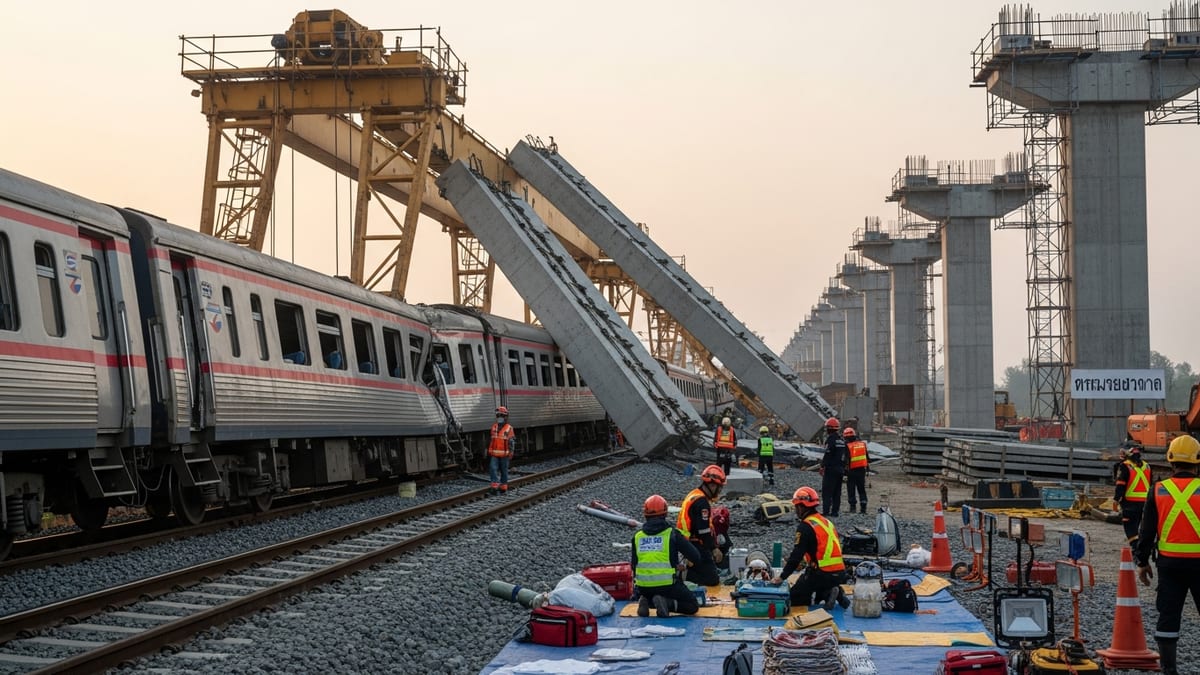
Sentencing follows 2024 Bennet derailment
Recent court proceedings in Lancaster County brought an end to the criminal case stemming from the derailment of a BNSF coal train near Bennet, a small community southeast of Lincoln. Reports indicate that the defendant, now 19 years old, received a state prison sentence after being found responsible for tampering with railroad equipment that caused the crash.
According to published coverage, the judge imposed a custodial term within Nebraska’s Class IV felony range, which carries a potential maximum of two years’ imprisonment. Local reporting notes that the sentence also includes post‑release supervision, reflecting the court’s view that the conduct warranted both punishment and ongoing monitoring.
Court records referenced in regional outlets show that the conviction followed a bench trial on a felony criminal mischief charge. The sentencing came nearly two years after the derailment, which occurred in April 2024 and initially prompted a lengthy investigation by railroad and local investigators.
Publicly available information shows that no injuries were reported in the incident, a factor that appears to have influenced the ultimate length of the sentence even as the court emphasized the potential for catastrophic harm.
How the derailment unfolded near Bennet
Reports indicate that on an evening in late April 2024, a BNSF coal train approached a rural crossing near Bennet when it encountered a misaligned railroad switch. The altered switch diverted a portion of the train off the main line, causing two locomotives and multiple loaded coal cars to leave the tracks.
Photos and video from the aftermath, carried by local news outlets at the time, showed several cars tipped at sharp angles along the right of way, spilling coal and damaging track and signal infrastructure. Nearby road traffic was temporarily rerouted while crews assessed the scene and began clean‑up and repairs.
Publicly available documents from the case describe the incident as a deliberate act involving manual manipulation of the track switch shortly before the train’s arrival. The derailment shut down a section of line that is used to move coal and agricultural products through southeast Nebraska, creating ripple effects for freight schedules.
Despite the scale of the derailment, investigators and subsequent coverage noted that there were no hazardous materials involved and no fuel spills of significant size, allowing normal operations to resume more quickly than in some higher‑risk freight incidents elsewhere in the country.
Filming the crash and posting it online
The case drew widespread attention because of the defendant’s actions before and after the derailment. According to court summaries and media reports, the then‑17‑year‑old rail enthusiast set up a tripod and camera near the crossing shortly before the train arrived, capturing the moment the locomotives and cars jumped the tracks.
Published accounts state that the video was later shared online and also shown to investigators, becoming a central piece of evidence. The footage, which circulated on social media and was discussed in railfan and local forums, intensified public debate over whether the derailment had been staged for views or was an incident of reckless tampering that happened to be recorded.
Legal filings described in Nebraska appellate records indicate that investigators focused on the timing of the recording, the defendant’s familiarity with railroad operations, and his proximity to the switch. Those details ultimately supported the conclusion that the switch had been intentionally moved and that the derailment was not simply an accident captured by chance.
The unusual combination of rail enthusiasm, social media content creation and serious property damage placed the case in a national conversation about risky stunts and criminal acts undertaken for online attention.
From juvenile case to adult conviction
Court records cited in regional news reports show that the case initially proceeded in juvenile court, reflecting the defendant’s age at the time of the derailment. However, prosecutors later sought to move the case into adult court, arguing that the seriousness of the conduct and the potential consequences warranted adult jurisdiction.
A Nebraska appellate decision made publicly available in 2025 outlines the reasoning behind that shift, noting the scale of the potential danger to train crews and nearby residents if the derailment had involved different cargo or led to a fire. The appellate panel allowed the transfer to adult court, clearing the way for a felony trial and eventual sentencing as an adult.
The transition from juvenile proceedings to adult conviction became another focal point of public discussion. Commentators in regional coverage and online forums weighed the balance between holding a young defendant accountable and recognizing adolescent decision‑making, particularly in a case where no one was physically harmed.
The final sentence, while short of the theoretical maximum, signals that Nebraska courts viewed the conduct as far outside the bounds of typical youthful mischief, particularly given the extensive property damage and disruption to a key freight corridor.
Rail safety concerns and broader implications
The Bennet derailment added to ongoing concerns about rail safety across the Great Plains, where long freight trains frequently pass close to small towns and rural crossings. Industry observers quoted in broader coverage have pointed out that mainline freight operations rely on a combination of signal systems, dispatcher oversight and physical security, but that rural switches can remain relatively exposed.
Publicly available information from rail safety advocates suggests that incidents involving intentional tampering are rare compared with mechanical failures, weather‑related issues or vehicle collisions at grade crossings. Even so, the Nebraska case has been cited in discussions about enhancing surveillance, fencing and community reporting around critical track infrastructure.
In southeast Nebraska, the case has also prompted renewed local attention to the role of railfans, many of whom document trains responsibly from public spaces. Commentaries in rail enthusiast communities have emphasized ethical guidelines for filming and a clear separation between lawful observation and any interference with operations.
With sentencing now complete, the case stands as a high‑profile example of how actions undertaken in pursuit of online attention can intersect with serious criminal liability, particularly when they involve critical transportation networks and the potential for large‑scale harm.