


More news on this day
Hundreds of travelers at Washington Dulles International Airport on Tuesday found themselves stranded amid widespread operational disruption, as 10 flight cancellations and at least 151 delays rippled across long haul routes to major tourism gateways including London, Frankfurt, Paris, Rome, Madrid, Lisbon, Zurich, Doha and Cairo.
Get the latest news straight to your inbox!
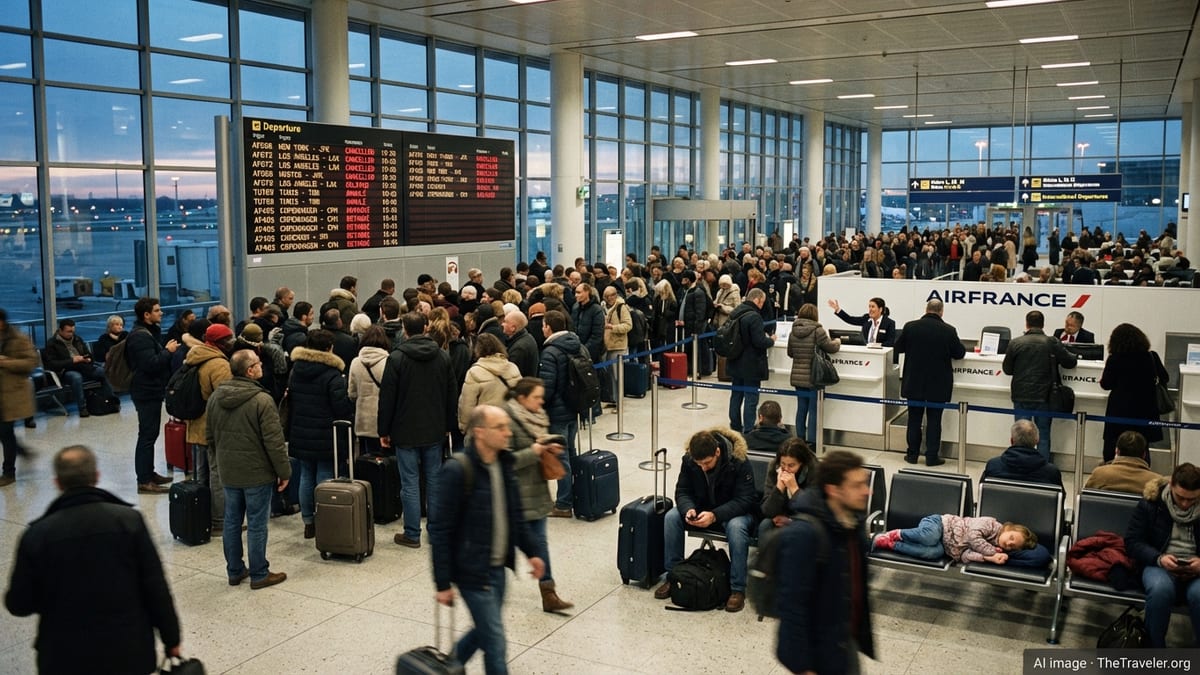
Operational Disruption Hits a Key International Hub
Publicly available flight boards and tracking services for Tuesday indicate that Washington Dulles International Airport is working through a dense backlog of delayed departures and arrivals, with the impact falling heaviest on transatlantic and Middle Eastern services. While Dulles regularly manages several hundred flights a day, the combined effect of 10 cancellations and more than 150 delayed operations has created visible congestion in terminal areas and at departure gates.
Data compiled from live tracking platforms show delays concentrated in the afternoon and evening banks, when many of the airport’s long haul departures to Europe and the Gulf typically operate. Services to London, Frankfurt, Paris, Rome, Madrid, Lisbon, Zurich, Doha and Cairo form part of Dulles’s core intercontinental schedule, and disruption on those links tends to cascade across multiple onward connections.
Airport information pages highlight that, on a typical day this June, Dulles handles close to 400 scheduled movements, placing Tuesday’s disruption in the context of a normally busy summer schedule. The combination of heavy demand, tight aircraft rotations and weather or air traffic constraints can quickly translate into extended delays for passengers, particularly on widebody long haul flights where rebooking options are limited.
Historical delay indices for the airport show that even a moderate uptick in late running can push operations into what analysts describe as a severe congestion pattern. Once aircraft and crews fall out of position, recovery often takes several scheduling waves, especially when affected flights are tied to tightly timed arrival and departure slots at major European hubs.
Transatlantic Tourism Corridors Disrupted
The most visible fallout from Tuesday’s disruption is on leisure and business travel between the Washington region and a string of major tourism destinations in Europe and the Middle East. Routes linking Dulles with London, Frankfurt, Paris, Rome, Madrid, Lisbon and Zurich typically feed both point to point demand and a large volume of connecting traffic onto onward flights across Europe and North Africa.
Published punctuality data for key European hubs such as London Heathrow, Frankfurt, Paris Charles de Gaulle, Rome Fiumicino, Madrid Barajas, Lisbon and Zurich show generally strong on time performance into the spring of 2026, but also underline how quickly bottlenecks can form during peak travel months. When an originating long haul service from the United States is delayed or cancelled, passengers may miss carefully sequenced onward connections, adding to congestion in transfer zones and forcing overnight stays.
Tourism analysts note that Dulles serves as an important North American gateway for visitors bound for iconic European capitals, Mediterranean cruises and cultural itineraries covering multiple countries in a single trip. Delays on departures to London, Paris or Rome, for example, can mean missed rail links, tour departures or hotel bookings arranged on tight schedules.
For U.S. travelers heading to Europe, Tuesday’s irregular operations are likely to result in rebookings over alternative hubs or, in some cases, short term cancellations of nonrefundable ground arrangements. Travel advisors often recommend building in buffer time at the start of complex itineraries, but peak season passengers frequently opt for tighter connections to maximize time at their destinations, leaving less margin when disruptions occur.
Knock-on Effects for Gulf and North Africa Connections
The disruption is not limited to Europe. Long haul services between Dulles and Doha and Cairo also play a central role in connecting U.S. travelers to broader networks across the Middle East, Africa and South Asia. Flights between Doha and Washington routinely act as feeders into a vast web of onward services to resort destinations and expatriate hubs, while Dulles Cairo links are important for both tourism and visiting friends and relatives traffic.
When an inbound flight from Doha or Cairo arrives late into Dulles, aircraft turnaround times can compress, ground handling windows shrink and departure slots may be missed, compounding delays for the return sectors. Conversely, delayed departures from Washington can cause passengers to miss banked connections at foreign hubs, where onward flights often depart in tight waves during late evening or early morning peaks.
According to publicly available schedules and airline network maps, summer 2026 sees Dulles positioned as a significant link between the U.S. capital region and North Africa, the Gulf and beyond. Any sustained pattern of delays on these services during the busy June to August period could influence booking patterns as travelers weigh alternative routings via New York, Chicago, Atlanta or other U.S. gateways.
Travel industry observers highlight that disruptions on high profile routes can also affect traveler perceptions of reliability, even if punctuality records over a longer period remain solid. Persistent headlines about stranded passengers and missed connections may lead some visitors, particularly those on tight business itineraries, to favor airports and carriers perceived as more resilient.
Airlines and Airports Under Pressure in Peak Season
The latest wave of delays at Dulles arrives against a backdrop of record passenger volumes across the Washington region’s two main airports and a broader industry push to manage surging demand with finite fleets and staffing. The airport operator has previously reported that combined traffic through Reagan National and Dulles in 2025 surpassed previous records, underscoring the pressure on infrastructure as airlines continue to rebuild and grow international networks.
Across the Atlantic, recent punctuality reports compiled by European airport associations show that large hubs serving London, Frankfurt, Paris, Rome, Madrid, Lisbon and Zurich have improved on time performance compared with the start of the year, but also caution that summer peaks remain vulnerable to weather, air traffic control constraints and knock on effects from distant disruptions. In this context, operational issues at a major U.S. origin point such as Dulles can act as a trigger for a wider chain of delays.
Network planning updates from large airline groups have already flagged tactical schedule trims and frequency adjustments for the summer season to help smooth operations. These measures include consolidating flights on certain routes, deploying larger aircraft to reduce the number of movements, and selectively reducing daily frequencies on high density European and domestic sectors in June.
Even with such adjustments, live data from flight tracking platforms on Tuesday show that delays remain a persistent feature of long haul operations. At Dulles, the combination of weather conditions, airspace congestion and aircraft rotation challenges can swiftly push departures outside their scheduled windows, particularly during the late afternoon and evening international bank.
Advice for Affected Travelers and Tourism Stakeholders
Travel organizations monitoring the situation at Dulles recommend that passengers with upcoming departures on affected long haul routes check flight status frequently on departure day and register for airline notifications. For those with complex itineraries involving connections in hubs such as London, Frankfurt, Paris, Rome, Madrid, Lisbon, Zurich, Doha or Cairo, building in longer layovers can provide extra protection against missed onward flights.
Tourism boards and local hospitality businesses in Europe and the Middle East are also watching patterns on U.S. gateways closely. Late arrivals can result in shorter stays, missed first nights in hotels and reduced spending on local tours and dining, particularly when travelers arrive exhausted after extended delays. Repeated disruption on key feed routes from North America can shape seasonal performance for destinations that rely heavily on U.S. visitors.
Industry analysts suggest that sustained monitoring of delay indicators at major U.S. and European hubs will be critical over the coming weeks as peak summer travel ramps up. If irregular operations at airports such as Dulles persist, airlines may opt for further schedule fine tuning or capacity shifts to stabilize on time performance, with knock on implications for tourism flows on some of the busiest transatlantic and Middle Eastern corridors.
For now, Tuesday’s 10 cancellations and 151 delays at Washington Dulles stand as a reminder of how quickly a single day of operational stress can spill across continents, leaving hundreds of travelers stranded and reshaping travel plans on some of the world’s most important tourism routes.