

More news on this day
American Airlines has quietly overhauled its mobile app to surface real-time cancellation and rebooking options on a single disruption screen, giving travelers a clearer look at what the airline will actually do for them when flights fall apart.
Get the latest news straight to your inbox!
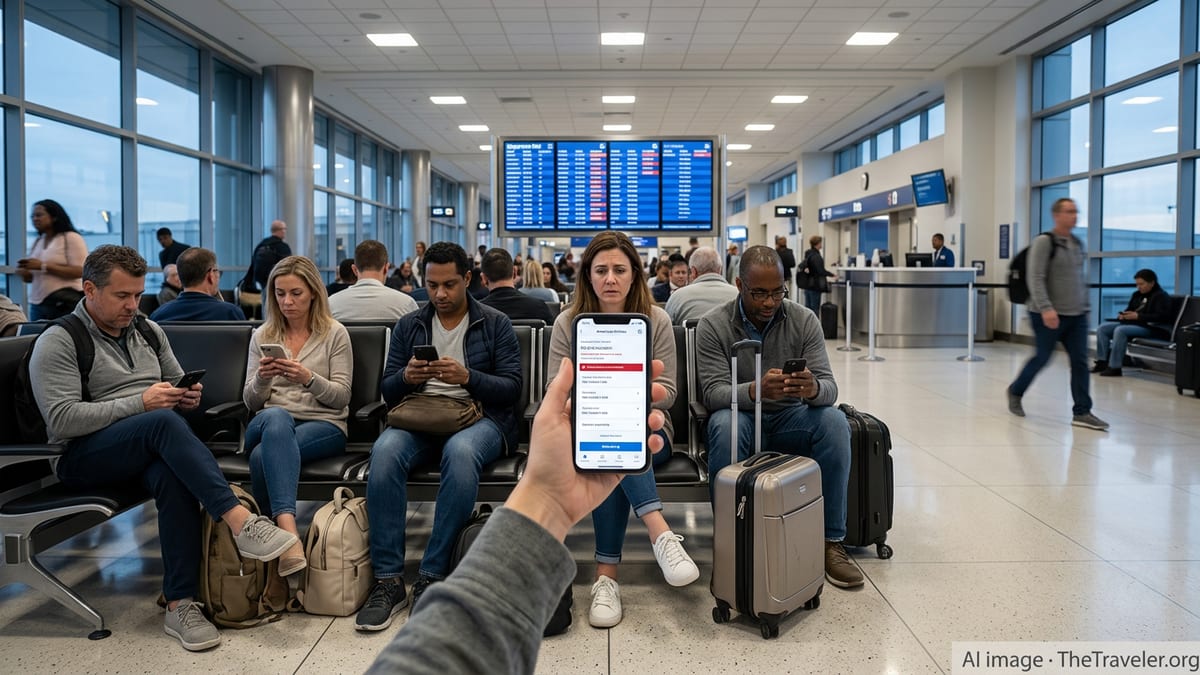
A Disruption Hub That Shows Your Real Options
American Airlines introduced a redesigned disruption experience in its mobile app in early 2026, presenting affected passengers with a new central hub the moment a delay or cancellation hits. According to the airline’s newsroom and recent coverage in travel industry outlets, the app now pulls together rebooking choices, flight status updates, and eligible vouchers in one place instead of scattering them across multiple menus.
When a flight is delayed or canceled, impacted journeys generate a prominent alert that leads to this disruption screen. Passengers can view alternative flights, confirm new itineraries, and see whether they qualify for hotel or meal support without contacting a call center or waiting in line at the airport. Reports indicate that the tools are designed to be both proactive and self-service, reducing the need for in-person assistance during peak disruption events.
Travel media analysis suggests that the update builds on earlier technology, such as delay prediction tools and live status tracking, by turning raw information into actionable choices. Rather than simply indicating that a flight is late or canceled, the app now emphasizes what customers can do next, including changing flights and accessing any benefits tied to the disruption.
This new level of transparency does not change American’s underlying policies, but it does make them more visible. For many travelers, it is the first time the airline’s practical response to cancellations is laid out clearly on their phone screen, in real time.
What the App Now Reveals About Cancellations
The updated app experience highlights a distinction that has long existed in airline contracts but often remained opaque to passengers: the difference between controllable and uncontrollable disruptions. Publicly available documentation and consumer-rights dashboards from U.S. regulators show that airlines, including American, commit to different levels of assistance depending on whether a cancellation is caused by the carrier or by weather, air traffic control, or other external factors.
In the new disruption hub, that distinction is now reflected in what appears on screen. Travel reports describe scenarios in which passengers see meal or hotel vouchers populate automatically when a cancellation is categorized as within the airline’s control, while weather-related events trigger rebooking options but fewer amenities. The app does not rewrite these policies, but it exposes how they work in practice by limiting offers to what the airline already commits to provide.
For many travelers, this is the part that feels like a revelation. The app’s clarity makes it obvious when there is no automatic promise of a travel credit, hotel stay, or meal support after a long delay or cancellation. Passengers who previously assumed certain benefits were standard are now confronted with the reality that, in many cases, the only guaranteed remedy is a new seat on a later flight.
Consumer advocates note that this shift toward app-based disclosure arrives as regulators continue to pressure carriers to explain their service commitments more clearly. By putting benefits and limitations directly into the disruption workflow, American’s tool effectively shows customers where the line is drawn between courtesy and obligation.
Instant Rebooking, Live Activities and QR Code Vouchers
Alongside clearer policy visibility, the American Airlines app refresh emphasizes speed and convenience when travel plans collapse. The disruption hub allows passengers to rebook onto available flights with a few taps, often before lines form at service desks. Coverage from travel industry publications indicates that these options may include same-day alternatives and, in some cases, rerouting through different hubs when space permits.
The app also supports digital vouchers that can be used for meals, hotels, or ground transportation when those amenities are offered. Some recent reports describe QR codes that can be scanned at participating vendors, removing the need for printed slips or manual processing at the airport. This approach is designed to cut down on confusion at crowded gates, especially during large-scale weather events or system disruptions.
For iOS users, American has tied these tools into Live Activities, enabling real-time flight status and gate information to appear on the lock screen and, where supported, on smart watch widgets. The latest version notes highlight that travelers can track boarding, departure estimates, and other key milestones without repeatedly opening the app, which can be crucial during rolling delays or rapid gate changes.
These capabilities turn the airline’s app into a practical command center during cancellations. However, they also require passengers to be proactive: those who do not open disruption alerts or who rely solely on airport screens may miss windows to claim seats on earlier replacement flights.
How the Feature Exposes Policy Gaps Travelers Often Miss
By making disruption choices more explicit, the American Airlines app also underscores where protections are limited. Public consumer dashboards maintained by federal transportation authorities show that major U.S. carriers vary widely in what they promise when they cancel flights for reasons within their control, and that few guarantee travel credits or frequent flyer miles purely for long delays.
When a cancellation appears in the updated app, the absence of certain options can be as revealing as the presence of others. Travelers may see a rebooking path but no automatic hotel offer, or a meal voucher without any form of partial refund or travel credit. These gaps reflect existing policies rather than a failure of the technology, but the app’s structured layout makes them more difficult to overlook.
Travel data services and independent analysts continue to point out that many frustrations stem from assumptions about what airlines are legally required to provide. While some regions have strong compensation rules, U.S. domestic flights operate under more limited federal guarantees. The American Airlines app, by showing exactly which services are extended in each case, unintentionally functions as a live demonstration of those regulatory boundaries.
This clarity can help travelers make more informed choices about schedules, connection times, and whether to purchase additional coverage. It can also prompt closer comparison across airlines, as passengers weigh not just fares and routes but also the concrete disruption support they are likely to see in their app if a flight is canceled.
What Savvy Travelers Should Do Differently Now
The emergence of this enhanced disruption feature shifts some responsibility onto passengers to monitor their options closely. Travel experts and frequent flyer forums consistently recommend enabling notifications in the American Airlines app and checking the disruption hub as soon as an alert appears. In major irregular operations, the first customers to act often secure the most favorable rebooking choices.
Passengers are also encouraged to pay attention to how a cancellation is labeled in the app, as this can signal whether hotel or meal support is likely to appear. If only minimal assistance is offered on screen, travelers may want to consult credit card benefits or separate travel insurance to fill the gap, especially on complex or time-sensitive itineraries.
Finally, the way American’s app surfaces disruption policies may influence how travelers plan future trips. Routes with frequent weather exposure, tight connections through busy hubs, or limited alternative flights could pose higher risk, particularly when app-based offers reveal that amenities are narrowly defined. By combining the new feature with publicly available data on on-time performance and cancellation rates, travelers can better gauge where the airline’s technology will meaningfully help them and where it may simply confirm that they are on their own.
For American Airlines customers, the update does not change the rules, but it does remove much of the mystery. When the next cancellation hits, the app now shows in plain language what the airline is prepared to do, and what it is not.