


More news on this day
Newly published images from the Dutch-flagged cruise ship MV Hondius, held offshore after a deadly hantavirus outbreak, are offering a rare glimpse of how stranded passengers are passing the time while medical teams monitor them for signs of illness.
Get the latest news straight to your inbox!
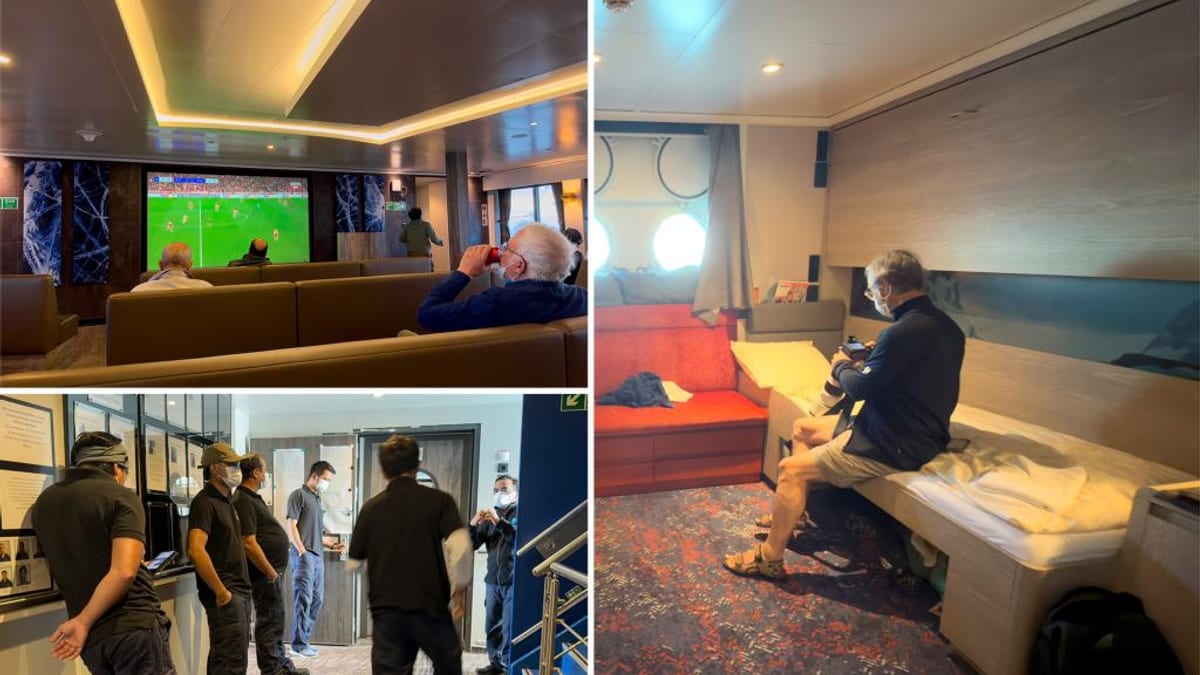
Snapshots of an Unplanned Quarantine at Sea
The MV Hondius has been anchored off the coast of Cape Verde as health workers track a cluster of hantavirus infections linked to the voyage between South America and West Africa. Publicly available information indicates that three passengers have died and several others have fallen ill since late April, turning what began as a polar and wildlife itinerary into an extended quarantine at sea.
Images circulated by international media and on social platforms show passengers clustered on open decks in small groups, reading, playing cards and watching the horizon as they wait for clearance to disembark. Some sit in deck chairs spaced farther apart than usual, creating improvised pockets of privacy on a ship designed for social mingling rather than isolation.
Other photos capture masked travelers lining railings with binoculars in hand, continuing to scan for seabirds and marine life while remaining under observation. Reports describe a subdued but orderly atmosphere, with many guests attempting to maintain a semblance of their original expedition experience even as the focus shifts from adventure to health surveillance.
Cabin balconies and window ledges have become informal extensions of living space, visible in images showing laundry drying in the sea breeze and handwritten messages taped to glass. These small details highlight how passengers are adapting shipboard routines to a prolonged, uncertain wait.
Health Monitoring and the Hunt for Symptoms
According to coverage from international news outlets and health briefings, at least eight passengers connected to the MV Hondius have been identified as confirmed or suspected hantavirus cases, with the Andes strain linked to the outbreak. The virus, which is associated with rodents in parts of South America, can in rare cases spread from person to person and is known for causing severe respiratory disease.
Reports indicate that onboard medical staff and visiting health workers are checking passengers regularly for early warning signs such as fever, headache, gastrointestinal upset and respiratory distress. Photos show crew and medical personnel wearing protective equipment as they move through corridors and along exterior decks, underscoring the caution around a pathogen that remains relatively rare worldwide.
Publicly available timelines compiled by major news organizations suggest that several symptomatic passengers were evacuated earlier to hospitals in South Africa and elsewhere, while those remaining on board are being monitored through daily health checks and questionnaires. With hantavirus incubation periods typically measured in weeks rather than days, the shipboard population faces a longer observation window than would be the case for many respiratory viruses.
Health agencies quoted in recent coverage have stressed that, despite the seriousness of individual cases, the overall public risk remains low compared with more easily transmitted infections. For the passengers still on the Hondius, however, the priority remains getting through the monitoring period without new symptoms emerging among friends, cabin neighbors or crew.
From Expedition Cruise to Prolonged Standby
The voyage began in early April with a route that took travelers from Ushuaia in Argentina toward Cape Verde, with stops that included remote islands and wildlife viewing opportunities. Travel features and passenger accounts gathered by international outlets describe an itinerary focused on birdwatching and polar-style expedition excursions before the first serious illnesses were reported on board.
As test results and laboratory analyses accumulated, the Hondius shifted from an expedition vessel to a floating containment setting. Port calls were curtailed, and the ship was directed to remain offshore while health authorities coordinated evacuations and assessed options for safely moving remaining guests. Tracking data cited in recent reports indicate that the vessel is now heading toward the Canary Islands, where passengers may eventually disembark if they remain free of symptoms.
For many on board, that has meant a second, unplanned leg to their journey with no firm end date. Photos show luggage repacked and stacked in cabin corners, and passengers wearing the same small rotation of casual clothes day after day. Entertainment that would normally punctuate a cruise itinerary has given way to quieter activities: reading, photography, exercise circuits on the outer decks and informal language lessons among multinational travelers.
Public commentary from tourism analysts suggests that the Hondius incident is becoming a new touchpoint in the long debate over cruise travel and infectious disease, coming several years after global scrutiny of ships during the COVID-19 pandemic. Yet the experience on board appears more muted than chaotic, shaped by slow-moving medical timelines rather than rapid, shipwide transmission.
Global Contact-Tracing Efforts Reach Far Beyond the Ship
While the remaining passengers on the Hondius wait offshore, health agencies on several continents are tracing those who disembarked earlier in the voyage. Coverage by international broadcasters and newspapers indicates that at least two dozen travelers left the ship at earlier stops, including on the remote island of St. Helena, before the scale of the outbreak became clear.
Reports from Europe, North America and South America describe a widening search for former passengers who may have been exposed during the cruise and then continued on to other destinations. Publicly available information shows that health departments in countries including the Netherlands, Switzerland, Argentina and the United States have identified travelers for follow-up, with some placed under monitoring or voluntary isolation as a precaution.
One widely circulated photo shows medical personnel in protective gear transferring a suspected hantavirus patient from the ship to a waiting ambulance, illustrating how individual cases are triggering significant logistical responses on land. Airport staff and flight crew who briefly came into contact with symptomatic travelers have also been assessed, according to media summaries of national health briefings.
For the travel industry, these developments highlight how a localized outbreak on a single vessel can quickly ripple outward via air routes and transit hubs. They also underline the ongoing reliance on rapid passenger manifests, digital communication and cooperative public health networks to identify potential contacts in a time-sensitive window.
Travel Uncertainty and Passenger Emotions
Beyond the medical bulletins, the emerging photo record from the Hondius captures the emotional side of an open-ended delay at sea. Some images show passengers chatting with family on video calls, phones held up against sunset backdrops as they share updates about test results and revised travel plans.
Other scenes, described in published coverage and visible in still frames, depict quiet contemplation: individuals sitting alone at the stern, writing in notebooks, or staring out at the Atlantic swells. Games of cards and makeshift quiz nights appear to be serving as informal morale boosters, the kind of low-tech entertainment that can be organized quickly when formal programming is suspended.
Reports note that many guests face complex onward journeys once they are allowed to leave the ship, with flights to rebook and work or family commitments to rearrange after an extended absence. For some, the cruise has evolved from a once-in-a-lifetime wildlife expedition into an unexpected lesson in global health protocols, quarantine law and the logistics of cross-border disease investigations.
As the Hondius continues toward its next port under close observation, the latest photographs and dispatches from on board offer an evolving record of how ordinary travelers respond when a rare virus abruptly turns their ship into the focal point of an international health story.