


More news on this day
Travellers heading through London Heathrow this weekend are being urged to prepare for disruption, as continuing Middle East airspace closures trigger fresh long-haul flight cancellations and put additional pressure on already disrupted Tube and rail links to the UK’s busiest airport.
Get the latest news straight to your inbox!
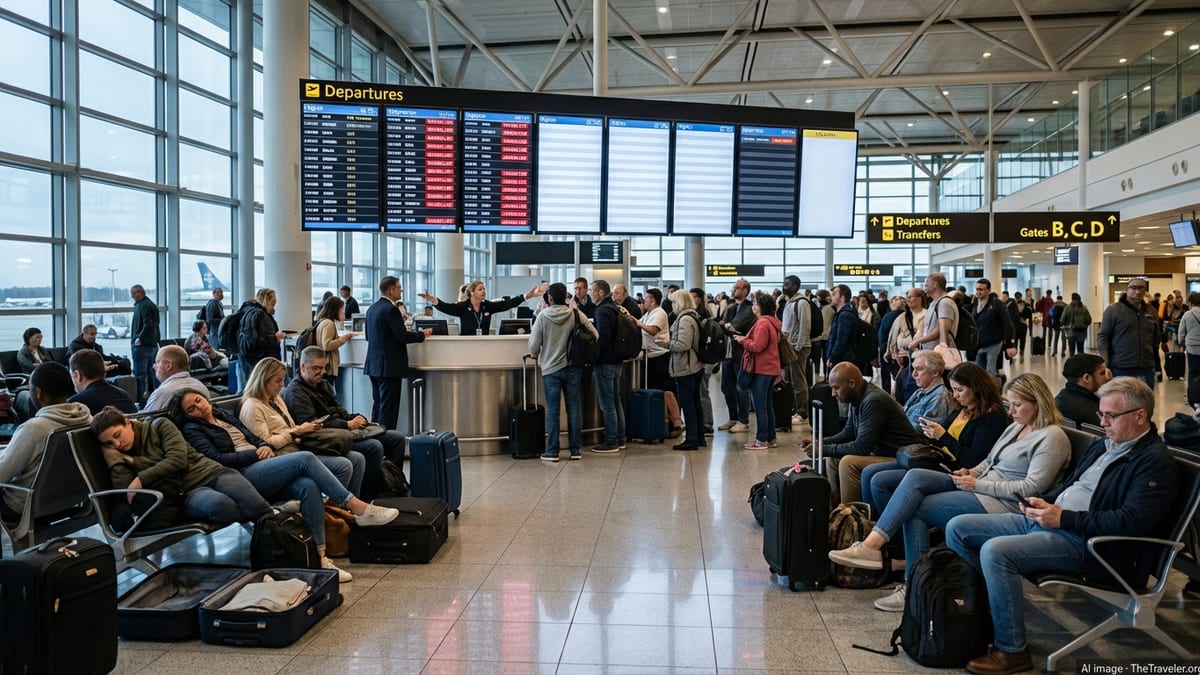
Middle East conflict keeps key air corridors closed
Airlines serving Heathrow continue to grapple with a patchwork of airspace restrictions across the Middle East, following weeks of tension and military activity involving Iran, Israel and regional powers. Publicly available aviation notices and travel advisories show that sections of airspace over Iran, Iraq, Israel and parts of the Gulf remain fully or partially closed to civilian overflights, forcing carriers to cancel or reroute services on core Europe to Asia and Australia corridors.
Analysis from travel and risk consultancies indicates that thousands of flights were cancelled across the wider region when closures began in late February, with schedules still being rebuilt as authorities review restrictions in stages. Some states, including Iraq, have periodically extended bans on transit traffic, while others have reopened with limits on altitude or time-of-day operations. The resulting uncertainty continues to filter through into airline planning for the coming weekend.
Major Middle Eastern hubs such as Dubai, Doha and key Saudi gateways play a vital role in connecting Heathrow with destinations across Asia, Africa and Oceania. Earlier suspensions and capacity cuts at those hubs disrupted onward connections for passengers originating in London, and while partial services have resumed, timetable data suggests that frequencies remain below normal on several routes. Any renewed tightening of airspace rules in the coming days could quickly ripple out into Heathrow’s long-haul network.
Industry bodies note that even when aircraft are able to operate, detours around closed airspace can add hours to flight times and significantly increase fuel burn. That in turn can push airlines to consolidate frequencies, upgauge aircraft or temporarily pause marginal routes, particularly where alternative routings are already congested. Heathrow’s role as a major interchange point for Europe means those adjustments are often most visible to passengers over peak travel weekends.
Heathrow warns of cancellations and knock-on delays
Heathrow Airport has been highlighting the impact of the Middle East situation on its own operations in recent weeks, including in traffic and performance updates published in April. Management has pointed to disruption linked to the conflict as one factor behind late-running flights in recent months, and the airport’s media centre has issued statements indicating continued support for airlines managing schedule changes and stranded passengers.
For the coming weekend, flight information screens and airline advisories show a growing list of cancellations on routes that usually rely on Middle Eastern overflight permissions or connections. These range from direct services to Gulf and Levant destinations to long-haul sectors to South and Southeast Asia that typically pass through or near affected air corridors. Some carriers are pre-emptively trimming frequencies or consolidating departures in order to build more slack into tightly timed rotations.
Operational planners at Heathrow also face the challenge of handling aircraft and crews that arrive significantly behind schedule after taking lengthy diversion routes. Late inbound flights can quickly cascade into missed departure slots, particularly during busy morning and evening banks. Historical data released by the airport for earlier months this year shows that similar disruption in March contributed to higher levels of delayed departures than usual, underlining how fragile punctuality can become when one major air corridor is constrained.
Passengers with itineraries involving tight connections at Heathrow are therefore at heightened risk of missed onward flights, especially where journeys link Middle East or Asia services with transatlantic departures. Airline websites indicate that many are offering flexible rebooking policies, travel waivers or refund options for customers booked on affected routes, but availability on alternative services may be limited over peak periods.
Tube and rail works tighten the squeeze on access
Compounding the challenge for Heathrow-bound travellers, Transport for London and rail planning documents outline a series of engineering works and strike-related disruptions on parts of the Underground and suburban rail network across the spring. Although specific dates and lines vary, several weekends in March, April and May have seen closures or reduced services on routes commonly used to reach the airport, including stretches of the Piccadilly line and interchanges used to connect to Heathrow Express and Elizabeth line services.
Published timetables and service bulletins indicate that further works are scheduled around key bank holiday and holiday-adjacent weekends, intensifying pressure on remaining routes into west London. Even when Heathrow’s dedicated rail links remain in operation, closures on intersecting Underground lines can lengthen journeys for passengers travelling in from other parts of the capital or from regional mainline stations.
In parallel, ongoing reviews of the Heathrow Express service, highlighted in recent public discussions between the Mayor of London and Transport for London, have drawn attention to the long-term shape of rail access to the airport. While any structural changes remain some years away, debate over ridership levels and ticket prices underscores how dependent Heathrow is on resilient public transport links, particularly when road congestion and weather add further unpredictability.
This weekend’s combination of airspace-related flight disruption and patchy Tube availability means that missed trains or longer interchanges could prove costly for time-pressed passengers. Journey planners for both rail and Underground are advising customers to check for closures on their specific route before setting out and to allow extra time at key interchange hubs in central London.
What passengers should expect at Heathrow this weekend
With Middle East airspace restrictions still evolving and local transport works continuing, travellers using Heathrow over the weekend are being advised by airlines and travel providers to prepare for a more complicated journey than usual. Industry updates suggest that the risk of last-minute schedule changes remains elevated for flights that depend on routes across the Middle East or that connect via Gulf hubs, and that airport processes may be slower if large numbers of passengers need to be rebooked.
Departing passengers are likely to encounter longer queues at check-in and rebooking desks for affected carriers, particularly at peak times on Friday evening and Sunday afternoon when leisure and business traffic typically intersect. Those arriving into Heathrow from disrupted regions may experience extended waits for baggage or onward connections as airlines prioritise aircraft turnaround and crew duty time limits. Travel insurers and consumer groups continue to remind customers to retain documentation of delays and cancellations in case they need to pursue claims later.
On the ground, anyone relying on the Tube to reach Heathrow should be ready for diversions or replacement bus services if their usual line is subject to engineering works. Where possible, travellers are being encouraged to confirm the status of both their flight and their chosen transport route into the airport on the morning of travel, rather than relying on plans made earlier in the week. For some, shifting to earlier departures, leaving extra time for security and border checks, or booking flexible tickets may help absorb unexpected disruption.
While airlines and transport operators are gradually adapting to the new pattern of airspace restrictions, experts note that the situation in the Middle East remains fluid and that further closures or reopenings could occur at short notice. For Heathrow’s passengers this weekend, that means staying informed, building in contingencies and expecting a journey that may take longer, and prove more complicated, than the timetable suggests.