

More news on this day
Countries across the globe are tightening travel advisories for the wider Middle East as the Iran–United States crisis escalates, triggering airspace restrictions, flight disruptions and mounting uncertainty for tourists, business travellers and expatriates throughout the region.
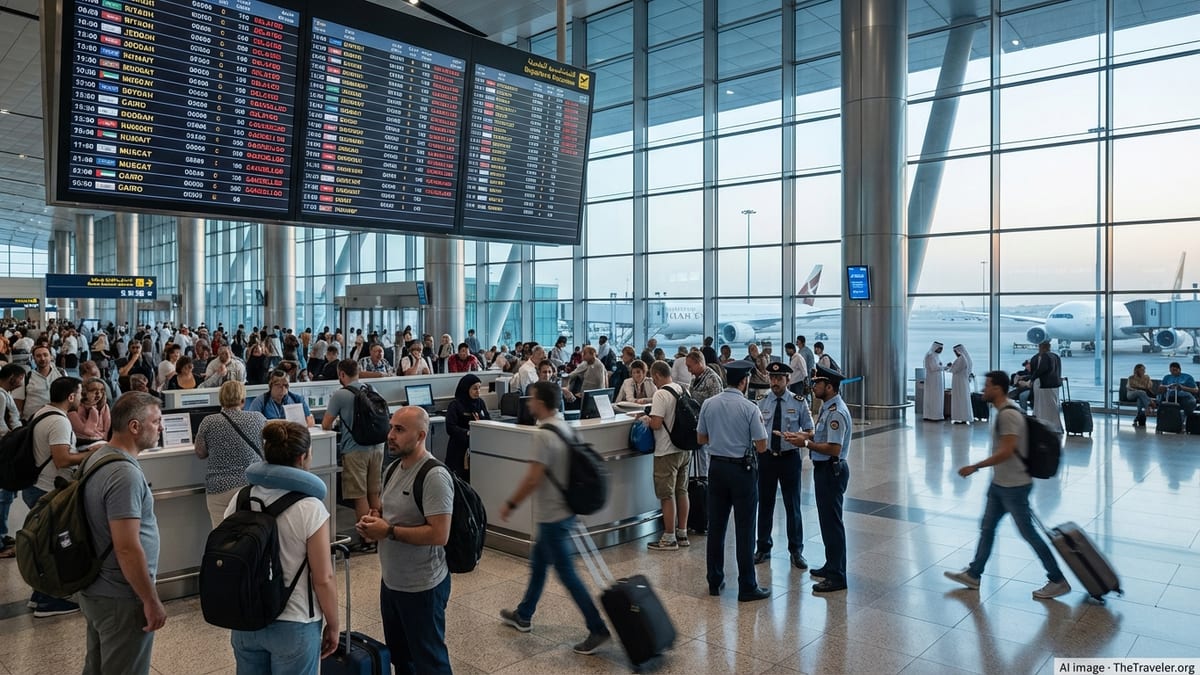
Governments Raise Alert Levels Across the Region
In recent days, a growing list of governments has issued new or expanded warnings that cover not only Iran but swathes of the Middle East, citing the risk of a potential US strike on Iranian targets and the prospect of retaliation. Several foreign ministries have urged citizens to avoid all travel to Iran and neighbouring high‑risk areas, and in some cases to leave while commercial routes remain available.
Germany, India, South Korea and Sweden are among the countries now advising against travel to Iran and calling on their nationals already there to depart, according to public foreign ministry notices and local media reports. Some have coupled those warnings with guidance to avoid non‑essential travel to nearby states that could be drawn into any confrontation, including parts of Iraq, Lebanon, Syria and Israel.
The United States has also reduced its diplomatic footprint in sensitive locations. Officials in Washington have confirmed that non‑essential staff have been withdrawn from the embassy in Beirut, while security alerts urge US citizens to reconsider travel throughout areas where tensions with Iran and its allied groups are highest. Other Western missions are reviewing staffing levels and contingency plans.
Travel risk consultancies say the pattern of advisories now resembles the early phases of previous regional crises, with overlapping warnings that stop short of a blanket ban on Middle East travel but raise the threshold for what is considered safe or necessary movement.
Airspace Closures and Flight Rerouting Hit Key Corridors
Commercial aviation has become one of the most immediate pressure points. Iran briefly closed its airspace to civilian traffic for several hours in mid‑January, forcing long‑haul carriers to divert north and south around the country. The closure, imposed without a public explanation, followed earlier shutdowns during clashes with Israel and has fuelled concerns that more prolonged restrictions could follow if military action escalates.
Industry monitoring platforms report that many airlines are already avoiding Iranian airspace as a precaution, even when it remains technically open. The result is longer flight times and higher fuel costs on some of the busiest East–West routes linking Europe with South and Southeast Asia, as well as Australia. Airlines that rely heavily on the Gulf as a transit hub are particularly exposed to any further deterioration in the security environment.
Executives at major Gulf carriers have warned that a direct US attack on Iran could make some services to North America operationally unviable if overflight options shrink. Rerouting around large swathes of the region would add hours to flight times, potentially requiring fuel stops and reducing the appeal of once‑direct connections that underpin global networks.
Regional airlines have already adjusted schedules on routes to Iran itself, trimming frequencies or suspending secondary destinations where demand has collapsed. Trade bulletins show that at least one major Gulf airline has limited operations to Tehran to a single daily rotation over coming months, keeping only a skeletal link in place while scaling back broader services to the country.
Tourism Hubs Brace for a Slowdown
Tourism‑dependent destinations across the Middle East are now bracing for ripple effects, even if they are far from any potential frontline. Travel specialists say they are seeing a rise in cancellations and postponements for itineraries that combine multiple countries in the region, as well as for cruise calls and escorted tours that include high‑risk ports.
Popular city break destinations such as Dubai, Doha and Istanbul, which have spent heavily to market themselves as safe, modern gateways between continents, are closely watching booking trends for the coming months. While hotels and airlines in these hubs report that flights and room occupancy remain relatively resilient for now, they are offering more flexible change and cancellation policies to reassure uncertain travellers and tour operators.
Hospitality groups with large regional portfolios, including major international chains, have begun scenario‑planning for softer demand and potential dips in occupancy should advisories widen or if images of any military confrontation dominate global news cycles. They are leaning on domestic and short‑haul markets to offset any decline in long‑haul leisure visitors and corporate meetings business.
Travel agents say the psychological impact of a broad “Middle East” travel alert can be significant, even in destinations that remain open and calm on the ground. For many long‑haul holidaymakers, a perceived lack of clarity about evolving risks is enough to shift plans toward alternative sun and city options in Europe, Asia or the Americas.
Travellers Reassess Risk as Security Situation Evolves
For individual travellers, the flurry of advisories and security bulletins has injected a new layer of complexity into trip planning. Airlines and insurers increasingly point customers to official government advice pages, which in some cases now warn that evacuation may become difficult or impossible if a conflict breaks out and commercial flights are curtailed.
Specialists in corporate travel risk management report that multinational companies are reviewing their duty‑of‑care policies for staff based in or transiting through the region. Some are pausing non‑essential business trips to higher‑risk countries, relocating short‑term assignments and asking employees to avoid overnight stays in locations where diplomatic missions have thinned out non‑essential personnel.
Independent tourists and backpackers, meanwhile, are weighing their appetite for uncertainty. Online forums and travel communities show rising numbers of questions about route safety, the reliability of internet and telecommunications in parts of Iran, and the practicalities of overland exits should airports close at short notice.
Security analysts stress that most Middle Eastern destinations remain peaceful and open to visitors, and that advisories are often highly specific to certain border areas, military facilities or protest hotspots. Even so, they recommend that travellers monitor official guidance daily, register with their embassies where possible and maintain flexible itineraries that can be adjusted if geopolitical tensions continue to climb.
Outlook for Regional Travel in the Coming Weeks
How the travel picture evolves now hinges largely on decisions being made in Washington and Tehran over the coming days and weeks. The United States has carried out a major military buildup across the region since late January, positioning additional aircraft, naval assets and air defence systems while signalling that it is prepared to strike Iranian targets if diplomacy fails.
Iran, grappling with ongoing domestic unrest and a harsh security crackdown, has warned that it would retaliate against any attack, raising fears among airlines and shipping companies about instability along vital air and sea corridors, including the Strait of Hormuz. The memory of previous missile exchanges and airspace shutdowns in 2025, which forced mass flight cancellations and diversions, is still fresh in the minds of carriers and travellers alike.
Travel industry leaders say that, for now, the response is focused on agility rather than withdrawal: rerouting flights where necessary, fine‑tuning schedules and providing passengers with real‑time updates on route changes and safety protocols. Tour operators are building contingency itineraries that can pivot to alternative destinations at short notice if clients no longer feel comfortable visiting certain countries.
If the current standoff can be defused through renewed talks, analysts expect tourism to rebound quickly, as it has after previous episodes of regional tension. But with embassies trimming staff, airlines recalculating their routes and foreign ministries urging caution, the Middle East’s travel sector is entering one of its most uncertain periods since the height of the pandemic, and globetrotters are watching closely before committing to their next journey.