


More news on this day
Cleanup crews in Bucyrus, a small city in northern Ohio, are working through Monday to remove derailed railcars and repair damaged track after a Norfolk Southern freight train left the tracks, prompting an evacuation order and renewed scrutiny of rail safety in communities along busy freight corridors.
Get the latest news straight to your inbox!
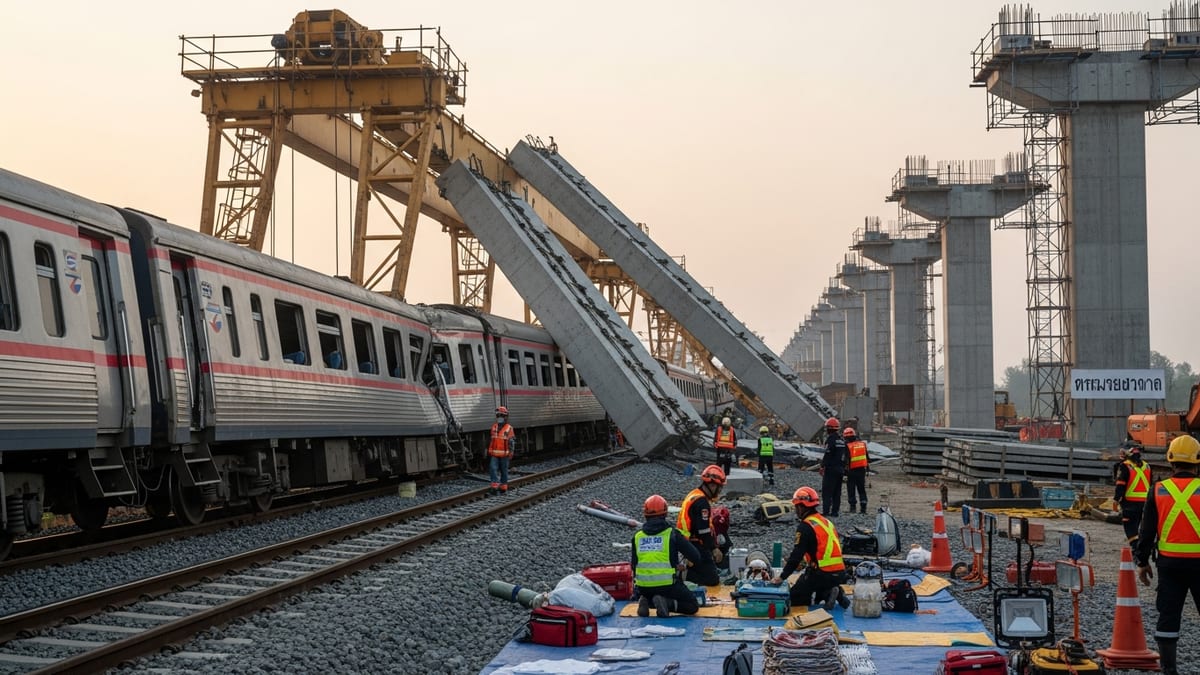
Railcars lifted and damaged track under repair
Publicly available information from local outlets in Ohio indicates that a total of 19 railcars derailed along Whetstone Street in Bucyrus on Sunday evening, with several cars overturning and others coming to rest at angles that blocked the rail line and an adjacent roadway. Rail recovery crews spent Monday repositioning heavy cranes and specialized equipment to lift the damaged cars from the right of way.
Reports from the scene describe five railcars lying on their sides and others partially off the rails, forcing a shutdown of the line while teams worked to stabilize equipment before removal. Whetstone Street remains closed to vehicle traffic as contractors cut damaged components, clear debris and prepare the rail bed for new ties and track segments.
According to published coverage, rail operators expect work on the damaged section to continue into at least Tuesday, with crews focusing first on clearing overturned cars and then on rebuilding the track structure. The scale of the operation has drawn curiosity from residents, but emergency management agencies continue to advise people to stay clear of the active work zone.
Evacuation order scaled back as hazmat risk reassessed
The derailment initially triggered concern because one of the affected cars was a tanker labeled for hydrochloric acid. Early guidance from local emergency agencies led to an evacuation radius of roughly one mile around the site and the opening of Bucyrus High School as a temporary shelter for residents who left their homes.
By Monday morning, updated assessments from emergency management teams and hazmat specialists, as reported by regional news outlets, indicated no active leak from the tank car and no immediate threat to air or water quality. On that basis, the evacuation zone was reduced to a quarter-mile around the site, and most residents were allowed to return home.
Officials continue to maintain traffic closures near the damaged rail line while removal and repair work proceeds. Publicly available statements emphasize that monitoring will remain in place as the tanker car is inspected and eventually removed, with responders prepared to adjust guidance if conditions change.
Bucyrus joins list of communities disrupted by derailments
The Bucyrus incident places another northern Ohio community in the national conversation about rail safety, only a few years after a high-profile hazardous-materials derailment in East Palestine drew widespread attention to freight operations in the state. Although the circumstances are different, residents following the news have been quick to draw comparisons between the two events and to raise questions about long trains and hazardous cargo moving through small towns.
Data cited in federal transportation summaries show that derailments of varying severity occur regularly across the United States, though most do not result in major spills or long-term environmental damage. Even so, each incident disrupts daily life along rail corridors, interrupting local traffic, raising short-term safety concerns and affecting the perception of rail operations among nearby communities.
Coverage of previous incidents in Ohio and neighboring states highlights recurring themes, including concerns about track conditions, train inspection practices and communication with local emergency responders. In Bucyrus, the current focus remains on cleanup and verification that hazardous loads remained intact, but the event is likely to feed into wider policy discussions about preventing future accidents.
Impact on travel, local access and nearby communities
For travelers and drivers in northern Ohio, the immediate effect of the Bucyrus derailment is localized but noticeable. Whetstone Street, an important connector through the city, is expected to remain closed until crews finish removing railcars and repairing the line, according to regional reporting. Detours add time to local commutes and can affect access to nearby businesses and residential neighborhoods.
Rail traffic along the affected segment is expected to be disrupted until the line is cleared and inspected. Freight trains may be rerouted, which can create ripple effects for rail operations elsewhere in the region. Travelers using nearby highways and secondary routes could encounter heavier truck traffic as shippers adjust short-term logistics around the temporarily out-of-service rail link.
For visitors passing through northern Ohio by car, the incident underscores the value of checking local traffic advisories and news updates before planning routes through smaller cities that host major freight lines. While Bucyrus is not a major tourism hub, it sits within driving distance of several regional attractions, and any extended closure of key streets can subtly alter travel patterns.
Ongoing cleanup and questions about long-term safety
As railcars are removed and track repairs advance, attention is shifting toward the investigation into what caused the Norfolk Southern train to leave the rails in Bucyrus. Early reports do not point to a confirmed cause, and investigators are expected to examine track conditions, train speed, equipment performance and recent maintenance records.
National discussions about freight rail safety have grown more pointed in recent years, particularly around the length and weight of trains, the handling of hazardous cargo and staffing levels for inspections and operations. Previous federal reviews of incidents in Ohio and other states have produced calls for improved defect detection systems and closer coordination with local emergency agencies along major freight corridors.
For Bucyrus residents and for travelers who regularly cross rail lines in northern Ohio, the sight of overturned cars and heavy cranes is a reminder of the infrastructure that quietly underpins cross-country trade. As cleanup winds down and normal traffic resumes, many in the region will be watching for the outcome of the investigation and for any new measures aimed at reducing the risk of another disruptive derailment in the future.