

More news on this day
Escalating conflict around key Middle Eastern shipping lanes is injecting fresh anxiety into global energy markets, and Norway is moving to cement its role as Europe’s primary alternative supplier by opening more of its Arctic waters to oil and gas exploration. The strategy underscores a hardening focus on energy security, but it also raises pointed questions over whether Europe is prepared to accept higher environmental and climate risks in the Barents Sea to shield itself from turmoil further south.
Get the latest news straight to your inbox!
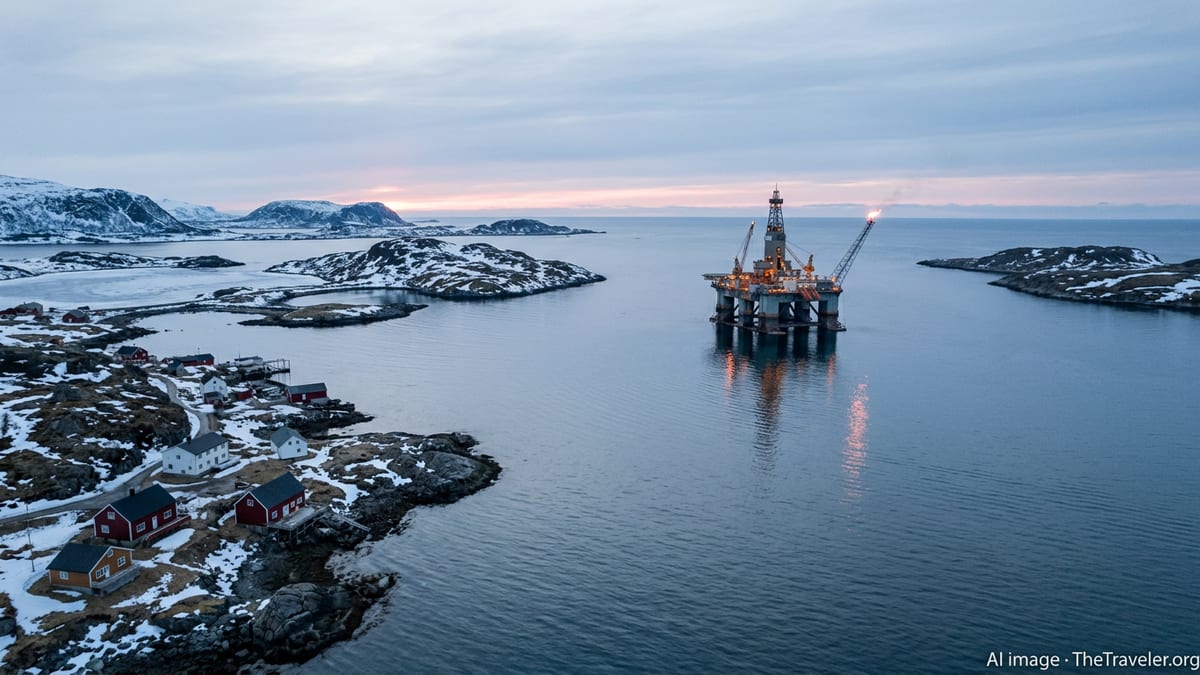
Middle East Turmoil Reframes Europe’s Energy Vulnerabilities
Recent geopolitical shocks in and around the Gulf have reminded policymakers that even if Europe imports relatively modest volumes of gas directly from the Middle East, it is deeply exposed to swings in global oil and shipping markets. The latest crisis around the Strait of Hormuz has pushed benchmark oil prices sharply higher and sent European gas prices spiking within days, illustrating how quickly supply fears in a narrow maritime chokepoint can ripple into European wholesale markets.
Attacks on commercial traffic in the Red Sea and uncertainty about safe passage through the Suez corridor have already forced many cargoes to reroute via the Cape of Good Hope. Analysts note that these detours drive up freight costs for liquefied natural gas and refined products, tightening an already stressed market. For Europe, which leaned heavily on global LNG after Russia’s 2022 invasion of Ukraine, the renewed volatility underscores the cost of relying on seaborne supplies that are vulnerable to conflict.
The European Union has made progress in cutting its dependence on Russian fossil fuels and has diversified toward suppliers such as the United States, Norway, Algeria and others. Yet oil and gas still account for the vast majority of the bloc’s energy imports, and recent price spikes have revived calls in some capitals for “local” and politically stable production, even when it clashes with climate ambitions.
This is the backdrop against which Norway, now the EU’s leading pipeline gas supplier, is expanding its Arctic portfolio. The move is framed in Oslo as a contribution to European resilience, but within Europe it is stirring debate over whether substituting Russian barrels with Arctic ones can be reconciled with the continent’s decarbonisation goals.
Norway Expands Licensing in the Barents Sea
Norway’s latest offshore licensing decisions point to a clear long-term bet on the High North. In January, the government awarded more than 50 new petroleum licences on its continental shelf, many in mature areas but several reaching into higher-latitude waters. Earlier, authorities had already launched an expanded 2025 licensing round that adds fresh blocks in both the Norwegian Sea and the Barents Sea, reinforcing a policy of incremental Arctic opening as older North Sea fields decline.
Publicly available data from the Norwegian Offshore Directorate indicate that at the start of 2024 there were just two producing fields in the Barents Sea, compared with dozens further south. However, the region holds significant undeveloped discoveries around projects such as Johan Castberg and the long-discussed Wisting area, which companies view as anchors for future infrastructure. New acreage offered in successive “Awards in Predefined Areas” rounds allows operators to map prospects and prepare potential drilling campaigns that could run well into the 2030s.
Norwegian officials present continued exploration as a way to maintain predictable output as Europe phases down Russian supplies. Reports highlight that petroleum production from the Norwegian shelf has been edging higher again since 2020, and the government argues that without new finds, gas deliveries to Europe would fall steeply in the 2030s, potentially recreating the sort of scarcity that drove prices to record levels after 2022.
At the same time, the political temperature around Arctic drilling is rising inside Norway. Coverage in Nordic media describes a fierce backlash from opposition parties and environmental groups over licences overlapping with sensitive marine areas, including key spawning grounds. Critics contend that pushing the exploration frontier northward conflicts with Norway’s own climate pledges and undermines its image as a champion of ocean protection.
Energy Security Versus Climate Commitments
The European Union has bound itself to cut net greenhouse gas emissions by at least 55 percent by 2030 and to raise the share of renewables in its energy mix to more than 40 percent. Official assessments published in late 2024 show that emissions are still falling, but also that energy-system investment must surge if the bloc is to stay on track. In parallel, recent agreements among EU governments and the Parliament maintain strict gas storage obligations, a sign that security of supply remains a central concern even as fossil fuel use is supposed to decline.
Against this policy backdrop, Norway’s Arctic ambitions look both attractive and awkward for Europe. On one hand, pipeline gas from Norway has been a stabilising force since Russian flows were curtailed, with some analyses estimating that Norway now covers roughly a third of the EU’s gas imports in gaseous form. A steady stream of Norwegian barrels and molecules can blunt the impact of turbulence in the Middle East and ease pressure on storage levels during cold winters.
On the other hand, expanded Arctic production risks locking in high-carbon infrastructure at a moment when the EU is trying to bend its fossil fuel demand sharply downward. Energy economists warn that if Europe is serious about electrification, efficiency and large-scale deployment of heat pumps and green hydrogen, gas demand should fall substantially over the next two decades. Additional long-lived Arctic projects could therefore end up at odds with the trajectory implied by climate models, especially if they seek to recover reserves into the 2050s.
Environmental groups and some policy institutes also emphasise that the Barents Sea is warming faster than the global average, with retreating sea ice and shifting ecosystems. In this context, a larger industrial footprint from platforms, pipelines and shipping raises the risk of oil spills and cumulative ecological stress in waters that support vital fisheries and seabird populations. For coastal communities that rely on tourism and seafood exports, any major incident could be economically devastating.
How Far Is Europe Willing to Lean on Norway?
Four years after the start of Russia’s full-scale invasion of Ukraine, Europe’s energy map looks markedly different. Russian pipeline gas has been largely replaced by Norwegian flows and a surge of LNG from the United States and other suppliers. Recent studies suggest that by 2030 as much as 40 percent of the EU’s combined gas and LNG imports could come from the United States, up from just over a quarter in the mid-2020s, while Norway’s relative weight as a nearby source remains central.
Yet this diversification has created a new pattern of dependence. Instead of relying heavily on one eastern supplier, Europe is now more tightly bound to a small group of producers in the North Atlantic and Mediterranean, as well as to globally traded LNG that is sensitive to shipping disruptions. The Middle East conflict has shown that events far from European shores can still trigger rapid price swings, even if physical shortages are avoided.
This reality is driving a nuanced debate in European capitals over how to handle Norway’s Arctic push. Some policymakers see expanded Norwegian output as a pragmatic insurance policy: a way to secure reliable gas for a transitional period while renewable capacity, storage and grid upgrades catch up. Others argue that leaning too heavily on new fossil projects, particularly in climate-sensitive regions, risks slowing investment into cleaner alternatives and weakening Europe’s credibility in global climate diplomacy.
Think-tank analyses of recent crises stress that Europe’s most durable shield against Middle Eastern shocks is not more drilling, but lower overall fossil demand achieved through structural changes to the energy system. That includes faster deployment of renewables, more interconnections between national grids, and scalable storage solutions, rather than simply shifting dependence from Russia to Norway and the United States.
A High-Stakes Test for Arctic Governance
Norway’s decisions in the Barents Sea are also being watched as a bellwether for Arctic governance more broadly. As sea ice retreats and new shipping lanes open, the High North is becoming increasingly strategic for NATO allies and commercial actors alike. Reports from European security institutes describe a more assertive Norwegian posture in the region since 2022, with upgraded infrastructure and closer coordination with partners, even as Oslo continues to promote cooperation on search and rescue and environmental monitoring.
Expanding oil and gas activity adds another layer to this picture. Each new licensing round signals to markets that Arctic hydrocarbons will remain part of Europe’s energy equation well into the coming decades. For environmental organisations and some northern communities, this trajectory raises concerns that the region could become a testing ground for how far climate-exposed ecosystems can be stretched in the name of security.
For now, European institutions are treading carefully. Official strategies continue to frame Norwegian gas as a “bridge fuel” that supports the phaseout of Russian imports while the share of renewables rises. At the same time, recent EU debates on phasing out remaining Russian gas and tightening climate policies highlight a determination to avoid replacing one structural dependency with another. Whether Europe ultimately judges Norway’s Arctic drive as a necessary risk or an avoidable detour may hinge on how quickly it can deliver on those green transition promises at home.