


More news on this day
A preliminary report from the National Transportation Safety Board details how a Norfolk Southern freight train derailed in Morgan County, Tennessee, releasing an estimated 107,000 gallons of flammable liquids and triggering a fire that burned for hours along a remote stretch of track near the Obed Wild and Scenic River.
Get the latest news straight to your inbox!
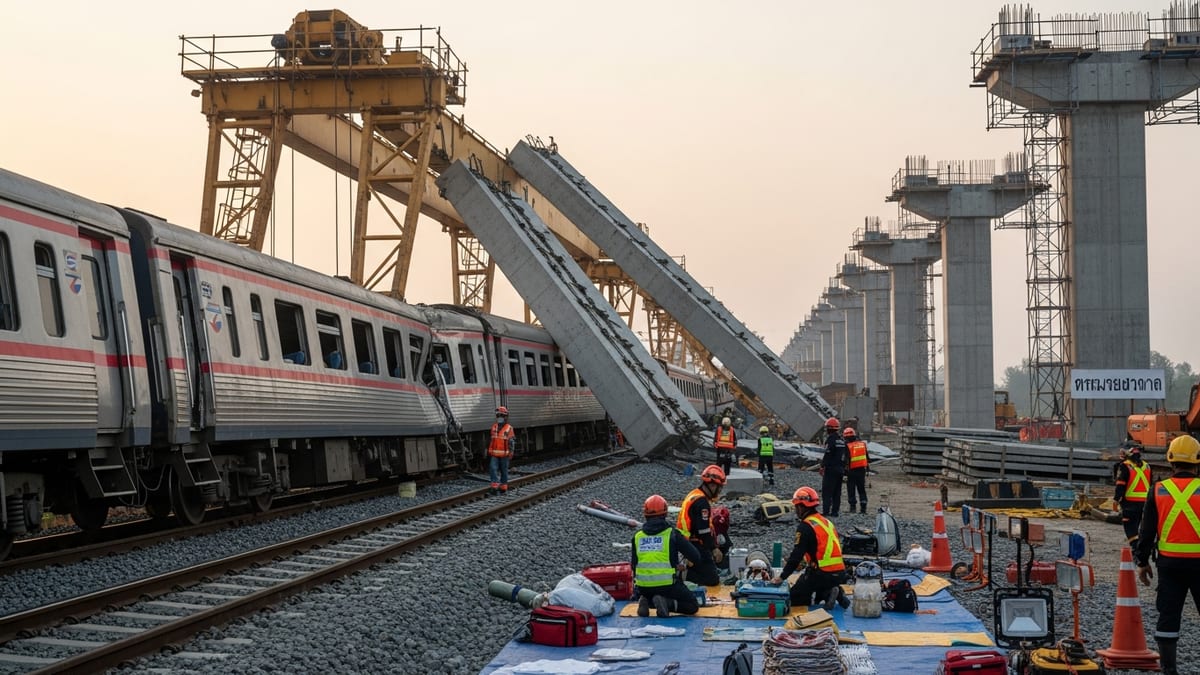
Key train derails near Obed Wild and Scenic River
Publicly available documents from the NTSB identify the train as a Norfolk Southern key train hauling mixed freight, including several tank cars carrying ethanol and other alcohols classified as Class 3 flammable liquids. The derailment occurred near Lancing in Morgan County, a sparsely populated area of the Cumberland Plateau known for its steep hollows and the protected waters of the Obed Wild and Scenic River.
The report describes how multiple tank cars left the tracks and piled up along the right-of-way, with several cars breaching and releasing their contents. The spilled liquid formed large burning pools around the wreckage, producing intense heat and heavy black smoke visible across the valley. Rail operations along the route were suspended while emergency responders accessed the crash site over narrow rural roads.
According to the NTSB’s preliminary findings, Norfolk Southern estimated that about 107,000 gallons of alcohol-based flammable liquid were released during the accident. Damage to track, rolling stock and lading is currently placed at roughly 5.3 million dollars, a figure that may change as the investigation and repairs continue.
Fire, fumes and river advisories raise safety concerns
News coverage from regional outlets indicates that the released alcohol ignited quickly, feeding a fire that burned near the rail line and adjacent woodland. While early air monitoring did not point to widespread contamination, the scale of the spill and the intensity of the flames prompted a cautious response from environmental and public land agencies.
The National Park Service issued advisories asking visitors to stay out of sections of the Obed system, including areas near Rock Creek Campground and the Nemo day-use area, because of concerns that runoff from firefighting and spilled fuel could reach nearby streams. Local radio reports noted that tests of air and drinking water in surrounding communities did not show immediate hazards, but officials maintained a river-use advisory as a precaution while additional sampling continued.
Residents and outfitters in Morgan County have grown increasingly reliant on outdoor recreation along the Obed and its tributaries, and the derailment’s location has underscored how closely rail corridors intersect with boating, climbing and camping sites. Even if most of the contamination remains contained at the right-of-way, temporary closures and uncertainty can disrupt the region’s growing tourism economy at the height of the summer season.
Tank car performance under scrutiny once again
The NTSB document notes that the derailed consist included modern DOT-117J and DOT-117R tank cars designed for flammable liquid service. At least three of these cars were reported to have breached, releasing alcohol that ignited and exposed nearby cars to high heat. Investigators are examining how the tank shells, heads and protective features performed when subjected to pileups, impacts and sustained fire.
Past investigations into crude oil and ethanol derailments in states such as Illinois, North Dakota and Montana have highlighted both improvements and lingering vulnerabilities in the DOT-117 family of cars. Those cases have shown that even upgraded tanks can fail when they are subjected to extreme forces or when derailed cars are compressed together in a tight curve or on uneven terrain.
According to specialized rail industry coverage, the Morgan County accident is among several recent derailments in which large volumes of ethanol or similar fuel-grade alcohols have been released and then contained on site. These events are fueling a broader policy conversation over whether current tank car standards, train speeds and routing practices are sufficient for mixed-freight trains carrying significant quantities of hazardous materials through environmentally sensitive corridors.
Ongoing investigation focuses on cause and prevention
The preliminary report emphasizes that findings remain subject to revision as investigators analyze track conditions, train handling data, equipment performance and inspection records. The NTSB process commonly spans many months, beginning with on-scene documentation and extending through laboratory testing, simulation work and formal hearings when warranted.
In Morgan County, investigators are expected to review the geometry of the line, recent maintenance history and the composition of the train, including how hazardous material tank cars were placed relative to other rolling stock. Federal rules outline additional requirements for key trains, and the agency has previously flagged issues such as wheel bearing performance, hot-box detector spacing and train length as factors in other derailments involving hazardous materials.
Once the investigation is complete, the NTSB typically issues a final report that identifies the probable cause of the accident and makes safety recommendations to regulators, railroads, car builders and emergency response organizations. Those recommendations can influence future requirements for tank car construction, operating practices, crew training and emergency planning in communities along busy freight routes.
Implications for a region built around rivers and rails
The Morgan County derailment highlights a long-standing tension in many rural parts of Appalachia, where rail lines share narrow valleys with rivers that attract paddlers, anglers and climbers from across the Southeast. The Obed Wild and Scenic River has become a marquee destination for whitewater boating and backcountry camping, and any disruption along its tributaries has potential ripple effects for outfitters, campgrounds and small businesses that depend on seasonal visitation.
Local tourism advocates have emphasized in past incidents that clear, timely information about environmental conditions is crucial for maintaining visitor confidence. When advisories remain in place, travelers often shift plans to other rivers and parks, which can reduce lodging and guiding revenues even if long-term damage is avoided. For communities with limited economic diversity, a major rail accident at the wrong time of year can be felt well beyond the immediate cleanup zone.
At the same time, rail infrastructure remains a backbone of freight movement across the plateau, connecting chemical plants, fuel terminals and manufacturing centers to national markets. As the NTSB proceeds with its work in Morgan County, many in the region will be watching for findings that could reduce the risk of future derailments while preserving the vital economic role of rail in Tennessee’s hill country.