

More news on this day
Ongoing conflict and rapidly changing airspace restrictions across the Middle East are forcing Oman Air to cancel and reroute flights, leaving passengers facing last minute schedule changes, longer journeys, and uncertainty over upcoming travel plans.
Get the latest news straight to your inbox!
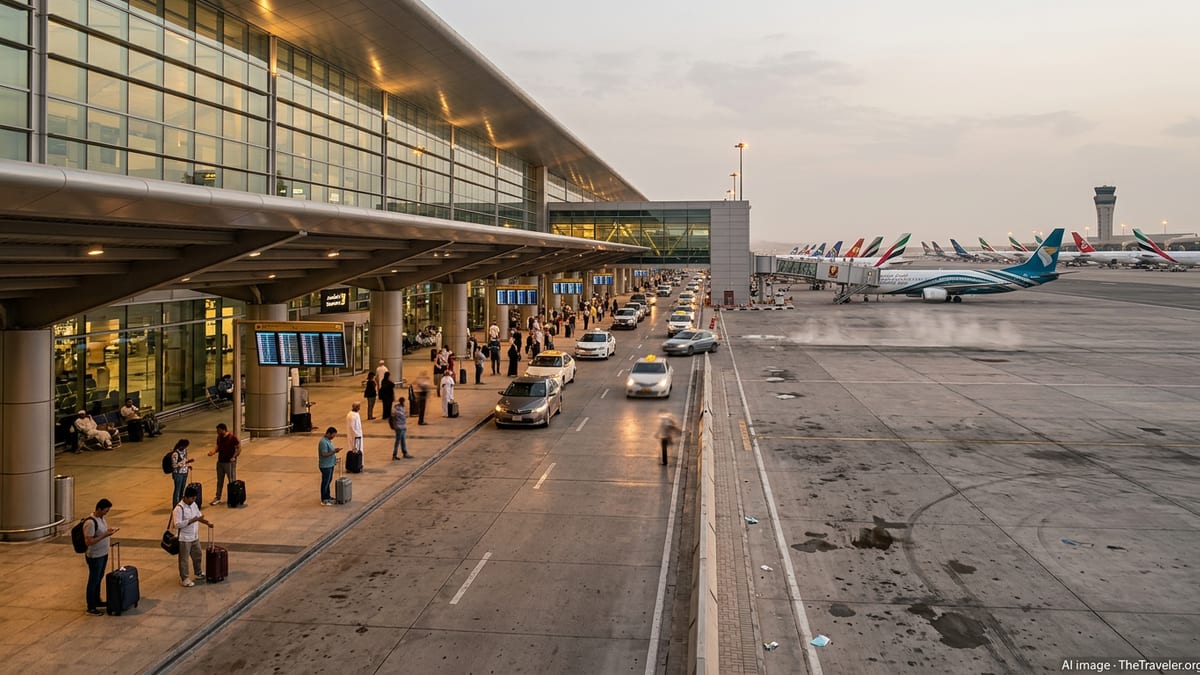
Regional Airspace Closures Ripple Across Oman Air’s Network
Recent escalations in the Israel Iran conflict and related strikes around the Gulf have triggered widespread airspace closures and restrictions across the Middle East. Publicly available operational bulletins and industry reports indicate that Iran and Iraq remain subject to total closures for most civil aviation, while countries such as Jordan, Lebanon, Kuwait, Qatar, Bahrain, Syria and the United Arab Emirates have introduced full or partial suspensions at various points in recent weeks. This has created a patchwork of restrictions across one of the world’s busiest aviation corridors.
Oman’s own airspace remains open, with Muscat operating as a key alternative hub and relief point, but the closures around it have inevitably affected Oman Air’s route network. Logistics advisories and aviation industry summaries describe Muscat International Airport as functioning but under pressure, with air traffic rerouted around closed skies and capacity tightened at airports across the Gulf. As a result, even flights that depart and arrive on schedule may be using longer routings and adjusted flight paths.
Travel disruption analysis focused on the Middle East notes that extensive closures in neighboring states have forced airlines to rethink how they connect Europe, Africa and Asia. For Oman Air, which sits at the crossroads of these regions, the impact is visible in reduced frequencies on certain regional routes, tactical cancellations, and extended flight times on services that would normally cross Iranian or Iraqi airspace.
The broader picture for travelers is one of volatility. Travel risk briefings and government advisories emphasize that airspace status across the region can change at short notice, with new restrictions sometimes announced only hours before taking effect. This environment makes long range planning difficult for airlines and passengers alike, and Oman Air is having to update its schedules frequently as new information becomes available.
Which Oman Air Routes Are Most Affected
According to disruption tracking platforms and airline information aggregators, Oman Air has recently cancelled or significantly reduced services on a number of regional routes that rely on access to heavily restricted airspace or closed hubs. Flights to and from Amman, Dubai, Doha, Bahrain, Kuwait, Baghdad and Dammam have seen a mix of outright cancellations and rolling schedule changes as airspace rules and airport operations in those locations fluctuate.
Some long haul routes are also indirectly affected. When Iranian and Iraqi airspace are unavailable, flights linking Muscat with European destinations often need to detour via alternative corridors over Saudi Arabia or further north, adding time and fuel consumption. Publicly available flight tracking data and aviation analytics show extended routings and irregular flight times on several Oman Air services as they navigate around no fly zones and temporary closure areas.
Domestic and short haul services within Oman remain comparatively stable, but even these can experience knock on effects when aircraft and crews are out of position due to delays elsewhere in the network. Industry observers note that Oman Air, like other regional carriers, has had to juggle fleet assignments and crew rotations to keep as much of its schedule running as possible, sometimes resulting in late night or early morning departures replacing more convenient daytime slots.
Analysts following Gulf aviation point out that Muscat’s role as a secondary hub has grown during past regional crises, as travelers sought alternatives to closed or congested airports elsewhere. A similar pattern is emerging again, with Oman Air handling diversions and additional demand on some routes even as it is forced to trim others. This balancing act can produce sudden availability changes, with seats opening up or disappearing quickly as schedules are reworked.
What Passengers Can Expect in the Coming Weeks
Given the current security environment, travel experts widely caution that passengers should expect continued uncertainty rather than a quick return to normal operations. Risk assessments prepared for corporate travelers and shipping clients describe the situation as fluid, noting that airspace status in several Middle Eastern countries is being reviewed on a day by day basis. For Oman Air customers, that means that flights which appear confirmed at the time of booking may still be subject to later changes.
Travelers can expect three main forms of disruption. First, short notice cancellations, particularly on routes that require overflight of, or access to, countries with intermittent closures. Second, significant delays and extended flight times, especially on Muscat services linking Europe and Asia, as aircraft take longer detours. Third, last minute aircraft swaps that may change cabin configuration and seating assignments, reflecting how the airline is reallocating its fleet.
Published guidance from travel risk and immigration advisory firms also highlights a higher likelihood of missed connections. With many airports across the Gulf operating reduced schedules and facing congestion, minimum connection times that worked in the past may no longer be sufficient. Passengers transiting through Muscat or other regional hubs may find that onward flights are rescheduled or that they are automatically moved to later services to protect connections.
Insurance considerations are another factor. Several corporate advisories point out that many standard travel insurance policies treat war and related security incidents as exclusions. This can limit compensation for delays and cancellations linked to the current conflict. Passengers relying on Oman Air’s own disruption policies and voluntary waivers may therefore find that airline provided rebooking or refund options are their primary recourse when plans change.
How to Manage Oman Air Bookings Amid Disruptions
Publicly available information from airline disruption specialists and passenger rights organizations suggests a number of practical steps for travelers booked with Oman Air. The most consistent recommendation is to monitor flight status directly through the airline’s official channels in the 24 hours before departure and again shortly before leaving for the airport. Schedules published days or weeks in advance are more likely than usual to change as airspace conditions evolve.
Where Oman Air has authorised flexible rebooking or refunds on affected routes, passengers are generally advised to act quickly. Travel assistance services note that alternative flights in and out of the Gulf region can sell out fast when multiple carriers are cancelling services at the same time. Rebooking early can increase the chances of finding acceptable alternatives, whether on Oman Air or via other carriers that still have operating corridors.
Experts in corporate travel management also stress the importance of building additional time into itineraries. For journeys involving connections through Muscat, allowing a longer layover than usual can reduce the risk of missed onward flights if the first leg is delayed. Where possible, travelers with essential commitments at their destination are encouraged to arrive a day earlier than strictly necessary, given the current risk of disruption.
Passengers are further advised to keep documentation of cancellations, delays and any additional expenses. While compensation rules vary depending on ticket type, origin and destination, having clear records can assist when seeking refunds or filing claims under any available protection schemes. Travel advocates suggest retaining boarding passes, booking confirmations, written notifications from the airline and receipts for hotels or meals purchased because of disrupted travel.
Key Tips for Travelers Planning Future Trips via Muscat
For those still in the planning phase of a trip with Oman Air, travel planners recommend taking a more cautious approach than in calmer periods. One consistent piece of advice from regional travel briefings is to avoid non essential journeys through the most affected airspace zones until there is clearer evidence of stability. Where travel cannot be postponed, routing via airports and countries with consistently open airspace and fewer security alerts may be preferable, even if it adds distance.
Flexible booking conditions are especially valuable in the current environment. Passengers may wish to prioritise fares that allow changes with minimal penalties, or to use payment methods that include built in travel disruption cover. Some travelers are also choosing to book separate, fully refundable hotel stays for potential overnight stops in Muscat or other hubs, in case missed connections require an unplanned layover.
Communication is another important element. Travel managers and experienced frequent flyers recommend registering contact details with Oman Air and enabling notifications so that schedule changes are received as quickly as possible. In parallel, checking airport operational updates and national travel advisories for departure, transit and destination countries can provide early signals of emerging restrictions that may impact a planned route.
While there is no definitive timeline for when Middle Eastern airspace will fully normalise, industry analysis suggests that airlines such as Oman Air are adjusting operations continuously to maintain as much connectivity as safety conditions allow. Passengers who stay informed, allow extra time, and make use of the most flexible booking options are likely to be best placed to navigate the continuing disruptions.