

More news on this day
One person has died in Munich after two freight trains collided on a railway bridge, sending wagons plunging several meters onto a city street and triggering a large-scale response and traffic disruption in the Bavarian capital.
Get the latest news straight to your inbox!
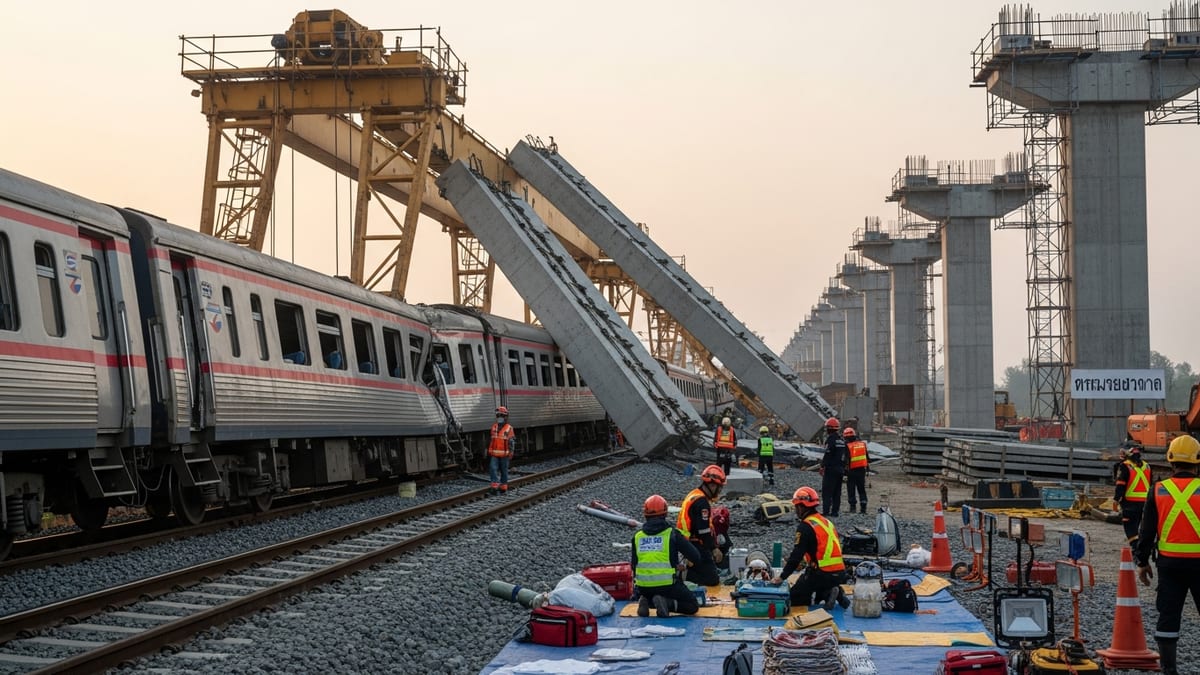
Collision on Overnight Freight Route in Northern Munich
According to published coverage from German and international media, the collision occurred overnight on a railway bridge in the northern Munich district of Milbertshofen. Two freight trains using the route came into contact on the bridge structure, causing at least two wagons to derail and fall to the road below.
Initial reports indicate that the impact took place at a height of around five meters above the street. Images shared by local outlets show freight wagons lying across multiple lanes, with debris scattered around the bridge pillars and emergency vehicles lining the area.
Publicly available information suggests that the derailed wagons were not carrying cargo at the time of the crash. Early accounts describe mainly structural damage to the rail infrastructure and roadway, but the precise technical sequence of events leading to the collision remains under investigation.
Rail operations on the affected route were immediately halted as rail staff and emergency services moved in to secure the scene, assess damage to the bridge, and check neighboring track sections for potential structural issues.
One Fatality and Local Disruption, but No Broad Public Hazard
Reports from German news agencies state that one person died as a result of the incident. The individual has not yet been publicly identified, and details about their role at the scene have not been officially clarified in open sources.
Despite the dramatic images of wagons resting on the roadway, current coverage indicates that no additional serious injuries have been confirmed. Information made public so far suggests that there was no significant risk from hazardous materials, as the affected wagons were reportedly empty.
The street beneath the bridge has been closed to all traffic while recovery work continues. Local commuters have been advised through traffic and public transport updates to avoid the wider Milbertshofen area, with diversions and potential congestion on parallel routes expected throughout the day.
For residents and travelers in Munich, the most immediate impacts are localized: blocked streets, temporary detours for buses and cars, and some changes to rail timetables while the line is examined and cleared.
Investigations Focus on Cause and Structural Safety
As is standard practice after a serious rail incident in Germany, technical teams are examining the crash site to determine how two freight trains came to collide on a bridge section. Publicly accessible reporting notes that the exact cause has not yet been established, and no timeline has been given for conclusions.
Specialists are expected to assess the condition of the bridge deck, support structures, and track alignment, looking for signs of impact damage or potential pre-existing weaknesses. Engineers will also review signaling data, train movements, and the operating status of braking and safety systems in the period immediately before the accident.
While freight wagons falling from a bridge into a city street is a rare occurrence, rail analysts often point out that busy urban corridors combine high train frequencies with dense road networks underneath, increasing the potential for complex incident scenes when something goes wrong.
The results of these investigations typically inform future infrastructure works, speed restrictions, or procedural updates, which in turn can affect how both passenger and freight services are scheduled through major German hubs such as Munich.
Rail Safety Under Scrutiny Amid Recent European Incidents
The Munich freight collision comes at a time when rail safety is already in the public eye across Europe following a series of serious crashes and derailments in recent years. While each incident has distinct technical causes, the pattern has renewed debate about aging infrastructure, maintenance backlogs, and the challenges of integrating modern safety systems into legacy networks.
Germany’s rail network, one of the busiest in Europe for both passenger and freight traffic, has seen several high-profile accidents over the past decades. Experts frequently highlight the need for continual investment in track, signaling, bridges, and digital control systems to keep pace with rising traffic volumes and climate-related stresses on infrastructure.
Munich’s role as a major southern hub means that disruptions and safety investigations here are closely watched by operators, commuters, and logistics companies moving goods between central Europe and the Alpine region. The latest crash is likely to intensify calls from rail-user groups and transport specialists for transparent reporting on incident causes and for clear timelines on remedial measures.
For travelers, the episode serves as a reminder that even in countries with strong rail safety records, rare but serious accidents can still occur, prompting reassessments of risk management on key routes.
What Travelers in and Around Munich Should Expect
In the near term, visitors and residents in Munich can expect localized disruptions near the crash site as recovery and engineering assessments continue. Travel advisories suggest allowing additional time when moving through northern districts, especially by car or bus, and monitoring local transport updates for temporary rerouting.
Long-distance and regional passenger services may experience adjustments if rail traffic is rerouted around the affected bridge. Travelers using Munich as a gateway to other German or Alpine destinations are likely to see minor timetable changes rather than widespread cancellations, but real-time checks remain advisable.
Tourism businesses and hotels in the city are not reporting broad impacts beyond potential delays in guest arrivals and some noise and traffic around detour corridors. For most visitors, the event is unlikely to alter travel plans significantly, though those staying in the Milbertshofen area may notice ongoing cleanup operations and construction activity in the coming days.
As more information becomes available about the cause of the crash and the condition of the bridge, transport operators are expected to gradually restore normal rail and road operations along this important freight corridor through Munich.