

More news on this day
Ontario has acquired a critical section of railway between North Bay and Washago and is nearing completion of more than $100 million in upgrades, clearing a major hurdle in the long-awaited return of the Northlander passenger rail service linking Northern communities with Toronto.
Get the latest news straight to your inbox!
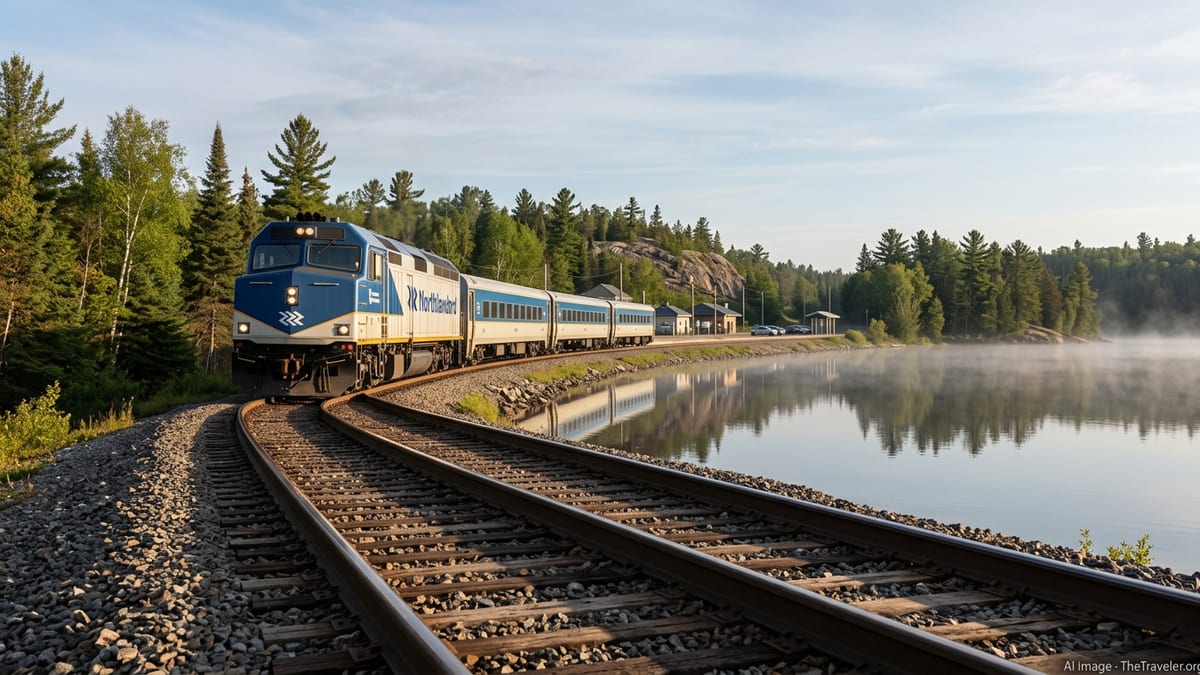
Strategic Corridor Acquisition Unlocks Northlander Route
Publicly available information shows that the province has finalized the purchase of approximately 205 kilometres of track between North Bay and Washago, a stretch previously owned by Canadian National. The acquisition creates a continuous, provincially controlled rail corridor that will allow Ontario Northland’s restored Northlander service to operate more reliably between Northeastern Ontario and the Greater Toronto Area.
Government news releases indicate that this corridor purchase represents a multimillion-dollar investment in regional rail, complementing earlier commitments to equipment, stations, and supporting infrastructure. Officials have framed the move as a way to reduce dependence on freight-owned track segments, which can constrain passenger schedules and limit future growth in service frequency.
The newly acquired line connects directly into the existing Ontario Northland network at North Bay, tying Northern communities into the southern rail network at Washago, where trains can continue toward Toronto. This linkage is viewed by transportation analysts as a foundational step in moving from a conceptual restoration plan to an operational passenger service.
According to published coverage, the corridor acquisition is also expected to streamline future planning and capital work along the line, since the province can now coordinate standards, maintenance, and upgrades under a single owner rather than negotiating with multiple private railways.
More Than $100 Million in Rail Upgrades Nearing Completion
Recent Ontario Newsroom updates report that more than $100 million in rail infrastructure investments dedicated to the Northlander are nearing completion. These works include track improvements, siding extensions, and signal upgrades intended to support safe, reliable passenger operations and reduce conflicts with freight movements.
Among the most significant projects is the North Bay Rail Bypass, a 982-metre new track that connects the CN Newmarket Subdivision to Ontario Northland’s Temagami Subdivision. Public information notes that this $5.7 million project allows future Northlander trains to avoid the busy North Bay rail yard, improving safety and on-time performance by separating passenger movements from intensive freight activity.
Additional work is under way at numerous communities along the route, where platforms are being reconstructed and pre-manufactured passenger shelters installed. A previously announced contract covers stops from South River to Washago, while related projects are proceeding at other locations to standardize accessibility, wayfinding, and passenger amenities.
Budget documents and agency business plans describe these upgrades as part of a broader capital program that also includes fleet procurement, design and engineering, and safety-related enhancements. Together, these components are intended to ensure that when the Northlander returns, it does so with modern standards that reflect current expectations for intercity passenger rail.
New Trains and Service Plan for Northern Communities
According to Ontario budget statements, the province has allocated approximately $139.5 million for three new trainsets dedicated to the Northlander corridor. These trains are designed for long-distance intercity service, with features expected to support comfort in winter conditions and accessibility for a wide range of passengers.
Ontario Newsroom announcements note that the first of these new trainsets has already arrived in Toronto and is undergoing testing and commissioning. Once initial checks are complete, the equipment will move north for further testing along the corridor to validate performance, safety systems, and compatibility with the upgraded infrastructure.
The service plan outlined in public documents envisions the Northlander running between Timmins and Toronto, with a rail connection to Cochrane and intermediate stops in communities such as Englehart, Temagami, North Bay, Huntsville, and Gravenhurst. The reinstated service is expected to provide access to essential services, educational institutions, and employment opportunities for residents across Northeastern Ontario.
Ontario Northland’s most recent business planning materials describe the Northlander restoration as a flagship initiative for the agency, with a multi-year capital envelope covering corridor works, stations, and fleet. The route is also positioned as a complement to existing motor coach services, creating a more resilient multimodal network for remote and rural communities.
Economic and Social Impact Across the North
Publicly available information indicates that Northern municipalities and business groups have long advocated for the return of the Northlander, citing the economic impact of improved connectivity with Southern Ontario. The restored train is expected to support tourism, labour mobility, and resource-sector travel, particularly during winter when road conditions can be challenging.
Provincial fiscal updates describe the project as part of a broader strategy to enhance transportation options in the North, with the goal of making it easier for residents to access health care, education, and government services in larger centres. The Northlander is presented as a safer and more sustainable alternative to long-distance driving, especially for seniors and students.
Communities along the corridor are preparing for potential spin-off benefits such as increased visitor spending in downtown areas near stations, opportunities for small hospitality and retail businesses, and renewed interest in transit-oriented development around rail stops. Travel and tourism observers have noted that rail-linked destinations often see higher overnight stays and more repeat visits compared with locations served only by highways.
At the same time, the investment is framed in public documents as a way to strengthen long-standing rail towns such as Englehart and Temagami, where railways have historically played a central role in local identity and employment. The return of passenger trains is being viewed as both an economic tool and a symbol of renewed provincial attention to Northern needs.
Next Steps Toward Passenger Service Launch
According to Ontario’s most recent transportation planning documents, work will now focus on finalizing station upgrades, completing track and signal commissioning, and finishing testing of the new trainsets along the full corridor. Once these elements are in place and regulatory requirements are met, the province is expected to confirm a start date and publish detailed schedules and fare structures.
Ontario Northland’s business plan outlines a phased ramp-up toward full service, allowing the agency to monitor ridership patterns, fine-tune timetables, and coordinate with motor coach connections to Cochrane and other points beyond the rail line. This phased approach is intended to ensure both operational reliability and responsiveness to community travel needs.
Analysts following the project point out that the combination of corridor ownership, significant infrastructure investment, and modern rolling stock places the Northlander restoration on a firmer footing than in previous decades. With key capital milestones now reached, attention is shifting from whether the train will return to how quickly it can begin carrying passengers.
For travelers across Northern Ontario, the acquisition of the North Bay to Washago rail corridor marks a decisive step toward seeing passenger trains again at stations that have been without regular intercity service since 2012, signaling a new chapter for sustainable mobility and regional connectivity in Canada’s North.