

More news on this day
Orlando International Airport has cemented its status as one of America’s busiest aviation hubs, riding a surge in domestic and international travel that has propelled the Florida gateway into the top tier of U.S. airports by passenger volume.
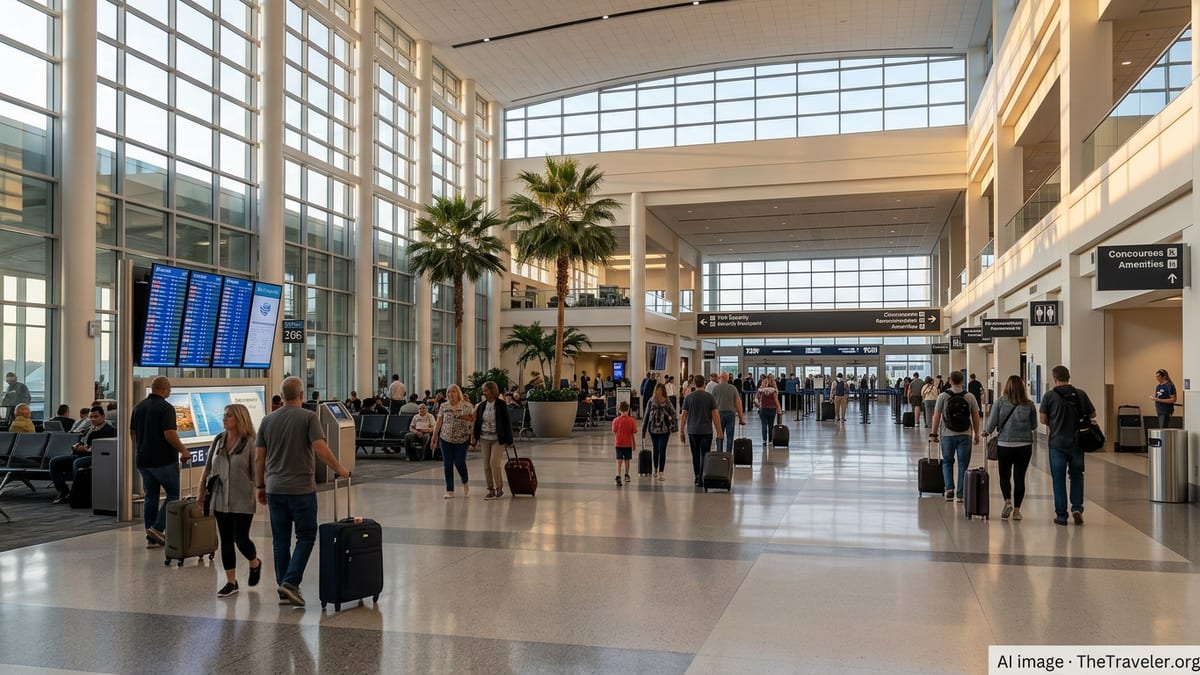
Record Passenger Growth Lifts Orlando Into the Top Ranks
Passenger traffic through Orlando International Airport has climbed to unprecedented levels, placing the airport firmly among the 10 busiest in the United States by total travelers. Airports Council International’s latest North American traffic summary reports that MCO handled more than 57 million passengers over the most recent full year of data, edging past several long-established hubs and securing its position as the busiest airport in Florida by passenger volume.
While global air travel has rebounded, Orlando’s trajectory has been particularly strong. Aviation and economic reports for the Orlando metropolitan area indicate that international passenger numbers reached record highs in 2024, growing at a double-digit pace compared with the previous year. That surge in overseas travel has complemented already robust domestic demand, turning MCO into a key connecting point for both sun-seeking vacationers and business travelers heading into Central Florida.
Industry analysts note that Orlando’s ascent reflects broader shifts in U.S. air travel patterns. Traditional coastal gateways and legacy-carrier fortress hubs still dominate the very top of national rankings, but high-growth leisure markets such as Orlando are now competing directly for capacity, aircraft and new routes. In that environment, MCO’s ability to sustain volumes above 57 million passengers places it in an elite group of mega-hub airports.
Tourism Powerhouse and New Theme Park Fuel Demand
Orlando’s strength as a tourism powerhouse remains the principal engine behind the airport’s rapid growth. Central Florida’s world-famous theme parks, resorts and attractions continue to draw tens of millions of visitors annually, many of whom arrive by air. Local tourism forecasters expect an additional spike in arrivals beginning in May, when a major new theme park, Epic Universe, is slated to open and add a fresh lure for domestic and international guests.
Airport and tourism officials say forward bookings and airline schedules already point to heavier peak-season loads. Carriers have been adding extra frequencies on popular domestic routes linking Orlando with major metropolitan areas such as New York, Chicago and Dallas, while also reinforcing service from key feeder markets in the Southeast and Midwest. That added capacity is helping to convert Orlando from a purely point-to-point leisure destination into a more versatile connecting node within airline networks.
The economic ripple effects are substantial. The Greater Orlando Aviation Authority has previously estimated the airport’s contribution to the regional economy in the tens of billions of dollars annually, a figure that continues to grow as passenger counts rise. Hotels, attraction operators, ground transportation companies and service-sector employers across Central Florida are all closely tied to MCO’s performance, making the airport a central barometer for the broader tourism-driven economy.
North American Rankings and Growing International Reach
Recent rankings from global aviation data providers show Orlando International rapidly climbing the ladder of North America’s busiest airports. A 2025 analysis by OAG placed MCO among the top 10 airports in the region by scheduled airline capacity, noting that the airport had moved up two spots from its previous year’s position. That ranking complements ACI’s passenger figures, which already list Orlando in the top 10 for total travelers on the continent.
International traffic is a major part of that story. Market updates for the Orlando region highlight that overseas passengers posted a record tally in 2024, with double-digit percentage growth over 2023. Expanded service from Canada, Latin America, the Caribbean and Europe has been central to the increase, as carriers such as Southwest, JetBlue and various international airlines have launched or expanded routes linking Orlando with sun-and-sand destinations, financial centers and secondary cities abroad.
Many of those routes capitalize on Orlando’s dual appeal as both a leisure destination and an increasingly diversified regional economy. Beyond tourism, the metro area has seen growth in sectors such as technology, aerospace, healthcare and higher education. That diversification is drawing a broader mix of business travelers and conference attendees, further solidifying MCO’s role as a gateway for Central Florida’s global connections.
Terminal C Expansion and New Technology Tackle Crowding
As passenger volumes swell, Orlando International has been racing to keep its facilities ahead of demand. The airport’s Terminal C, a modern complex that significantly expanded international and domestic capacity, continues to ramp up operations and attract additional airline partners. The new terminal has helped distribute passenger flows more evenly across the campus and provided space for future route growth, especially on long-haul and international services.
Alongside bricks-and-mortar expansion, MCO is leaning on technology to manage crowding and improve the passenger experience. In 2025, the airport introduced a real-time crowd tracking system and large-scale visual messaging to help direct travelers toward less congested checkpoints and queuing areas. Officials say early results show shorter wait times and less bottlenecking during peak travel periods, which frequently see well over 190,000 passengers pass through the terminals in a single day.
The airport has also rolled out more digital wayfinding, expanded use of biometric identity verification through third-party providers and promoted reservation-based access to select security lanes. These tools are designed to smooth out surges that are increasingly common on weekend mornings, holiday periods and school vacation weeks, when Orlando’s theme parks are at their busiest and airport traffic mirrors that intensity.
What Orlando’s Rise Means for Florida Travelers
For travelers, Orlando’s emergence as one of America’s busiest aviation hubs brings both advantages and new pressures. On the positive side, the concentration of traffic at MCO has attracted more airlines, additional nonstop destinations and competitive fares, giving Florida residents and visitors a wider range of options than ever before. The airport now offers flights to more domestic destinations than any other airport in the state, while its international network continues to deepen.
At the same time, the volume of passengers moving through the terminals makes planning and preparation more important. Airport officials and travel advisers are urging passengers to build extra time into their journeys, particularly during peak holiday seasons and major school breaks. Early arrival for security screening, advance parking or rideshare plans, and familiarity with terminal layouts are increasingly part of traveling through a hub that now rivals the busiest airports in the country.
Aviation analysts expect Orlando International’s upward trend to continue over the next several years, supported by new attractions, ongoing investment in terminal infrastructure and strong demand from both tourists and business travelers. If growth holds, MCO is poised to remain not only Florida’s busiest airport but also a defining fixture on the list of America’s leading aviation gateways.