


More news on this day
Air travel across Asia and parts of the Middle East faced major disruption today, with publicly available data indicating 1,162 flight cancellations and around 4,700 delays affecting airports from Hong Kong and Mumbai to Chengdu, Riyadh, Bahrain and hubs in Central Asia.
Get the latest news straight to your inbox!
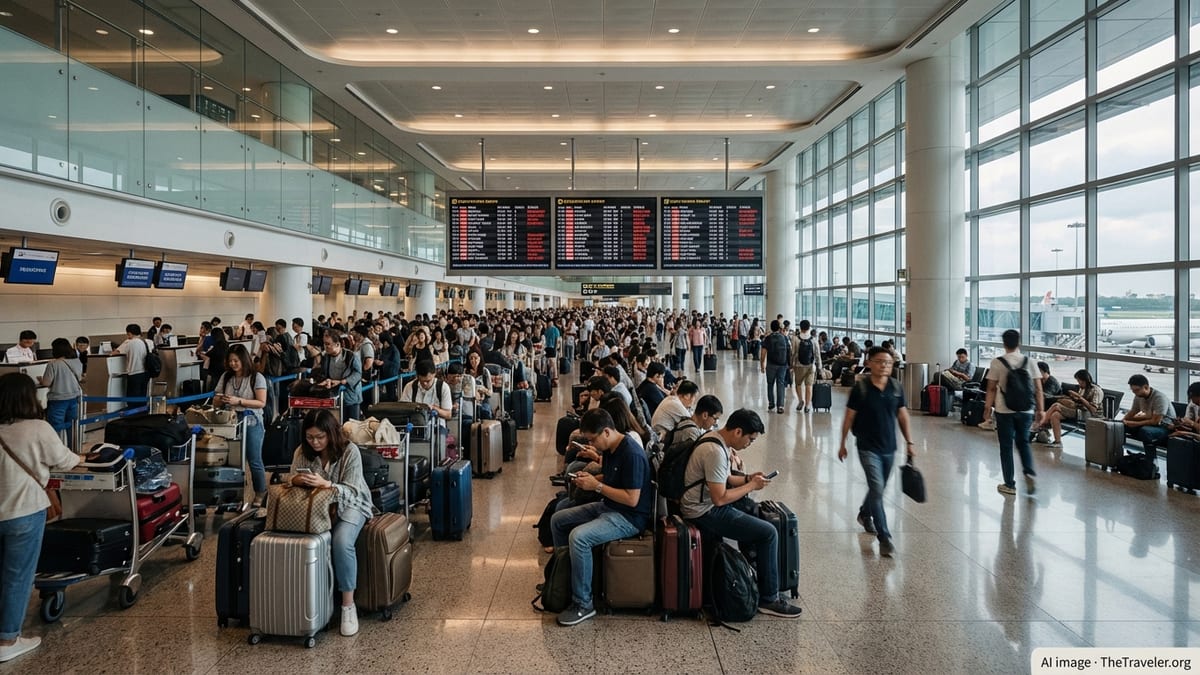
Major Hubs from Hong Kong to Mumbai Under Strain
Tracking platforms monitoring global aviation activity show that Hong Kong, Mumbai and several mainland Chinese airports are among the hardest hit, reporting clusters of cancellations and extended delays on regional and long haul routes. Airlines using these hubs as key connectors between Asia, Europe and the Gulf have been forced to retime or cancel services as operational pressures mounted.
In India, domestic and international operations through Mumbai have seen notable disruption, with low cost and full service carriers adjusting schedules throughout the day. Publicly available flight boards showed dozens of services departing late or being withdrawn entirely, creating knock on effects for connecting traffic across the subcontinent.
On the Chinese mainland, large traffic centers such as Chengdu, Shanghai and coastal airports already contending with seasonal weather have reported elevated levels of schedule changes. Earlier this summer, local media described waves of cancellations out of Chengdu during bouts of heavy rain and storms, and today’s figures suggest that irregular operations remain a challenge for carriers and airport operators.
Across the network, the pattern points to a system operating with limited spare capacity. When severe weather or airspace constraints emerge in one region, delays and cancellations quickly propagate through interconnected schedules, particularly at high volume hubs.
Juneyao, SpiceJet, Malindo and Saudia Among Affected Airlines
The disruption is being felt across a wide range of airlines serving Asian and Gulf markets, including China based Juneyao Airlines, India’s SpiceJet, Malaysia’s Malindo Air and Saudi Arabia’s Saudia. These carriers operate dense networks linking secondary cities with major hubs such as Shanghai, Hong Kong, Mumbai, Chengdu, Riyadh and Bahrain, leaving them exposed when bottlenecks form.
Corporate disclosures and timetable data show that Juneyao, which has been expanding international services out of Shanghai and other Chinese cities, counts routes touching Hong Kong, Chengdu and Central Asian airspace among its key corridors. Any sustained disruption at these airports can ripple through its short haul and connecting flights, affecting passenger itineraries across Northeast and Southeast Asia.
In India, SpiceJet’s customers have already been vocal in recent months about schedule changes and day of departure disruptions on domestic routes from Mumbai and other large cities. Traveller accounts shared on public forums describe late notice cancellations, multi hour timing shifts and rebookings, underscoring the impact that even a single irregular operating day can have on business and leisure plans.
Malindo Air and Saudia, both significant players on routes linking South and Southeast Asia with the Gulf, are also vulnerable to cascading delays when airports in Saudi Arabia, Bahrain or transit points in South Asia encounter congestion. Network maps show these airlines stitching together complex itineraries across time zones; once early morning services are delayed or cancelled, later waves of flights can be affected for many hours.
Weather, Airspace Constraints and Operational Pressures Combine
The spike in cancellations and delays spans a wide geographic area, from the Indian subcontinent and southern China to the Gulf and Central Asia, indicating that no single cause is responsible. Seasonal weather has played a significant role, with typhoon systems and heavy monsoon rains periodically disrupting departures and arrivals at coastal and inland airports.
Recent reporting from regional outlets has highlighted periods where dozens to hundreds of flights were cancelled in a single day across Chinese airports as typhoons approached, including extensive disruptions in Chengdu, Shanghai and several coastal cities. Similar patterns have been seen in past weeks at airports in eastern China and along typhoon tracks, where weather warnings prompted pre emptive schedule reductions.
At the same time, heightened sensitivity around certain airspace corridors in the Middle East and Central Asia has led airlines to adjust routings or consolidate services. Industry coverage in recent months has described carriers trimming frequencies or rerouting flights between Asia and Europe in response to security concerns, jet fuel costs and insurance considerations, adding complexity to already tight schedules.
Operational constraints such as aircraft availability, crew positioning and ground handling capacity can turn localized disruptions into widespread delays. Once aircraft and crews are out of position at hub airports, airlines may have little choice but to cancel subsequent sectors, contributing to the totals seen today across Hong Kong, India, China, Bahrain and Kazakhstan.
Knock On Effects for Passengers Across Asia and the Gulf
The 1,162 cancellations and approximately 4,704 delays represent more than abstract statistics for travelers, many of whom are dealing with missed connections, overnight stays and rebooked itineraries. With multiple major hubs affected at the same time, options for same day re routing are often limited, especially on popular business and holiday routes.
According to information compiled from aviation data platforms, some of the heaviest disruption has occurred on intra Asian sectors such as India to the Gulf, China to Southeast Asia and regional links from Hong Kong. These routes frequently rely on tight connections at intermediate hubs, meaning that a delay of a few hours on an inbound flight can cause passengers to miss onward services by a narrow margin.
Reports from passenger advocacy forums suggest that travelers are facing a patchwork of responses depending on carrier and jurisdiction, ranging from hotel and meal provisions to refund or voucher offers. The complexity of international itineraries, involving multiple airlines and separate tickets, can complicate efforts to secure alternative arrangements, particularly when cancellations occur close to departure time.
With the northern summer travel period in full swing, pressure on seat availability is likely to intensify. Even when replacement flights exist, cabins on popular routes may already be heavily booked, forcing some travelers to accept departures a day or more later than planned.
What Travelers Can Do as Disruptions Continue
Publicly available advice from aviation regulators and consumer groups in the region emphasizes the importance of monitoring flight status closely, particularly on days when weather or airspace issues are known risks. Many airlines encourage passengers to use mobile applications or messaging alerts to receive real time updates on gate changes, delays and cancellations.
Travel specialists generally recommend allowing longer connection times when itineraries involve multiple hubs that are currently under strain, such as Hong Kong, Mumbai, Chengdu, Riyadh and Bahrain. Building in a wider buffer between flights can reduce the likelihood that a moderate delay on the first leg will lead to a missed onward sector.
Passengers are also advised to familiarize themselves with the conditions of carriage and local consumer protection rules that may apply to their journey. Compensation, care and re routing obligations can differ markedly between jurisdictions and airlines, particularly when bad weather or airspace closures are involved.
With disruptions touching a broad swath of Asia and the Gulf, industry observers note that today’s elevated cancellation and delay figures may not be an isolated event. As the busy summer season continues, travelers may need to plan for a more unpredictable operating environment, with flexibility and up to date information becoming increasingly important parts of any long haul itinerary.