


More news on this day
More than 50 flight cancellations and around 890 delays across Jeddah, Istanbul and wider Middle Eastern hubs over recent days are causing missed connections, extended layovers and mounting frustration for travelers moving through one of the world’s busiest air corridors.
Get the latest news straight to your inbox!
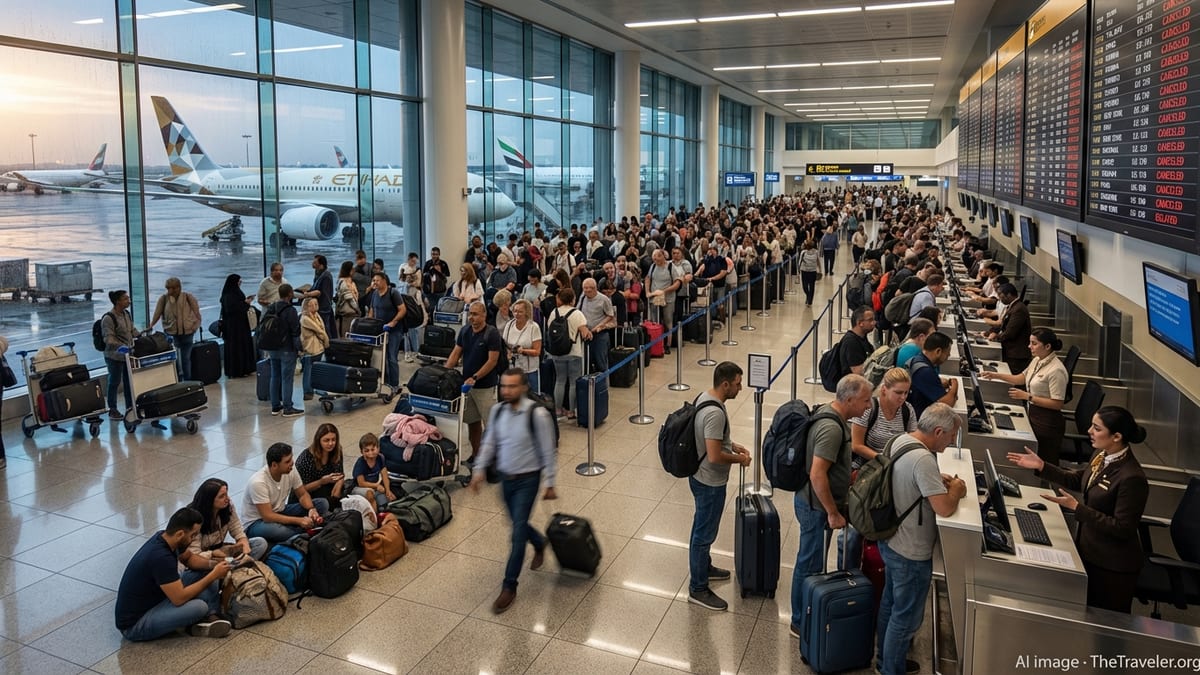
Latest disruption figures at key Middle East hubs
Publicly available aviation data and regional monitoring reports indicate that Middle East airports have collectively recorded well over 50 cancellations and close to 900 delays within a short operating window, concentrating disruption at major hubs such as Jeddah’s King Abdulaziz International Airport and Istanbul Airport. Aggregated disruption snapshots for early September show more than 1,200 delayed flights and close to 60 cancellations across Gulf and Saudi airports alone, illustrating the wider pressure on regional operations beyond any single hub.
Jeddah has featured prominently in recent disruption tallies. A late‑summer assessment of Asia and Middle East operations compiled by independent travel analysts reported Jeddah logging dozens of cancellations and more than 70 delays over a single review period, alongside elevated disruption at Riyadh and other Saudi airports. That same analysis highlighted Saudia among the carriers with the highest number of cancellations in the region, underscoring how national hubs continue to absorb a disproportionate share of schedule volatility.
Istanbul, one of the busiest hubs serving connections between Europe, the Middle East and Asia, has also seen knock‑on disruption. Live statistics from specialist tracking platforms on multiple recent days show a pattern of several cancellations and a substantially larger band of delayed departures and arrivals, even when day‑of totals at Istanbul itself appear modest. When these Istanbul numbers are combined with disruption at surrounding Middle Eastern hubs, the running total across the air corridor between Turkey and the Gulf rapidly reaches dozens of cancellations and many hundreds of delayed flights.
Although exact figures fluctuate by hour, the combined impact across Jeddah, Istanbul and neighboring Middle East airports aligns with a picture of more than 50 flights cancelled and roughly 890 significantly delayed, once delays of 30 minutes or more are aggregated across the region. The scale reflects both local bottlenecks and wider airspace and scheduling issues that are continuing to ripple through airline networks.
Operational and airspace pressures behind the delays
Industry analyses of recent Middle East aviation performance point to a convergence of factors driving the elevated disruption levels. Regional monitoring from March through late summer 2026 describes airlines rerouting or rescheduling services in response to intermittent airspace closures and restrictions affecting corridors over Iran, Iraq, Israel and parts of the Gulf. Flight‑tracking visualisations from the period show traffic bunching around alternative gateways such as Jeddah, Cairo, Riyadh and Istanbul when key overflight routes narrow.
These airspace adjustments increase flight times and compress airport schedules. Long‑haul services arriving late into major hubs make it harder for airlines to turn aircraft around within existing slots, particularly at banks of connecting flights. Operational briefings compiled by aviation‑focused sites note that carriers using Istanbul as a primary connection point have had to cancel or retime onward sectors once aircraft miss critical operating windows, in order to prevent wider network gridlock.
Weather has also periodically compounded the strain. Seasonal dust and sandstorms over parts of the Arabian Peninsula, combined with intense heat affecting aircraft performance and ground operations, have contributed to rolling minor delays that accumulate across the day. When combined with already tight schedules and longer routings around restricted airspace, these conditions increase the likelihood that a routine delay evolves into either a multi‑hour hold or a cancellation.
At the same time, many Middle East hubs are handling higher passenger volumes than before the pandemic, but infrastructure and staffing remain under pressure. Recent profiles of Istanbul Airport and Jeddah’s King Abdulaziz International Airport list them among the region’s busiest facilities by passenger numbers, with traffic growth outpacing some capacity enhancements. That imbalance leaves little margin to absorb disruptions when regional or global events suddenly reshape traffic flows.
Jeddah and Istanbul as pivotal connection points
Jeddah and Istanbul play distinct but complementary roles in Middle East aviation, which helps explain why disruption at these airports has outsized consequences. Jeddah is a primary gateway for religious travel to Makkah and Medina and a key hub for Saudia, with heavy seasonal traffic peaks during Umrah and Hajj as well as strong year‑round demand on routes linking Asia, Africa and the Gulf.
Recent schedule performance assessments show Jeddah handling dozens of daily departures to other regional hubs, including multiple flights to Istanbul. Route‑level tracking tools list more than 50 weekly services between Jeddah and Istanbul operated by several airlines, and recent days have seen both significant delays and individual cancellations on this corridor. When a Jeddah‑originating service to Istanbul is cancelled or heavily delayed, it can strand transfer passengers bound for Europe or North America and tighten capacity on later flights.
Istanbul, meanwhile, serves as a major east‑west transfer hub, consistently ranking among the busiest airports in the broader Middle East region by passenger volume. Even when local disruption indicators for Istanbul show only a handful of outright cancellations on a given day, the number of delayed flights can be far higher once regional knock‑on effects are counted, especially for services arriving from or departing to Gulf, Levant and Saudi destinations.
The interplay between the two hubs means that schedule disturbances rarely remain local. A late or cancelled flight from Jeddah feeding into Istanbul’s connection banks can cascade into missed onward services to Europe, North America or Central Asia. Conversely, delays on Istanbul departures to the Middle East can compress turnaround times at destination airports, amplifying pressure on ground operations and crew duty limits.
Impact on passengers and evolving airline responses
For passengers, the immediate effect of more than 50 cancellations and hundreds of delays is visible in extended terminal queues, rebooked itineraries and disrupted travel plans. Consumer‑facing compensation services tracking recent disruption episodes across Dubai, Jeddah and other Gulf airports report more than 1,200 delayed flights and dozens of cancellations within a 24‑hour period in early September, highlighting how quickly regional delays can accumulate once multiple hubs are affected.
Travel‑rights organisations and legal information platforms note that passengers may be entitled to assistance or financial compensation for long delays and cancellations, depending on the route, operating carrier and applicable regulations. Guidance issued around the current wave of Middle East disruptions encourages travelers to document boarding passes, delay notifications and out‑of‑pocket expenses, and to check whether flights fall under regimes such as Europe’s EC261 or similar national rules.
Airlines in the region have been adjusting schedules, adding buffer time on sensitive routes and, in some cases, temporarily suspending select services where operational reliability cannot be guaranteed. Recent coverage of Middle East cancellation patterns in July and August highlighted certain carriers scaling back or pausing operations on specific city pairs, while maintaining or even increasing capacity on alternative routes judged to be more stable. This targeted approach aims to preserve overall network connectivity while acknowledging that some segments remain vulnerable to short‑notice disruption.
Travel advisers recommend that passengers transiting through Jeddah, Istanbul or Gulf hubs build longer connection windows into their itineraries over the coming weeks, especially when connecting between long‑haul and regional flights. They also suggest monitoring flight status closely in the 24 hours before departure, as late‑breaking airspace decisions or operational adjustments can still lead to last‑minute timetable changes even on routes that have been running reliably.
What travelers through the region should expect now
Looking ahead, regional monitoring suggests that Middle East airspace conditions remain fluid, even as many routes continue to operate broadly as scheduled. While not every day will see more than 50 cancellations and nearly 900 delays, the recent figures underline that disruption risk is significantly elevated compared with more stable periods. Travelers using Jeddah, Istanbul, Dubai, Doha, Riyadh and other key hubs should be prepared for possible schedule changes and extended journey times.
For now, aviation analysts expect airlines to keep building resilience into schedules by lengthening block times, re‑sequencing connection banks and positioning spare aircraft or crews where feasible. However, given the concentration of global traffic through a relatively small number of Middle East transfer points, even incremental constraints on airspace or airport capacity can still produce sharp spikes in delays and cancellations similar to those recorded in recent days.
Passengers planning trips through the region are therefore advised, based on current reporting, to track live disruption statistics for their departure and arrival airports, consider flexible tickets where budgets allow, and ensure they are familiar with their rights in the event of significant delay or cancellation. While the majority of flights continue to operate, the recent pattern across Jeddah, Istanbul and neighboring Middle East hubs demonstrates that conditions can change quickly, with network‑wide effects that reverberate far beyond the immediate region.
AirHelp: Dubai and Jeddah flight delays and cancellations
NomadLawyer: Asia and Middle East flight disruptions 2026
FlightAware: live cancellations and delays at Istanbul Airport