


More news on this day
Europe’s biggest air gateways, from Paris to Amsterdam, Frankfurt and Venice, are grappling with a perfect storm of biometric border bottlenecks and soaring jet fuel prices in 2026, creating some of the worst travel disruption the region has seen since before the pandemic.
Get the latest news straight to your inbox!
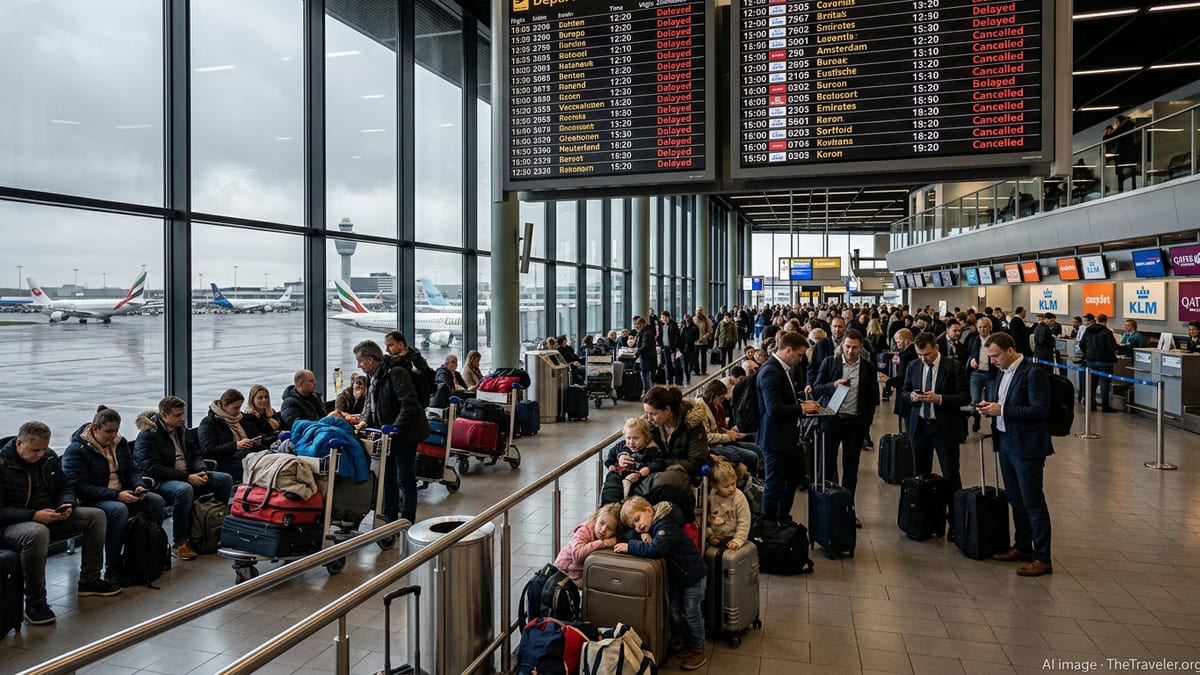
EES Rollout Turns Peak Travel Into a Stress Test
The European Union’s new Entry/Exit System, a biometric border regime for non EU travelers, moved from phased deployment to full operation across the Schengen Area in April 2026. The change replaced passport stamping with fingerprint and facial scans recorded in a central database, a shift intended to tighten security and automate compliance checks. In practice, the rollout has exposed capacity gaps at some of Europe’s busiest hubs.
Reports from aviation groups and travel advisories indicate that initial registration under EES is proving far slower than expected, especially at airports where large banks of long haul arrivals converge within short time windows. Passenger flows that previously moved through manual stamping in under a minute are now pausing for biometric capture and troubleshooting of scanners, connectivity and data mismatches. For first time visitors to the Schengen zone in particular, the result has been queues stretching for hours.
Airports Council International Europe, Airlines for Europe and the International Air Transport Association have jointly highlighted persistent waiting times of two to three hours at border control during peak periods since the system became fully operational. Their publicly released statements argue that, without additional flexibility to scale back EES during crunch times, bottlenecks at the border gate can cascade into missed connections, flight delays and mounting compensation claims.
The first full weeks of operation have borne out those concerns. From Brussels to Berlin, data gathered by travel advisory platforms and airport monitoring services show that non EU travelers are encountering some of the longest border queues since the reopening of international travel, with major hubs emerging as the most vulnerable nodes.
Paris Becomes the Latest Flashpoint
Paris Charles de Gaulle and Orly are now firmly in the spotlight as EES related disruption spreads. France’s airports had already featured in European Commission discussions earlier in 2026, when internal assessments and media coverage pointed to bottlenecks in testing phases and raised doubts over whether French hubs could handle full scale biometric processing at the start of the summer schedule.
Those warnings have translated into real world strain as inbound traffic ramps up. Publicly available information from airport monitoring services and traveler accounts describes dense queues at non EU arrival corridors in Paris, with some passengers held for more than two hours before reaching a border booth. The issues are especially pronounced during morning and late afternoon waves, when transatlantic arrivals coincide with short haul feeds from other regions.
Travel industry briefings note that Paris is dealing not only with the new border technology but also with preexisting pressure on staffing and terminal capacity. The city’s gateway role for events in 2026, combined with a strong rebound in leisure and corporate travel, means volumes are rising faster than the pace at which new EES kiosks and trained officers can be deployed. The combination has pushed Paris into the same category as Amsterdam and Frankfurt, where early EES congestion was already drawing headlines.
French operators have joined wider European calls for a more flexible application of the system, including the option to temporarily relax biometric capture during intense peaks. Analysts warn that if such measures are not adopted ahead of the main summer season, Paris could face repeated episodes of gridlock that undermine its status as a flagship intercontinental hub.
Amsterdam, Frankfurt and Venice Struggle With Prolonged Queues
Amsterdam Schiphol, long a bellwether for congestion in European aviation, was among the first major hubs to see significant EES queues in 2026. Coverage in European media has tracked three hour waits at passport control, particularly for British and other non EU tourists arriving during school holidays. For a hub that already faced staffing issues in earlier years, the extra friction at the border has pushed the operation close to its limits during peaks.
Frankfurt, Germany’s primary intercontinental gateway, has also experienced sustained turbulence. Industry reports in early May described cases of non EU passengers waiting up to four hours to clear border controls, leading to missed flights and partially empty departures where booked travelers were still stuck in the queue. German aviation groups have publicly urged policymakers to consider a temporary suspension or scaling back of EES checks until additional capacity can be brought online.
Italy’s northern airports, including Venice, have been another flashpoint. Travel advisory bulletins reference three hour border delays during the late April holiday period, prompting Italian aviation associations to lobby for an “off switch” that would let airports revert to conventional processing when queues reach critical length. Venice, a city that relies heavily on short stay international visitors and cruise related air traffic, is particularly sensitive to reputation damage from repeated reports of chaotic arrivals.
The pattern emerging across these hubs is similar: the first Schengen entry point for a trip often becomes the choke point, because that is where full EES enrollment takes place. Once travelers are in the database, subsequent crossings may be faster, but the initial processing burden at major gateways like Amsterdam, Frankfurt, Paris and Venice is currently outstripping available resources.
Fuel Prices Add a Second Shock to Airline Operations
Compounding the operational stress from EES, airlines and airports are facing a renewed surge in jet fuel prices in 2026. Eurocontrol’s recent European aviation overviews point to jet fuel costs that are more than double early year averages from before the latest geopolitical shocks, with prices in April climbing again compared with March. The spike comes against a backdrop of supply concerns linked to conflict in the Middle East and disruptions in refining and shipping.
Higher fuel bills are feeding directly into airline cost bases at the same time as schedules are being stretched by longer ground times. Carriers are attempting to absorb extended turnaround periods caused by delayed inbound passengers, late baggage loading and missed crew connections, all while grappling with thinner operating margins. Some analysts note that routes with marginal profitability, especially to secondary European cities, may face capacity cuts if current conditions persist.
Network planners are already making tactical adjustments. Publicly available schedule data and airline statements show selective retiming of flights to spread arrival peaks, the use of larger aircraft on constrained slots to maintain seat capacity with fewer movements, and a renewed focus on fuel efficiency measures such as reduced contingency uplift and optimized flight planning. However, these steps only partially offset the structural hit from fuel prices and EES related disruption.
Travel management companies warn that corporate travelers are likely to feel the effects through higher fares, tighter connection windows and a greater risk of misconnected itineraries. With airlines wary of sharply raising prices on leisure heavy routes, some are instead prioritizing yield management on business oriented corridors and premium cabins, which could further deepen the divide between flexible and price sensitive passengers.
Record Delays Reshape Traveler Behavior and Summer Outlook
The convergence of border gridlock and cost pressure is beginning to reshape how travelers plan trips into continental Europe. Online search trends and booking platform data cited in recent industry analyses suggest that some passengers are avoiding itineraries that route through the most affected hubs, instead favoring alternative gateways with historically shorter queues or direct services that bypass congested connecting points.
Travel advisories now routinely urge non EU visitors to allow three to four hours between scheduled arrival and onward flights at large Schengen hubs, a buffer that would have seemed excessive only a year ago. For time sensitive itineraries, particularly involving rail or cruise departures, agents are steering clients toward overnight stays in the arrival city or recommending hubs where EES implementation appears to be running more smoothly.
At the policy level, the coming months are shaping up as a critical test. Aviation associations have called in public statements for an immediate review of EES procedures before the main summer holiday wave, pressing for options such as staggered implementation, temporary exemptions for certain categories of travelers, or dynamic throttling of biometric checks during extreme peaks. The European institutions, for their part, have emphasized the long term benefits of a modernized border regime, while acknowledging the need to resolve operational teething problems.
For travelers looking ahead to summer 2026, the message from the latest data is clear: Europe’s marquee airports, including Paris, Amsterdam, Frankfurt and Venice, are entering the season already under strain from both technology transition and economic headwinds. Until border processing stabilizes and fuel markets cool, passengers can expect an environment where resilience, extra time and flexible plans are as important as tickets and passports.