

Parque das Nações, the contemporary riverside district created for Expo 98 in Lisbon, has quietly become one of the city’s best areas for families. With flat promenades, abundant green spaces, major kid-friendly attractions and easy public transport, it is one of the few places in Lisbon where you can spend a full day with children and barely push a stroller up a hill.
Whether you are visiting with a toddler, a curious school-age child or a teen, Parque das Nações offers a relaxed mix of nature, science, play and modern city life.
Why Parque das Nações Works So Well With Kids
Many visitors picture Lisbon as a maze of steep streets and historic trams, and much of the city does match that image. Parque das Nações, on the eastern waterfront, is the exception. Designed as a futuristic neighborhood for the 1998 World Expo, it was planned with wide pavements, elevators, ramps and open plazas from the start. That makes it unusually accessible for families with strollers, scooters and wheelchairs, and significantly less stressful than navigating the cobbled lanes of the old town.
The area stretches along the Tagus River, anchored by the Oriente transport hub at one end and the Vasco da Gama Tower at the other. In between, families find one of Europe’s largest aquariums, the Lisbon Oceanarium, a hands-on science museum, playgrounds, gardens and a cable car gliding over the water. Public art, fountains and shaded benches appear almost everywhere, so it is easy to pause for snacks, diaper changes or an impromptu game of tag without feeling you are “wasting” sightseeing time.
Parque das Nações is also practical. Oriente station connects metro, suburban rail, buses and taxis, which keeps transfer times short and straightforward. The adjacent Vasco da Gama shopping center offers supermarkets, pharmacies, children’s clothing stores, cinemas and plenty of dining options, a safety net for everything from forgotten sunhats to late-afternoon meltdowns. For a family who wants a lighter logistics load, this modern district can act as both a sightseeing destination and a backup plan.
Exploring the Lisbon Oceanarium With Children
The Lisbon Oceanarium is the headline attraction in Parque das Nações and a highlight for many families visiting the city. Opened in 1998, it remains one of Europe’s largest indoor aquariums, home to thousands of marine animals and plants arranged around a vast central tank. Children tend to be captivated even before they walk in, as the building sits on the water like a futuristic floating vessel connected to land by a walkway.
Inside, the design is quietly theatrical. The central tank, holding several million liters of water, reveals itself again and again from different levels and angles as you follow the path. Large ocean sunfish, rays, sharks and schools of glittering fish drift past, while smaller side habitats recreate Atlantic, Antarctic, Pacific and Indian Ocean ecosystems. For younger children, the constantly shifting movement and soft lighting can be mesmerizing, and many families report spending longer than expected simply watching the main tank from different vantage points.
Parents will appreciate the practical details. The Oceanarium is laid out with wide ramps and elevators instead of long flights of stairs, so it is well suited to strollers and wheelchairs. Benches appear near major viewing windows, making it easy to stop for a bottle or snack break without leaving the exhibits. Family restrooms and baby-changing facilities are available, and the controlled indoor climate can be a welcome break on very hot or rainy days. Because it is popular with school groups, many families aim to arrive near opening time in the morning or later in the afternoon to avoid peak crowds.
The Oceanarium also invests in family programming, offering occasional themed activities for different age groups, from toddlers to older children, along with specially designed experiences like overnight stays in sleeping bags near the tanks. While you may not schedule your trip around these events, it is worth checking the current program when planning your visit if you have marine-obsessed kids. Even on a regular day, two to three hours pass quickly here, and combining the aquarium with a relaxed riverside walk or playground time creates a full yet manageable outing.
Hands-On Discovery at Pavilhão do Conhecimento
A short walk from the Oceanarium brings you to Pavilhão do Conhecimento, a science center that often surprises families who arrived primarily for the aquarium. Housed in one of the original Expo 98 pavilions, it is designed as a playful space where children can engage with scientific ideas through climbing, building, experimenting and exploring. Rather than static displays, most exhibits invite visitors to touch, test and move.
Inside, you might find a bike you can pedal along a high wire, a construction zone with oversized blocks, or interactive stations demonstrating forces, light and sound. Exhibitions are rotated and updated, but the common denominator is interactivity. School-age children tend to be the ideal audience, but many areas also appeal to younger kids who simply enjoy pressing buttons and seeing what happens. Teens who say they are too old for playgrounds often loosen up here, especially with competitive or problem-solving exhibits.
The museum is laid out so that families can move at their own pace, lingering in favorite sections instead of feeling pressure to cover everything in one visit. Staff often run short demonstrations or guided activities, which can add structure for kids who focus better with a clear task. Like the Oceanarium, Pavilhão do Conhecimento is largely stroller-accessible, with ramps, elevators and rest areas. For families spending a full day in Parque das Nações, pairing a morning at the aquarium with a late-morning or early-afternoon stop here offers a satisfying balance between passive viewing and active participation.
Because the science center is indoors and climate-controlled, it is also a useful backup if the weather turns unexpectedly hot, cold or wet. Tickets are generally separate from the Oceanarium, so it is worth budgeting both time and admission costs in advance. Families with very young children might decide to focus on the aquarium and the outdoor spaces instead, but those with curious primary or middle school kids often list this museum among their Lisbon favorites.
Riverside Walks, Cable Car Rides and Open-Air Play
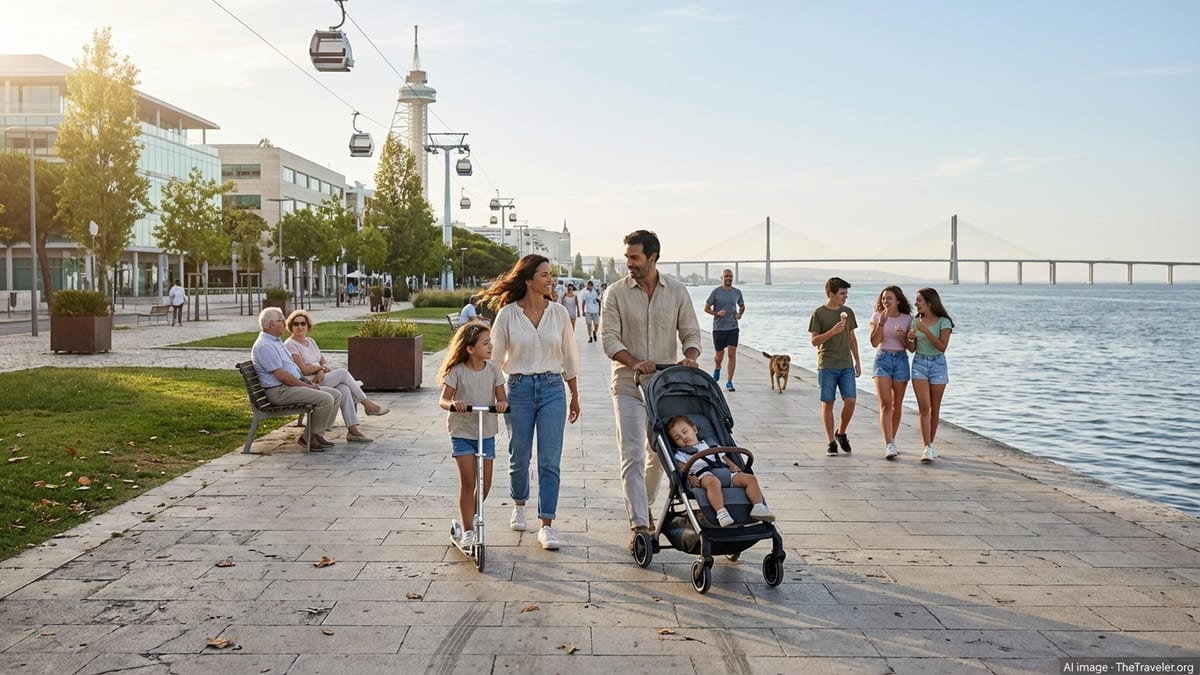
One of Parque das Nações’ great strengths for families is how much you can enjoy simply by walking along the riverfront. The promenade is wide, flat and paved, ideal for strollers, small bikes and scooters. The Tagus River is ever-present, with long views to the Vasco da Gama Bridge and constantly shifting light. For kids used to busier, more enclosed urban spaces, the sense of openness can be calming, and for parents it provides easy sightlines to keep track of children on the move.
Along the way, there are small playgrounds, climbing structures and fountains where children can splash in warm weather. Green spaces like Jardim Garcia de Orta and the landscaped areas near the Oceanarium offer shade, lawns and benches, good for picnic lunches or a quiet nap in a stroller. Public art installations from the Expo era dot the route, from abstract sculptures to tiled walls, often becoming impromptu backdrops for family photos or imaginative games.
For a brief but memorable treat, many families ride the Telecabine Lisboa, the cable car that runs between the vicinity of the Oceanarium and the Vasco da Gama Tower. Gliding above the riverfront at around 30 meters high, the cabins give children a bird’s-eye view of the district and the sweeping curve of the bridge. The ride itself is short, usually around ten minutes one way, which suits younger attention spans, and small children typically travel for a reduced fare or free depending on age. Operating hours and pricing vary slightly by season, but the cable car usually runs daily across the main daylight hours, with extended schedules in summer.
Because the cabins are compact, it is easiest to travel with a lightweight, foldable stroller. Staff generally assist with boarding and can advise whether your stroller can remain open or needs to be folded for the ride. Families who are nervous about heights should know that the cabins move smoothly and relatively slowly. Choosing a calm, clear afternoon can make the experience particularly pleasant, and scheduling the ride after indoor attractions works well as a “reward” for patient museum-going.
Playgrounds, Green Spaces and Room to Run
Despite its modern, urban architecture, Parque das Nações contains generous pockets of greenery and purpose-built areas where children can simply play. This is important in a city where many traditional attractions require hands-off behavior and quiet voices. Here, you can break up more structured visits with unstructured time on the grass or at playgrounds without leaving the neighborhood.
Near the riverfront and the main attractions, medium-sized playgrounds offer slides, climbing frames and swings suited to a mix of ages. Surfaces are generally soft and equipment modern, reflecting the district’s relatively recent development. Parents can supervise easily from nearby benches or low walls while also enjoying views of the water. Landscaping tends to include trees and pergolas, so even on warmer afternoons there are portions of shade where younger children can rest and cool down.
Gardens such as Jardim Garcia de Orta provide quieter corners with plants, ponds and shaded paths, appealing when children need a break from stimulation. Families with small babies often push strollers along the winding paths while older siblings explore, returning periodically to a shared base on the grass. On weekends, you may see local families doing the same, which can give visiting children instant playmates and help them feel less like tourists.
For energetic kids, the extensive promenade and side paths are perfect for running, riding scooters or practicing cycling in a safe, low-traffic environment. Unlike many older districts of Lisbon, there are few steep inclines or cobbled surfaces here, so falls tend to be less dramatic and pushing a stroller is considerably easier. If you are staying elsewhere in the city, building a half-day trip to Parque das Nações into your itinerary just for this combination of space and safety can be worthwhile.
Eating, Breaks and Practicalities for Families
Spending the day in Parque das Nações with children is easier when you know where to eat and take breaks. The Vasco da Gama shopping center, directly connected to Oriente station, is one of the most convenient options. Inside, you will find a broad choice of restaurants and cafes, from international chains to local concepts, many offering quick service and children’s menus. High chairs are common, and the food court’s open layout allows kids some visual variety while they sit. Supermarkets and snack stands inside the mall are useful for stocking up on fruit, water and simple picnic supplies before you head to the riverfront.
Closer to the water, cafes and restaurants line sections of the promenade, especially around the Oceanarium and the marina area. Many feature outdoor seating, which is a blessing with young children who are more comfortable when they can fidget and look around. Menus often lean towards Portuguese dishes, seafood, pizza and pasta, which usually provide something acceptable even for picky eaters. Service in Lisbon is generally relaxed rather than rushed, so if your children struggle with longer meals it can help to order a starter or bread promptly and clarify that you are in a bit of a hurry.
Inside the Oceanarium and Pavilhão do Conhecimento, there are cafes or small dining areas where you can grab snacks, drinks and light meals. While prices tend to be higher than in the mall, they offer the convenience of staying on-site during a visit. Many parents choose to time indoor attractions between main meals, using those cafes for top-ups rather than full lunches. Whichever strategy you choose, it is wise to carry a supply of snacks and water; excitement, walking and Lisbon’s sun can combine to produce hunger and thirst more quickly than expected.
In terms of facilities, public restrooms exist within the major sights and along the main promenade, often with baby-changing stations. Accessibility is generally good, but as always in a city environment, it pays to take opportunities for bathroom visits when you see them rather than waiting until a child is desperate. Because the riverfront can feel breezy even on warm days, layers of clothing, sun protection, and occasionally a light windbreaker for younger children make outings more comfortable.
Planning Your Visit and Getting Around
One of Parque das Nações’ advantages for visiting families is how easy it is to reach by public transport. Oriente station, at the western end of the district, is a major interchange for the Lisbon metro, suburban and long-distance trains and numerous bus routes. Families staying in central Lisbon can typically reach Oriente by metro in 15 to 20 minutes, avoiding traffic and parking issues. For those traveling with very young children and a lot of gear, taxis and ride-hailing services are widely available, and the ride from downtown is usually relatively short and reasonably priced.
Once you arrive, the key landmarks are concentrated within a roughly two-kilometer stretch along the river. The Oceanarium, science center, cable car, gardens and mall are all walkable from one another on level ground. Many families find that a compact stroller is extremely useful, even for children who usually walk, because distances can add up over a full day. Older children and teens can comfortably walk, scooter or cycle between points of interest, and rental bikes and e-scooters are sometimes available for adults who prefer wheels to walking.
In terms of timing, a full day in Parque das Nações is very possible and often recommended if you want to cover both the Oceanarium and Pavilhão do Conhecimento, ride the cable car and allow for playground or garden time. Families with toddlers might opt for a half-day focused on the aquarium and riverside play, returning to accommodation for an afternoon rest. It can be helpful to book tickets for major indoor attractions in advance, particularly during weekends, school holidays or peak season, to avoid queuing with restless kids.
Weather plays a role in planning. Lisbon enjoys many clear, sunny days, and the river breeze at Parque das Nações can moderate summer heat somewhat, but sun hats, sunscreen and water remain important. In cooler months, the district can feel windier and colder than more sheltered parts of the city, so warm layers are advised, especially if you plan a cable car ride. Fortunately, the combination of indoor and outdoor activities allows you to adjust on the day, spending more time outdoors when the weather is pleasant and retreating to the Oceanarium or science center if conditions shift.
The Takeaway
Parque das Nações offers something unusual in Lisbon: a district where the practical needs of families align naturally with memorable experiences. The flat, stroller-friendly layout, good transport links and ample facilities reduce daily friction, while the Oceanarium and Pavilhão do Conhecimento deliver genuine highlights that children talk about long after the trip. Add in riverside walks, playgrounds, green spaces and the gentle thrill of a cable car ride, and you have the ingredients for a full, varied day that feels both relaxed and rewarding.
Whether you use Parque das Nações as a single dedicated day within a larger Lisbon itinerary or as a recurring base for early evenings and easy dinners, it can anchor your family visit with a sense of space and calm. In a city famous for its steep historic hills and tightly packed neighborhoods, this modern riverfront quarter proves that cutting-edge design and family-friendliness can go hand in hand. For many parents, it becomes the place where Lisbon’s charms are easiest to enjoy, one riverside stroll and curious question at a time.
FAQ
Q1. Is Parque das Nações suitable for toddlers in strollers?
Parque das Nações is one of the best areas in Lisbon for strollers. The streets and promenades are wide, flat and largely step-free, with ramps and elevators in key spots. Attractions such as the Lisbon Oceanarium and Pavilhão do Conhecimento are designed with ramps and lifts instead of long staircases, and most cafes and the Vasco da Gama shopping center provide space for strollers and have baby-changing facilities.
Q2. How much time should a family plan for the Lisbon Oceanarium?
Most families spend between two and three hours at the Lisbon Oceanarium, depending on the age and attention span of their children. Younger kids may move more quickly through the exhibits but often want extra time at the central tank, while older children may linger at specific habitats and read more information. If you combine the visit with a snack break at the on-site cafe, allowing half a day gives you enough time without rushing.
Q3. Is the cable car safe and appropriate for young children?
The Telecabine Lisboa cable car is designed for all ages and is generally considered safe and family-friendly. Cabins are enclosed, move at a moderate speed and travel at a consistent height above the riverfront. Young children should sit on an adult’s lap or next to an adult, and families are usually asked to fold larger strollers before boarding. If anyone in the family is uncomfortable with heights, consider sitting away from the glass and choosing a calm weather day.
Q4. Can we visit both the Oceanarium and Pavilhão do Conhecimento in one day?
Yes, many families successfully visit both in a single day. A common approach is to start at the Oceanarium in the morning, when children are fresh and crowds may be lighter, then have lunch nearby or at the Vasco da Gama mall, and spend the afternoon at Pavilhão do Conhecimento. Building in a short break at a playground or garden in between helps avoid overload. With this pace, you can still finish the day with a relaxed riverside walk or a cable car ride.
Q5. Are there good food options for picky eaters?
Parque das Nações offers a wide range of dining choices suitable for picky eaters. The Vasco da Gama shopping center has numerous casual restaurants and a food court with familiar options such as pasta, pizza, burgers and grilled chicken, as well as bakeries and ice cream stands. Along the riverfront, many restaurants serve simple dishes like plain grilled fish, rice and salads, and they are often willing to adapt portions or sauces for children if you ask.
Q6. What is the best way to get to Parque das Nações with kids?
The easiest route for most visitors is by metro to Oriente station, which is on the city’s red line and connects conveniently to central Lisbon. From there, it is a short, level walk to the main attractions. Families traveling with a lot of luggage or very young children might prefer a taxi or ride-hailing service directly to their destination within Parque das Nações. Once you arrive, walking and using a stroller are usually sufficient to get around.
Q7. Is Parque das Nações a good place to stay, or just for day visits?
Parque das Nações works well both as a day-trip destination and as a base, depending on your priorities. Staying in the area gives you easy access to the Oceanarium, science center and riverside promenade, along with modern hotels and apartments and the convenience of Oriente station. However, it is farther from historic neighborhoods such as Alfama and Bairro Alto, so you will rely more on public transport or taxis for sightseeing. Many families choose to stay in central Lisbon and allocate one or two full days to Parque das Nações.
Q8. What should we pack for a family day in Parque das Nações?
For a typical family day, it is useful to bring sunscreen, hats, refillable water bottles, light layers or a windbreaker, and a small first-aid kit. Snacks, wet wipes and a change of clothes for younger children are also helpful, especially if they enjoy fountains or playgrounds. A compact stroller or carrier makes it easier to cover distances, and a small backpack leaves your hands free to manage children safely near the riverfront and in busy indoor spaces.
Q9. Is Parque das Nações crowded and noisy, or relatively calm?
Parque das Nações is generally calmer than Lisbon’s historic center, especially on weekdays. The wide open spaces and long promenades help disperse visitors, so it rarely feels cramped outdoors. That said, popular attractions like the Oceanarium and Pavilhão do Conhecimento can be busy during weekends, school holidays and rainy days, with a noticeable presence of school groups at certain times. Planning your visits for early morning or late afternoon can reduce wait times and noise levels.
Q10. Are there activities at Parque das Nações that appeal to teenagers?
While much of the marketing focuses on younger children, Parque das Nações has plenty to interest teenagers. The Oceanarium’s scale and design appeal to all ages, and Pavilhão do Conhecimento includes interactive exhibits that older kids and teens can enjoy on a more technical level. The cable car provides a popular photo opportunity, and the riverside paths are well suited to jogging, cycling or simply listening to music while taking in the views. Access to shops, cinemas and cafes at the Vasco da Gama mall can also make the district feel more appealing to teens who appreciate a bit of independence within a safe environment.